


August is shaping up to be another volatile month for investors. The biggest driver remains the Federal Reserve after July's decision to leave rates unchanged, with markets now pricing in around a 55-60% chance of a rate hike in September, meaning every major inflation and jobs report could move markets.
August is shaping up to be another volatile month for investors. The biggest driver remains the Federal Reserve after July's decision to leave rates unchanged, with markets now pricing in around a 55-60% chance of a rate hike in September, meaning every major inflation and jobs report could move markets.
Geopolitical tensions in the Middle East continue to influence energy prices, while investors remain focused on whether AI spending by the world's largest technology companies can deliver meaningful returns. Seasonally, August and September have historically been weaker months for equities, making stock selection especially important.
SpaceX: Strong growth, but AI spending under scrutiny
SpaceX delivered a strong set of Q2 results, with revenue jumping 92% year-on-year to $7.81 billion, comfortably beating expectations of $6.93 billion, while its net loss narrowed to $541 million from $1 billion a year earlier. Growth was driven by strong performance across its Space, Connectivity and AI divisions, with management reaffirming its target of $100 billion in annual revenue by the end of the year. However, despite the impressive top-line growth, the stock fell in after-hours trading as investors focused on a sharp increase in capital expenditure, which surged to $18.4 billion as the company ramps up AI infrastructure investment. While SpaceX's long-term growth story remains compelling, investors will be watching closely to see whether its heavy AI spending can translate into sustainable profitability.
Chart 1: SpaceX 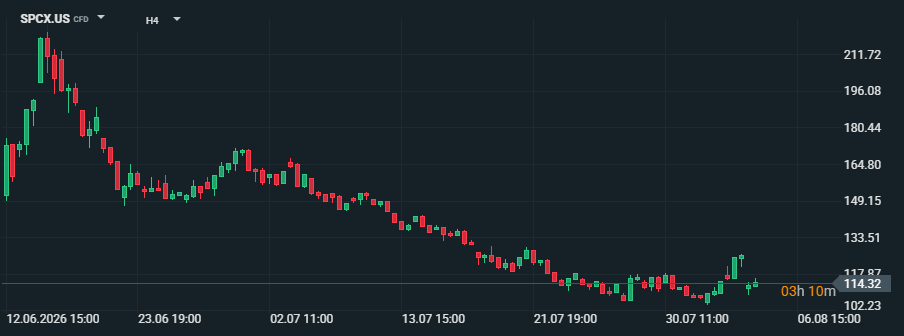
Past performance is not a reliable indicator of future resuls.
Microsoft: Time for a fresh start
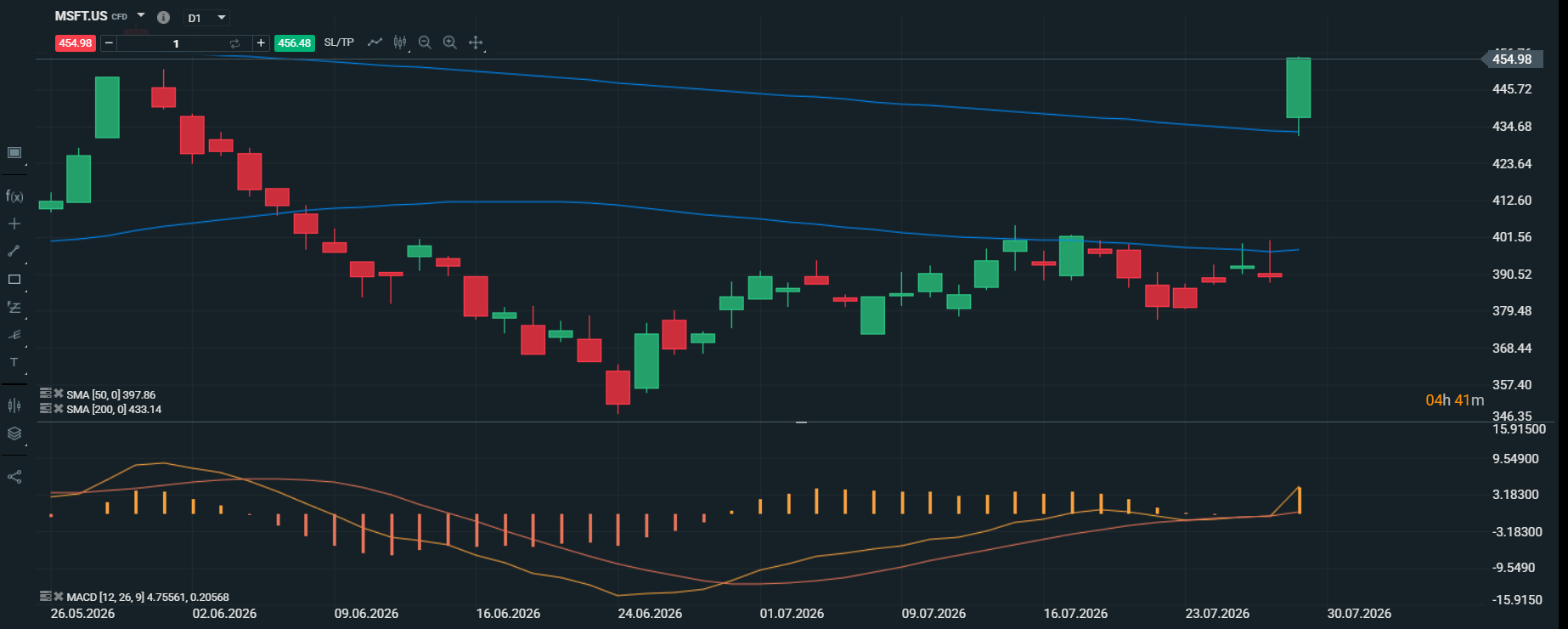
Microsoft’s Q2 results were warmly welcomed by the market, and the stock price jumped 16% on the day after the results, eroding YTD losses that had hit more than 20% before this report. Revenue and income both rose by 18% last quarter, beating estimates. Quarterly capex more than doubled compared to a year earlier, but the company has strong free cash flows of more than $19bn, suggesting that it is monetizing its AI investments. The company’s Azure cloud unit posted full year fiscal 2026 revenue at $100bn for the first time, which is easing fears about its AI prospects. Microsoft also announced that it had 30mn subscribers for its Copilot assistant.
Microsoft’s share price is still down 6% YTD, and it has a reasonable P/E ratio of 21, which is why investors are stepping back into the trade. Microsoft could be a beneficiary of an AI rotation trade this month, with investors turning away from expensive chip stocks, and towards hyperscalers that have a track record of monetizing their AI investments.
Chart 2: Microsoft
Past performance is not a reliable indicator of future resuls.
Exxon Mobil: The $100 per barrel trade
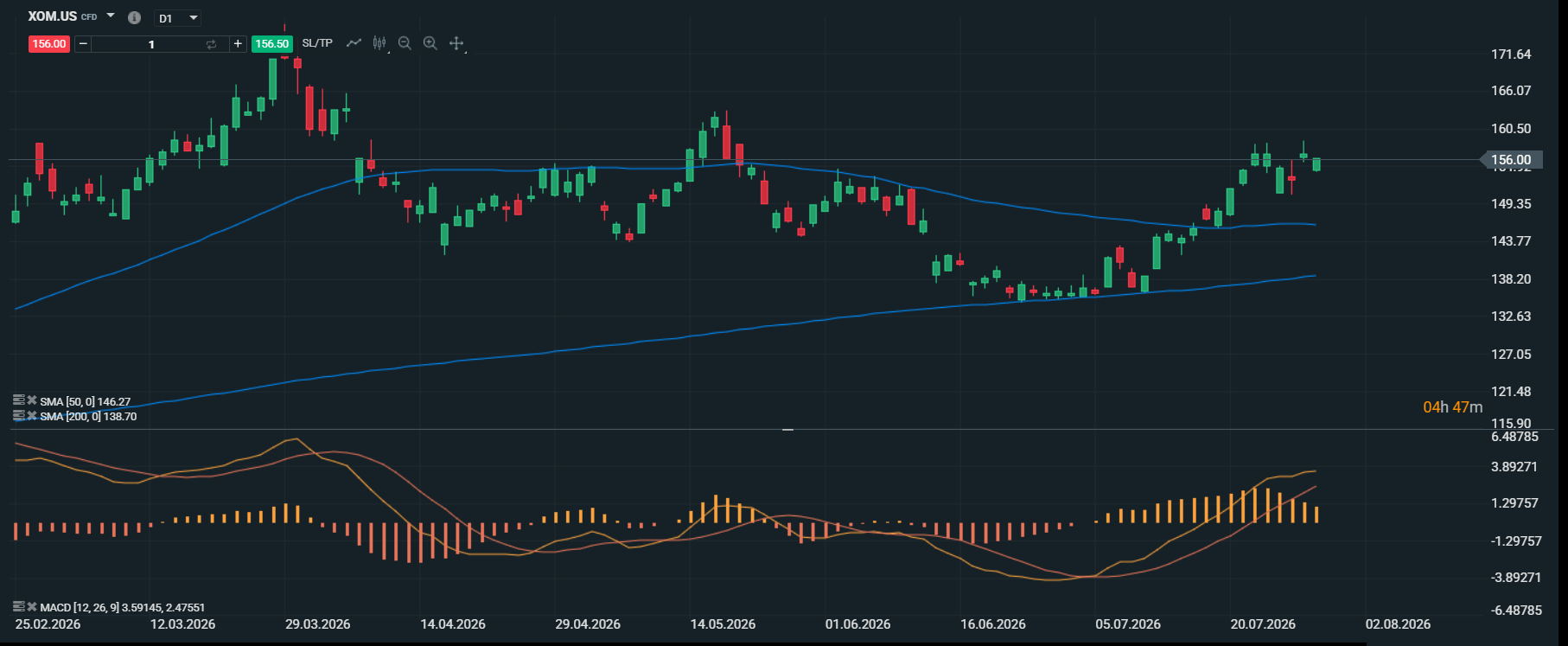
This trade could be a good hedge if Middle East tensions notch up a gear in August, and the oil price rises back to $100 per barrel. When we saw oil prices surge earlier this year, the oil majors were the unsurprising winners in the stock market. The stock price is higher by 30% YTD, but with a price to earnings ratio of 26, this stock still looks like a reasonably priced hedge for an uncertain few weeks.
Added to this, Exxon is also embarking on a $20bn share buyback scheme this year, as the company boosts shareholder returns with all its excess cash.
Chart 3: Exxon Mobil
Past performance is not a reliable indicator of future resuls.
HSBC: European banks are back
The European banking stock index is one of the top performing major indices so far in 2026, behind the South Korean Kospi and Japan’s Nikkei. HSBC will also report its Q2 results on August 4th before UK markets open for business. The focus will be on whether the new (ish) CEO’s turnaround plan has paid off. The company missed earnings estimates last quarter, and reported earnings per share of $2.0 vs. expectations of $2.12.
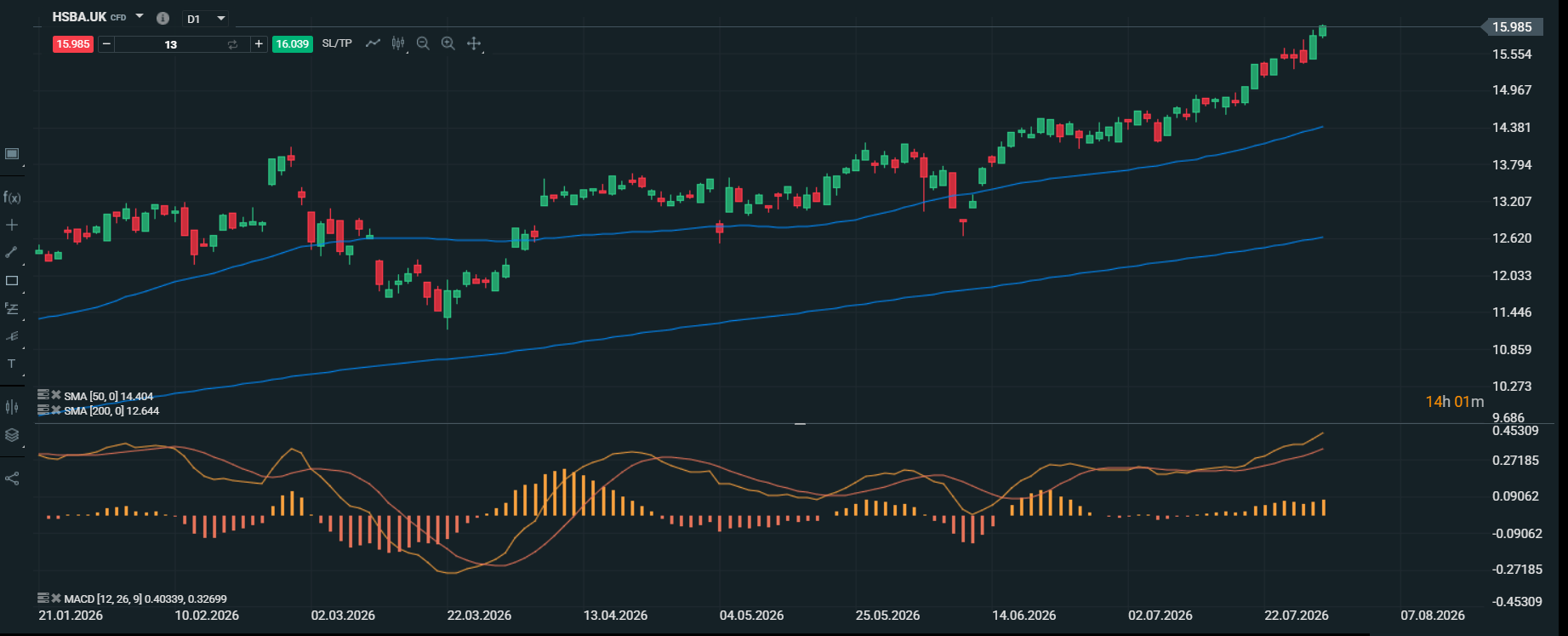
The fact that interest rates are on pause for the long term, based on the recent BOE meeting, suggests that HSBC might be able to benefit from higher net interest margins over the long term. The stock price has benefited from interest in the European banking sector, and is higher by 33% YTD. However, with a P/E ratio of just 16, this stock still looks like a bargain. It also looks well placed to benefit from 1, an uncertain environment for risk this month, and 2, for a desire to diversify away from global AI stocks.
Chart 4: HSBC
Past performance is not a reliable indicator of future resuls.
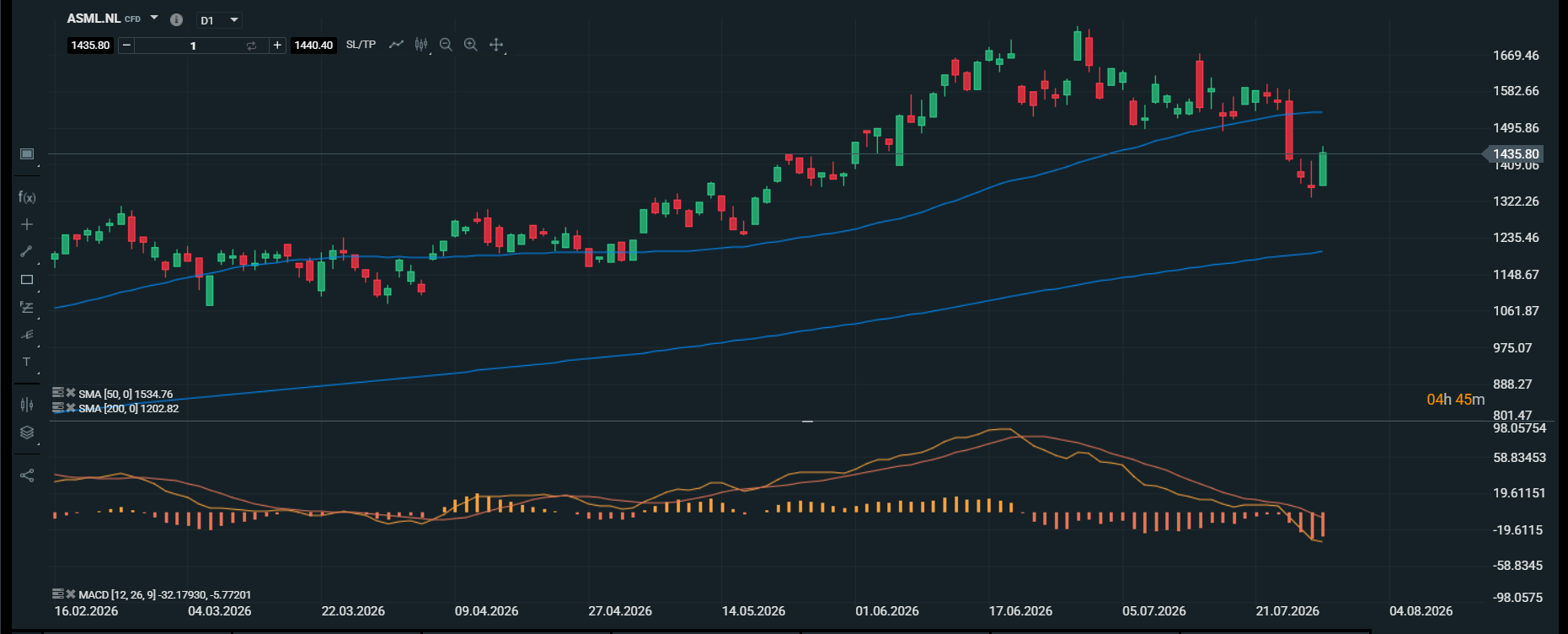
ASML: Has the stock fallen far enough?
This stock has fallen sharply in the past month and is down 13%, on the back of rising Chinese competition fears. The stock is still up 36% on a YTD basis. ASML’s performance in the coming weeks will be an important measure of whether the chip stock trade still has legs since it produces the technology necessary to produce semiconductor chips. There is something for both the ASML bulls and bears this month. The bears might think that the stock has not sold off far enough, especially if the chip sector remains volatile in the coming weeks. However, the bulls may think a 13% decline into correction territory is a good entry point given its recent strong set of earnings results. The company raised its full year sales guidance for 2026 to EUR 43bn – EUR 45bn. It also expects a gross margin of 54% - 56%. This may be enough to entice fresh buyers.
Chart 5: ASML
Past performance is not a reliable indicator of future resuls.

How to Choose the Best Forex and CFD Broker

Investing during a crisis: Strategies and Tips
US Presidential Election 2024: Kamala Harris vs Donald Trump. Which candidate is better for stock markets?
This content has been created by XTB S.A. This service is provided by XTB S.A., with its registered office in Warsaw, at Prosta 67, 00-838 Warsaw, Poland, entered in the register of entrepreneurs of the National Court Register (Krajowy Rejestr Sądowy) conducted by District Court for the Capital City of Warsaw, XII Commercial Division of the National Court Register under KRS number 0000217580, REGON number 015803782 and Tax Identification Number (NIP) 527-24-43-955, with the fully paid up share capital in the amount of PLN 5.869.181,75. XTB S.A. conducts brokerage activities on the basis of the license granted by Polish Securities and Exchange Commission on 8th November 2005 No. DDM-M-4021-57-1/2005 and is supervised by Polish Supervision Authority.