The USD/BRL currency pair represents the exchange rate between the US Dollar (USD) and Brazilian Real (BRL). It shows how many Brazilian Reais are required to purchase one US Dollar.
USD/BRL is influenced by differences between the US and Brazilian economies, particularly interest rates, inflation, commodity prices, economic growth and investor sentiment. US monetary policy and Brazil's commodity exports are important factors affecting the pair.
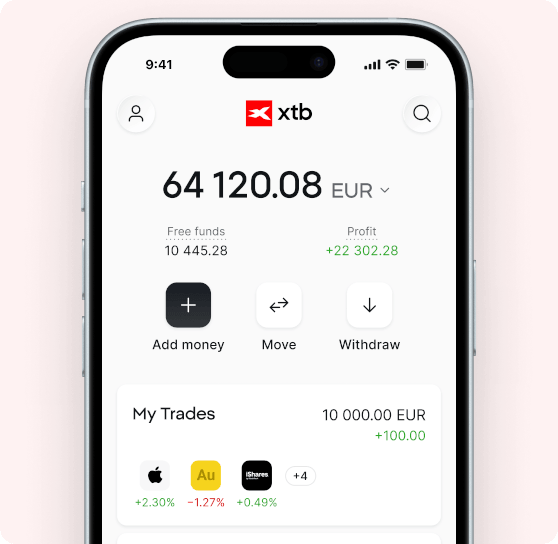
USD/BRL trading through contracts for difference (CFDs) is among the investment options offered by XTB.
Key Factors Influencing USD/BRL
US Federal Reserve Monetary Policy
The Federal Reserve (Fed) plays an important role in determining the strength of USD. Changes in US interest rates and expectations for future monetary policy can influence capital flows towards or away from emerging-market currencies such as BRL.
A relatively hawkish Fed can support USD and potentially push USD/BRL higher, while expectations of easier US monetary policy may reduce pressure on BRL.
Banco Central do Brasil Monetary Policy
The Banco Central do Brasil (BCB) influences BRL through interest rate decisions and its approach to inflation. Brazil's benchmark Selic interest rate is closely monitored by currency traders.
A relatively hawkish BCB stance can support BRL and potentially push USD/BRL lower, while expectations of lower Brazilian interest rates may weigh on the Real.
Brazilian Inflation
Brazilian inflation data can affect expectations for BCB monetary policy. Higher-than-expected inflation may increase expectations of tighter monetary policy, while weaker inflation can increase expectations of rate cuts.
Commodity Prices
Brazil is a major exporter of commodities including soybeans, iron ore, crude oil and other agricultural and mineral products. Changes in global commodity prices can therefore influence export revenues, economic expectations and demand for BRL.
China and Global Demand
China is an important trading partner for Brazil and a major buyer of Brazilian commodities. Changes in Chinese economic growth and demand can affect Brazilian exports and therefore influence expectations for BRL.
Global Risk Sentiment
BRL is an emerging-market currency and can be sensitive to changes in global investor sentiment. During periods of heightened uncertainty, investors may move towards perceived safe-haven currencies such as USD, potentially pushing USD/BRL higher.
Trading Characteristics of USD/BRL
USD/BRL is an emerging-market currency pair and can experience greater volatility than major forex pairs.
The pair can react significantly to Brazilian monetary policy, US Federal Reserve decisions, inflation data, commodity prices, political developments and changes in global risk appetite.
Trading activity is generally concentrated around the Brazilian and US market sessions. Liquidity can be lower outside the main trading periods, potentially resulting in wider spreads and greater price movements.
Because USD/BRL combines a global reserve currency with an emerging-market currency, traders should consider both volatility and liquidity when managing positions.
Potential Volatility Drivers
Interest Rate Differentials
Differences between US and Brazilian interest rates can influence capital flows between USD- and BRL-denominated assets. Changes in expectations for Fed or BCB policy can therefore cause significant movements in USD/BRL.
Commodity Price Movements
Brazil's export exposure to commodities means changes in prices for iron ore, soybeans and crude oil can influence BRL. Stronger commodity prices can support export revenues, while weaker prices may reduce external demand for the Brazilian currency.
Brazilian Political and Fiscal Developments
Changes in Brazilian fiscal policy, government spending or political conditions can affect investor confidence and expectations for the economy. Increased uncertainty can contribute to greater volatility in BRL.
US Economic Data
US economic releases such as inflation, employment and GDP data can influence expectations for Federal Reserve policy and therefore affect USD/BRL.
China Economic Data
Chinese economic growth and industrial demand can affect Brazilian commodity exports. Weaker Chinese demand may reduce expectations for Brazilian export revenues and put pressure on BRL.
Global Risk Appetite
Changes in global risk sentiment can affect capital flows into emerging markets. Risk-off conditions can increase demand for USD and contribute to upward pressure on USD/BRL.
Important Macroeconomic Data and Events
- Federal Reserve Interest Rate Decisions – Changes in US monetary policy can significantly affect USD.
- Banco Central do Brasil Interest Rate Decisions – BCB policy directly influences expectations for BRL.
- Brazilian Inflation (IPCA) – Inflation is an important indicator for future Brazilian monetary policy.
- US Inflation (CPI) – US inflation can affect expectations for Federal Reserve interest rates.
- Brazilian GDP – Provides insight into economic growth and domestic conditions.
- Commodity Prices – Iron ore, soybeans and crude oil are particularly relevant to Brazil's export economy.
- Chinese Economic Data – Chinese growth and industrial demand can influence demand for Brazilian commodities.