

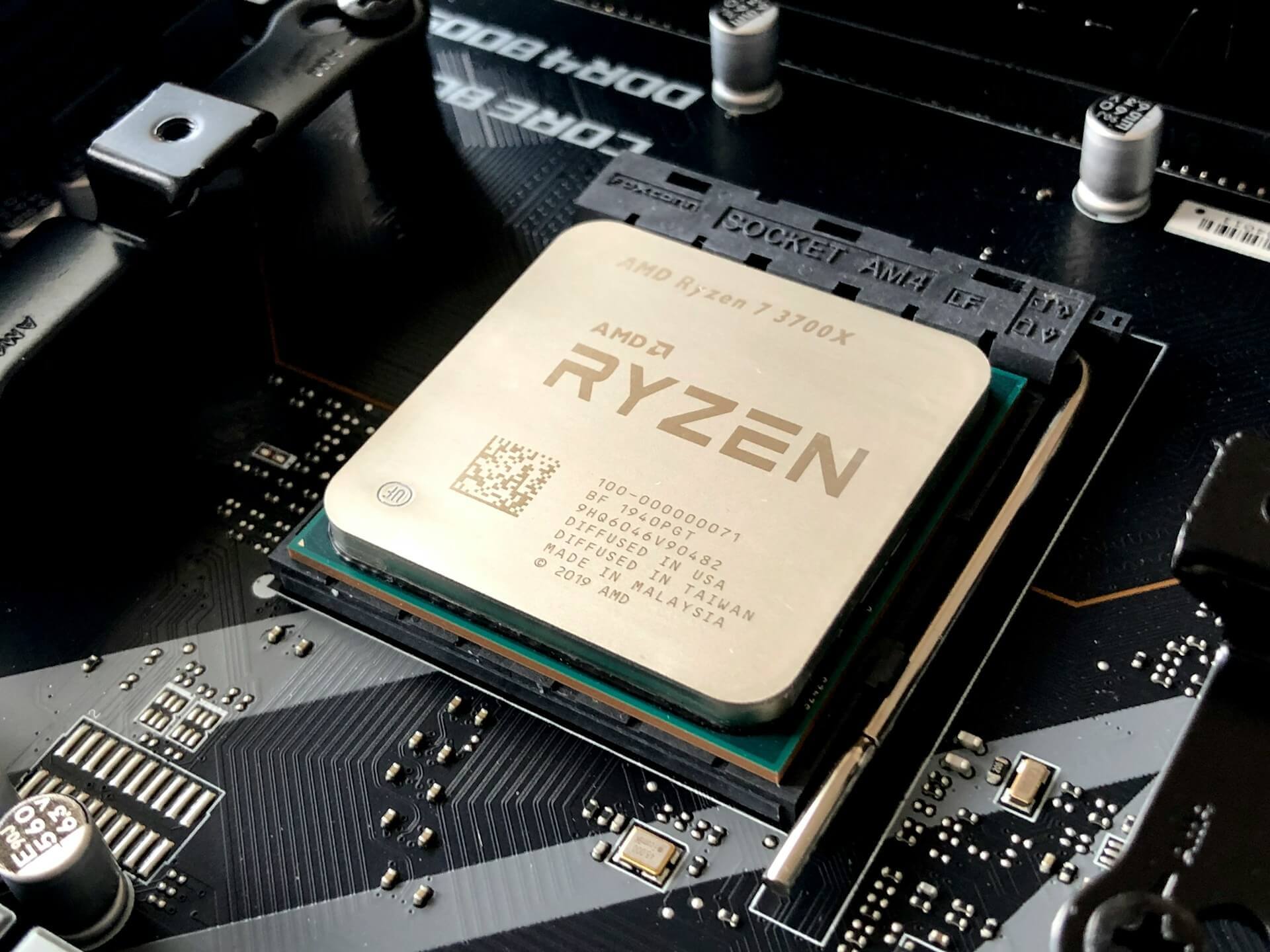

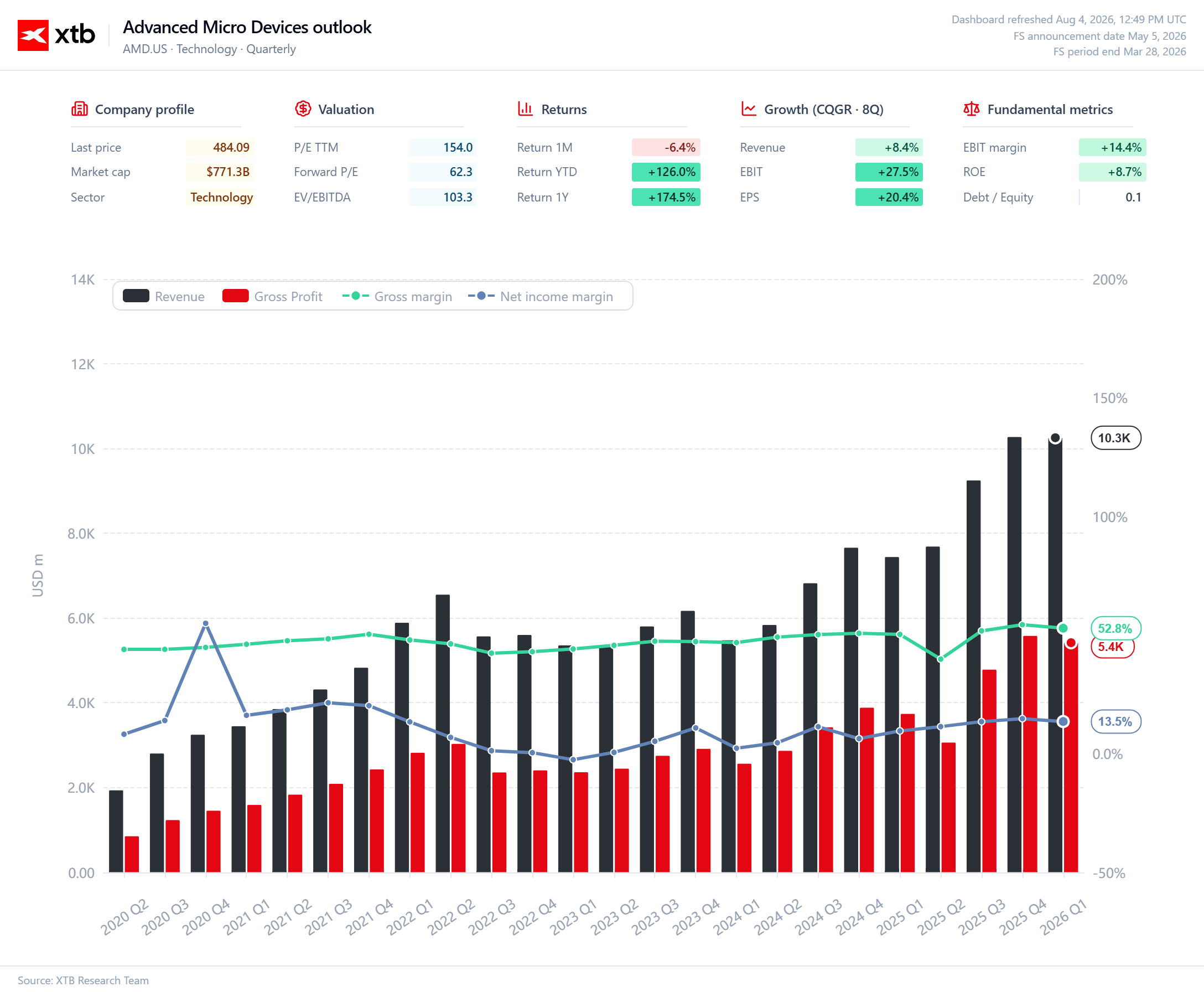
AMD enters its upcoming earnings release from a very different position than it occupied just a dozen or so months ago. The company has become one of the biggest beneficiaries of the artificial intelligence boom, and its shares have posted an impressive rally. Since the beginning of the year, AMD’s market capitalization has doubled, while over the past twelve months the stock has significantly outperformed the broader market.
The scale of that rally, however, also shows that investors are no longer buying AMD solely for its current financial performance. To a large extent, the market is already pricing in future AI-related revenue, continued expansion in data centers, and AMD’s growing competitive position against the largest manufacturers of computing chips.
That makes the upcoming report more than a routine summary of the previous quarter. AMD is facing a test of whether the rapid growth of its business is strong enough to justify its ambitious valuation. With expectations running so high, there is virtually no room for a meaningful disappointment. Simply meeting consensus estimates may not be enough, and even a modest earnings beat could be viewed as an insufficient signal if it is not accompanied by stronger prospects for the quarters ahead.
The market will be looking not only for strong numbers but, above all, for evidence that AMD is still accelerating. Key areas will include revenue growth, the performance of the Data Center segment, margin expansion, and guidance for the next quarter. Guidance may ultimately matter more than the second-quarter results themselves, because AMD’s current valuation requires confirmation that the strongest part of its growth story still lies ahead.
Key Financial Expectations
-
Revenue: $11.31 billion
-
Data Center revenue: $6.55 billion
-
Client segment revenue: $3.01 billion
-
Gaming segment revenue: $790.4 million
-
Embedded segment revenue: $959.7 million
-
Adjusted EPS: $1.62
-
Gross margin: 56.1%
-
Operating income: $3.01 billion
-
Operating margin: 26.9%
-
Free cash flow: $1.97 billion
-
Research and development spending: $2.45 billion
Third-Quarter Outlook
-
Expected third-quarter revenue: $12.5 billion
-
Expected adjusted gross margin in the third quarter: 56.2%
Consensus estimates also point to approximately $49.8 billion in revenue for the full year.
Data Center Remains the Most Important Growth Engine
AMD’s Data Center segment is now the company’s most important business. Consensus estimates call for revenue of approximately $6.55 billion, meaning that data centers are expected to account for more than half of AMD’s total sales. According to forecasts, segment revenue could increase by roughly 101% year over year, supported by both EPYC server processors and chips used in AI infrastructure.
The combination of these two businesses could become one of AMD’s most important competitive advantages. The company is not merely a producer of AI graphics processors. It also holds a strong position in the market for central processing units, which remain an essential component of data center infrastructure. As AI deployments continue to scale, demand is increasing not only for graphics processors but also for high-performance CPUs capable of supporting increasingly complex workloads.
The market will therefore assess not only the growth rate of the segment as a whole but also the composition of its revenue. Strong EPYC sales could demonstrate that AMD is benefiting from the AI boom indirectly as well, through rising demand for traditional computing power in data centers.
AI Agents Could Create a New Growth Catalyst for AMD Processors
One of the most interesting elements of AMD’s current growth story is the development of AI agents. Increasingly autonomous systems will not merely generate responses. They are expected to perform multi-step tasks, analyze data, use tools, and make subsequent decisions. These types of workloads could increase demand for both graphics processors and traditional central processing units.
Industry materials have repeatedly highlighted that the development of AI agents is already increasing demand for server processors. In some applications, the balance between CPU and GPU demand is beginning to move closer to parity.
This could be particularly important for AMD. The company has products in both key areas: it develops EPYC server processors as well as graphics chips and AI accelerators. If agentic AI requires an increasing number of CPUs to manage tasks, process data, and support infrastructure, AMD could benefit from the trend more broadly than companies focused primarily on a single type of processor.
For now, however, this remains mainly a potential catalyst for future demand. The market will be looking for early signs that growing interest in AI agents is translating into concrete orders, higher infrastructure utilization, and stronger sales of server processors.
Helios Could Open the Next Phase of AI Growth
The second pillar of the story remains the expansion of AMD’s AI chip business. AMD still trails Nvidia in terms of market scale, but it is attempting to strengthen its position by building more comprehensive solutions for data centers.
Helios is particularly important in this context. It is AMD’s first solution designed at the scale of entire server racks. The system is expected to use next-generation MI450 graphics chips, with shipments scheduled to begin toward the end of the third quarter. Reported customers include OpenAI and Meta, while the company has also announced Helios-related agreements with Microsoft and Anthropic.
This could create a meaningful revenue catalyst in the coming quarters. At the same time, the full scale of the growth may not become visible until the fourth quarter and next year. Investors will therefore listen particularly closely to management’s comments regarding delivery schedules, deployment rates, and the size of the potential market.
For AMD, simply announcing additional partnerships may no longer be enough. At its current valuation, the market will expect concrete information showing when new solutions will begin to make a meaningful contribution to revenue. Any sign of accelerating adoption could be interpreted as confirmation that AMD is gradually building a credible alternative to the dominant suppliers of AI infrastructure.
Margins Must Confirm the Quality of Growth
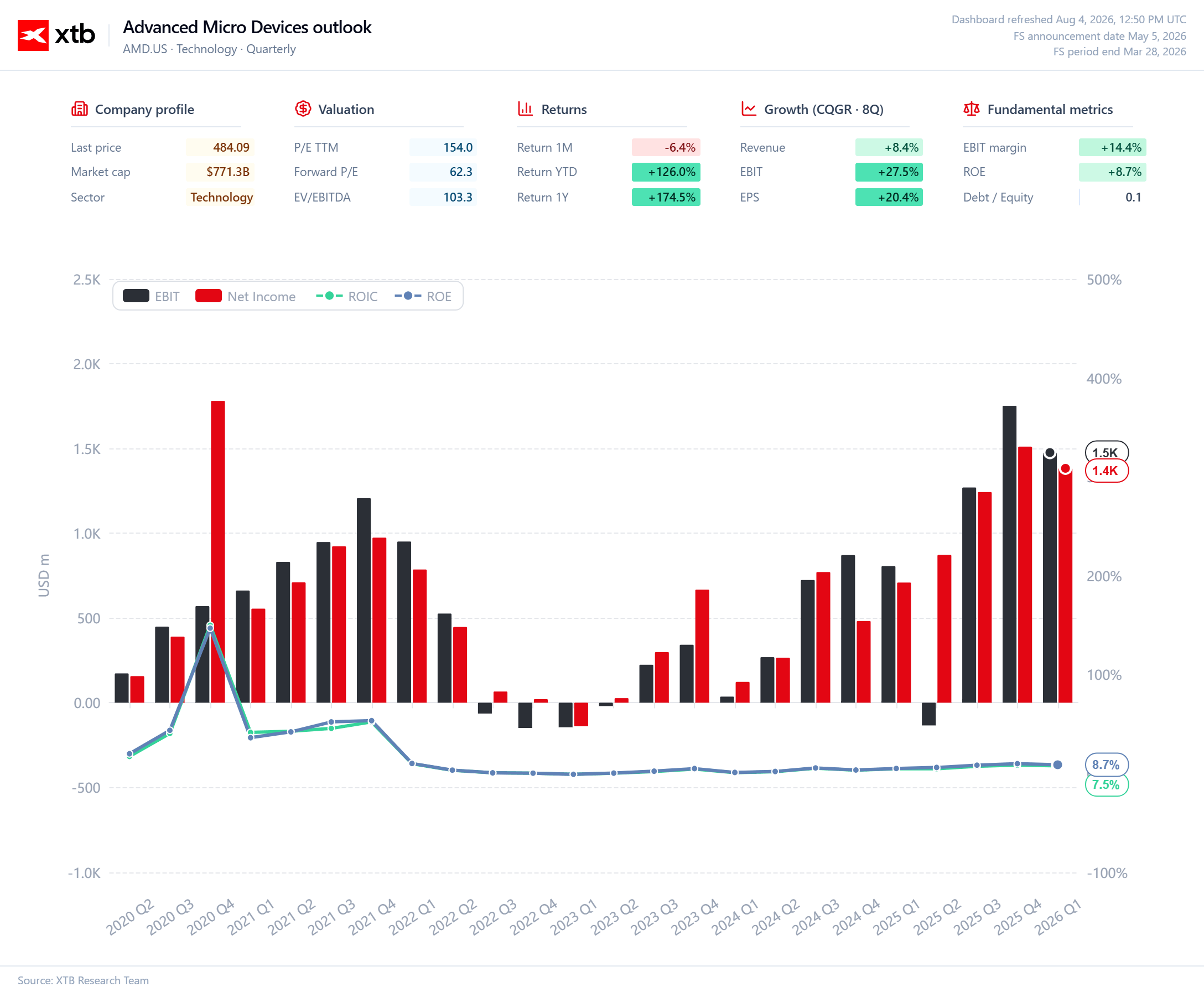
Rapid revenue growth is important, but at AMD’s current valuation, the quality of that growth will be equally significant. Consensus estimates call for an adjusted gross margin of 56.1% and an adjusted operating margin of 26.9%. In the third quarter, gross margin is expected to increase only slightly, to approximately 56.2%.
The market will therefore assess whether the expansion of the Data Center segment and rising sales of AI products are translating into further improvements in profitability. A higher share of more advanced processors and complete systems could support margins, but AMD is also making substantial investments in research and development to maintain the pace of technological innovation.
Expected R&D spending stands at approximately $2.45 billion. This shows that the company continues to invest heavily in future generations of processors, accelerators, and data center solutions. High spending may be acceptable if it leads to faster revenue growth and stronger margins. However, if sales continue to rise without a clear improvement in profitability, investors may begin to question whether AMD’s valuation has moved ahead of its fundamentals.
Guidance May Matter More Than the Earnings Results
AMD may report very strong second-quarter results, but given current expectations, its outlook for the coming months could prove more important. Consensus estimates call for approximately $12.5 billion in third-quarter revenue and the continued maintenance of a high gross margin.
This is where the company faces its greatest challenge. The market may not react enthusiastically to simply meeting expectations. To support its high valuation, AMD may need to raise expectations meaningfully or provide very strong commentary on the continued expansion of its Data Center and AI businesses.
Investors will focus primarily on several questions:
-
Is demand for EPYC processors still growing rapidly?
-
Is revenue from AI infrastructure increasing faster than expected?
-
How quickly will Helios begin to affect financial results?
-
Can new deployments increase revenue as early as the second half of the year?
-
Will margins continue to improve as the sales mix changes?
-
Will management raise its outlook for the next quarter or the full year?
At the current valuation, even a good report may not be enough. The market will be looking for evidence that growth is still accelerating rather than merely remaining at a high level.
Risks Remain Elevated
The biggest risk is the high bar set by the market itself. After such a strong rally in AMD shares, the stock may be particularly vulnerable to profit-taking if the earnings report fails to deliver a clearly positive surprise. The more ambitious the valuation, the lower the market’s tolerance for weaker revenue growth, pressure on margins, or more cautious guidance.
AMD also continues to compete with Nvidia in the AI processor market. Even with rapid growth, the company must demonstrate that it can win additional deployments and build sufficient scale to narrow the gap with the market leader.
The personal computer market remains another challenge, while memory chip shortages could limit the growth rate of the Client segment. Weaker performance in the Client business would not necessarily undermine AMD’s broader growth story, but it could constrain the pace of expansion across the company as a whole.
AMD Is Being Tested Against Its Own Valuation
AMD is currently at one of the most important points in its history. The company has two powerful growth engines: its expanding server processor business and its growing AI infrastructure portfolio. Demand for EPYC chips remains strong, while the development of AI agents could increase the importance of central processing units in the years ahead. At the same time, Helios and the MI450 chips could open a new stage in the development of AMD’s accelerator business.
The problem is that the market has already incorporated much of this scenario into AMD’s valuation. After the company’s market capitalization doubled since the beginning of the year, AMD is no longer a company that can simply deliver solid results and expect the market to be satisfied. Investors will be looking for a clear beat, expanding margins, and stronger guidance for the quarters ahead.
The bullish scenario would include strong Data Center results, continued acceleration in EPYC processor sales, rising AI-related revenue, and an increase in guidance. In that case, the market could conclude that AMD’s current valuation still does not fully reflect the company’s long-term potential.
The neutral scenario would involve results in line with consensus, sustained high growth, and confirmation of existing plans. Such a report would demonstrate that the company’s fundamentals remain strong, but given the elevated expectations, it might not be enough to drive another major increase in the share price.
The bearish scenario would involve weaker Data Center performance, pressure on margins, or guidance that fails to confirm further acceleration. In that case, the market could conclude that the best-case scenario has already been priced in and that AMD’s current valuation has moved ahead of the growth of its underlying business.
Key Takeaways
-
AMD enters its earnings release as one of the most important companies benefiting from the growth of artificial intelligence. However, the sharp increase in its share price has also pushed expectations to very high levels, meaning that the market may demand much more than a routine beat of consensus estimates.
-
Data Center remains the most important area. Rising demand for EPYC processors and the expansion of the AI business could confirm that AMD has two powerful sources of growth. The potential of AI agents further strengthens the appeal of a business model in which the company offers both central processing units and graphics processors.
-
However, the second-quarter results will not be the only factor that matters. The market’s ultimate reaction may depend primarily on guidance, management’s comments regarding Helios, the outlook for AI-related revenue, and continued margin expansion.
-
AMD is no longer being tested on whether it can grow. The company must demonstrate that its growth is fast, profitable, and sustainable enough to justify a valuation that already assumes a highly ambitious future.
-
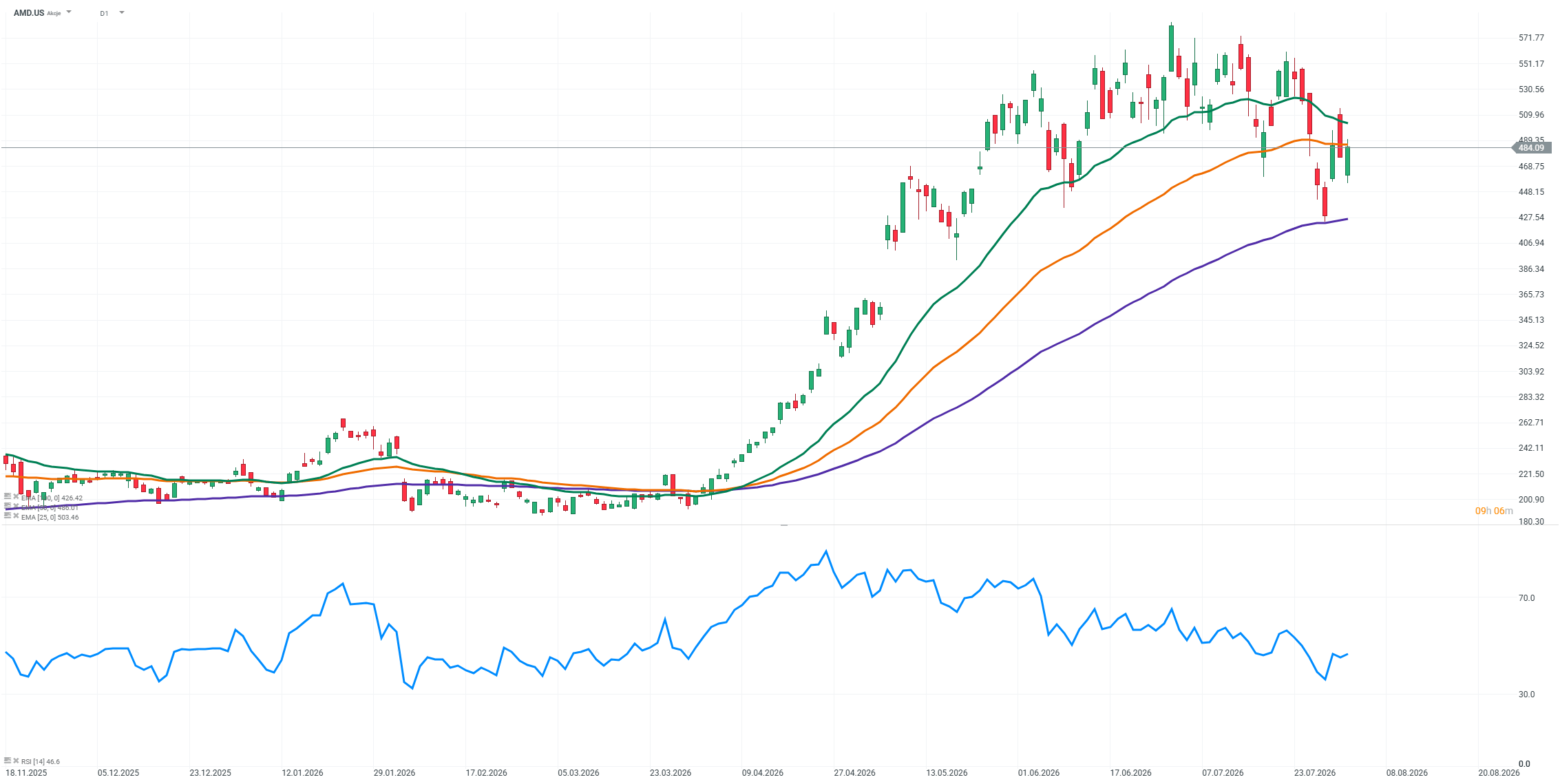
Source: xStation5


🚩 Caterpillar shares extend decline, down 30% from record high


Webull shares down 20% amid fears over potential China ties



US Open: Wall Street in the Red 🚩 Nasdaq Falls 1% From Record Highs, Constellation Brands Back at March 2020 Level



Market Wrap: Oil rises again, French fiscal concerns weigh on euro (07.10.2026)
This content has been created by XTB S.A. This service is provided by XTB S.A., with its registered office in Warsaw, at Prosta 67, 00-838 Warsaw, Poland, entered in the register of entrepreneurs of the National Court Register (Krajowy Rejestr Sądowy) conducted by District Court for the Capital City of Warsaw, XII Commercial Division of the National Court Register under KRS number 0000217580, REGON number 015803782 and Tax Identification Number (NIP) 527-24-43-955, with the fully paid up share capital in the amount of PLN 5.869.181,75. XTB S.A. conducts brokerage activities on the basis of the license granted by Polish Securities and Exchange Commission on 8th November 2005 No. DDM-M-4021-57-1/2005 and is supervised by Polish Supervision Authority.