

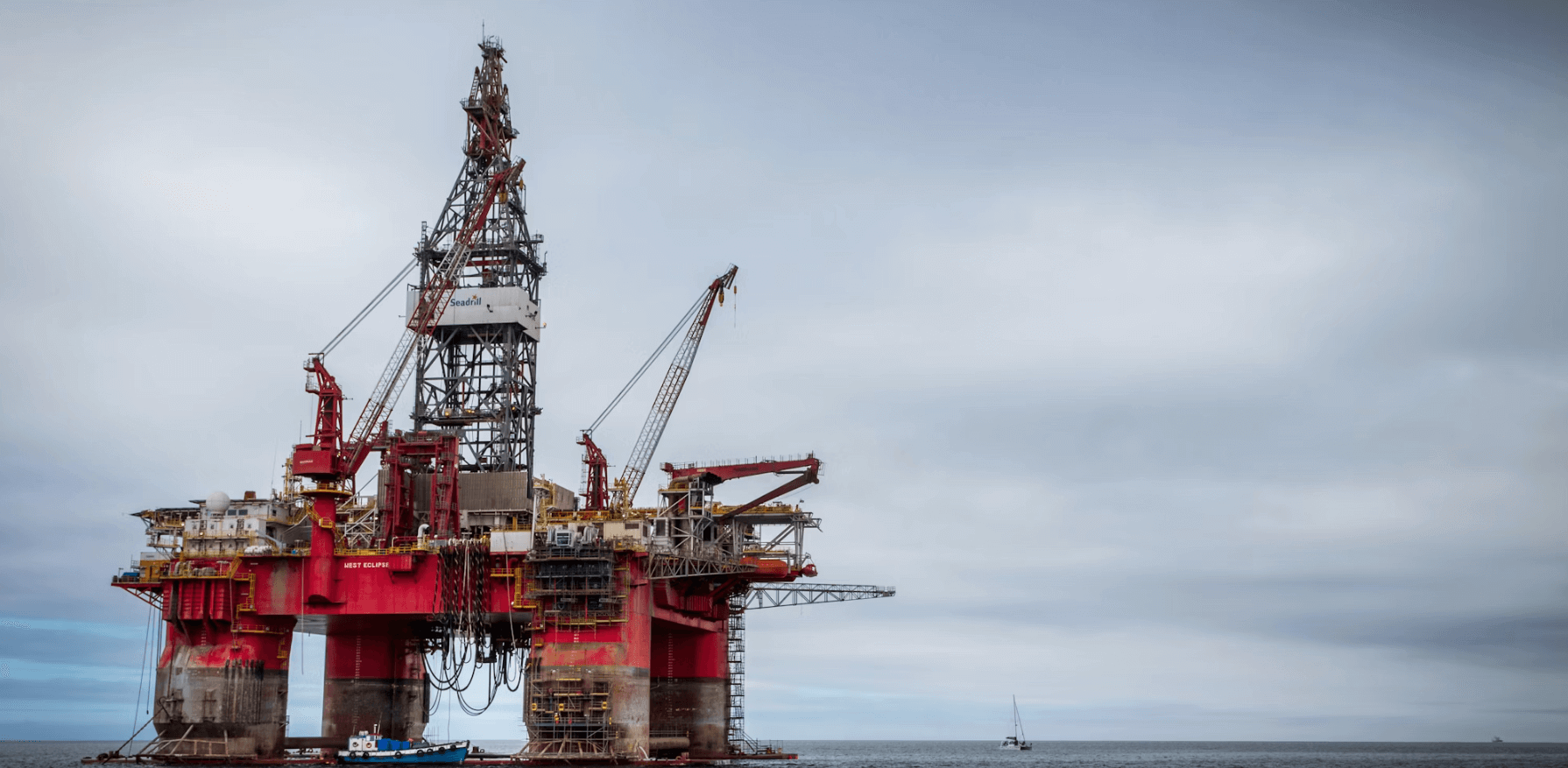

Following yesterday's price rebound in the energy market, today we are seeing a return to declines amid hopes of achieving peace in Iran. At the beginning of today's session, investors reacted optimistically to reports of a possible diplomatic breakthrough between Washington and Tehran. However, despite the clear improvement in market sentiment, the physical situation in the strategic Strait of Hormuz remains virtually unchanged. Ship traffic is still drastically restricted, and regular military clashes continue to occur in the region.
Sharp Declines in Crude Oil Prices
Reports of a potential peace agreement have led to a sharp sell-off on fuel exchanges. What does this look like in terms of statistics?
The price of Brent crude dropped momentarily below the $92 per barrel level, the lowest in a month, but later prices returned to $94 per barrel. On a weekly basis, prices are losing over 6%, while since the beginning of the month, it is a decline of up to 15%.
The US benchmark, i.e., WTI crude for July delivery, recorded an even deeper decline, at one point exceeding 5%. Currently, the reduction is limited to 3.5%, and the price is returning slightly above $90 per barrel.
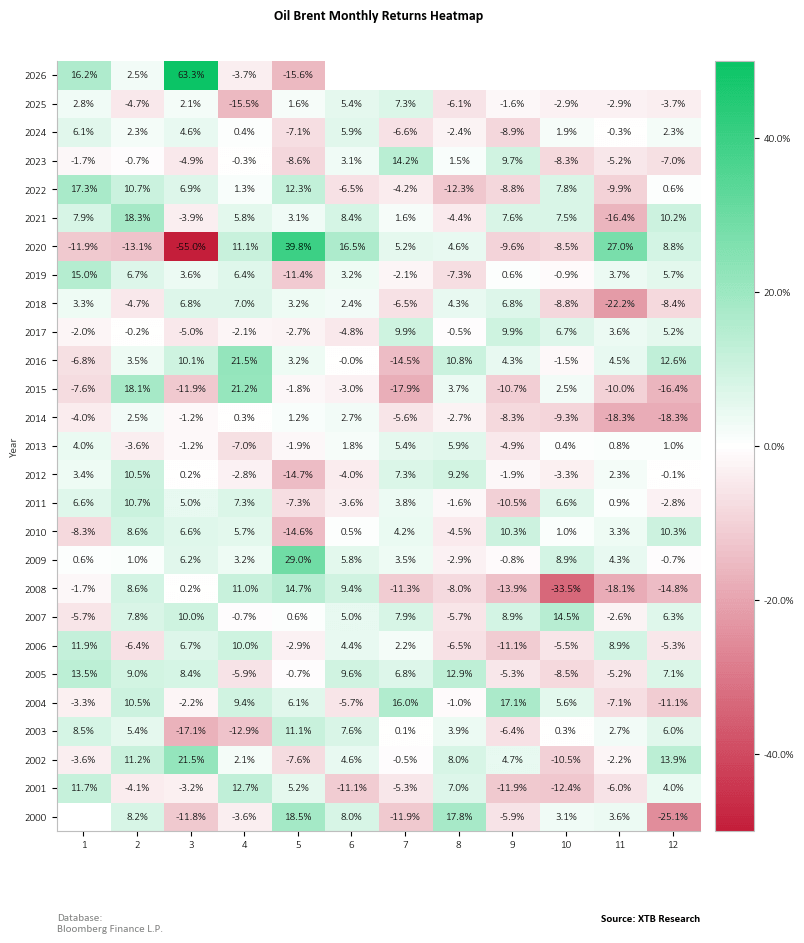 Oil could experience its largest pullback since April 2025. Source: Bloomberg Finance LP, XTB
Draft Agreement Sparks Optimism
The source of today's price drop was reports from Iranian state television, which announced it had obtained an unofficial draft of an interim peace agreement between the US and Iran. According to the provisions of this document, commercial traffic and the flow of ships through the Strait of Hormuz would return to normal within a month of the deal being finalized. The draft provides, among other things, that US forces will lift the naval blockade imposed on Iranian ports and withdraw their navy from the waters surrounding Iran. Lifting the blockades could lead to a sudden influx of a large number of barrels into the global fuel market.
However, it should be remembered that the agreement has not yet been concluded, and US Secretary of State Marco Rubio warned that hammering out a final agreement could take at least a few days. Moreover, in the last dozen or so weeks, there have been at least a few such statements, so it cannot be ruled out that the current movements are merely a correction before another upward wave in a sideways trend that has been ongoing since March 8/9.
It is worth emphasizing that the main points of contention include Iran's demand for the immediate unfreezing of half of the $24 billion in frozen assets and Tehran's reluctance to ensure completely free navigation without charging fees for navigation services. Iran itself reported that it has recently allowed several dozen ships to pass. Information also emerged about the departure of two supertankers. On the other hand, this is only a drop in the ocean of the global oil market's needs.
It is worth highlighting that the departure of these tankers marked the first time in a week that 4 million barrels of unsanctioned crude were transported through the strait, although total Tuesday traffic concluded at just 5 units traveling in both directions. Energy market analysts emphasize that this temporary increase could be quickly offset by a complete absence of vessels in the following days, as ships leave this area exclusively in organized groups. Furthermore, tracking traffic is hampered by widespread interference with AIS signals and the fact that Iran-linked vessels routinely turn off their transponders to avoid detection.
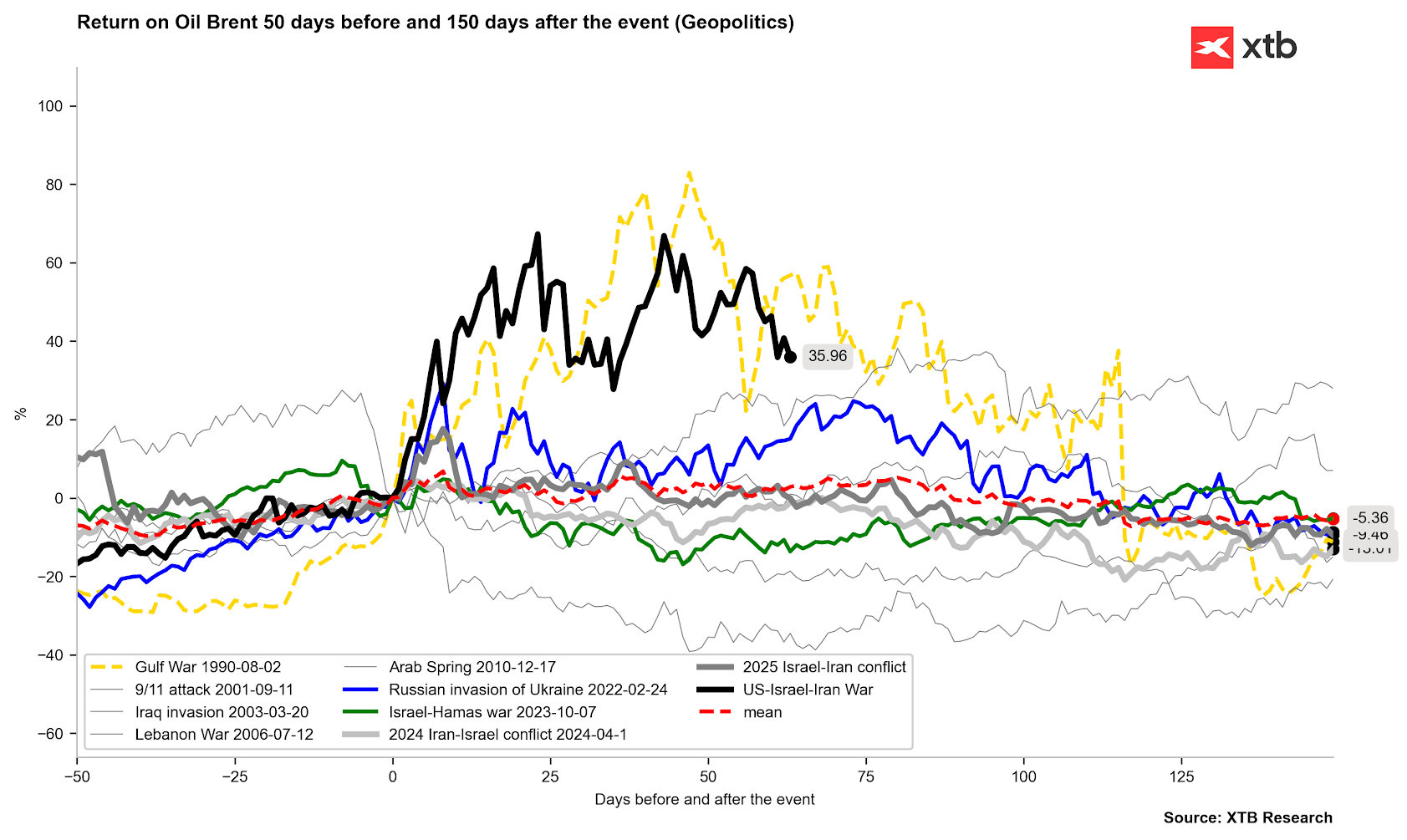 Oil is already in a downward trend, which is also suggested by the history of tensions in the oil market from 1990 and 2022. On the other hand, the same history shows that the road to pre-conflict levels can be very bumpy, and the current crisis in the crude oil market is the largest in history. Source: Bloomberg Finance LP, XTB
Technical Look
Technically, we are dealing with an important situation in the Brent crude market. First, we are clearly below the 50-day moving average for several days in a row, which could be an important signal. The SMA 50 is also hitting an inflection point, similar to what occurred in July 2022.
On the other hand, the 100-period average is still rising and remains below the current oil level. It also appears that market stabilization after achieving peace will require maintaining prices at least in the $80–$85 per barrel range, whereas in 2022 they ultimately fell even below $80.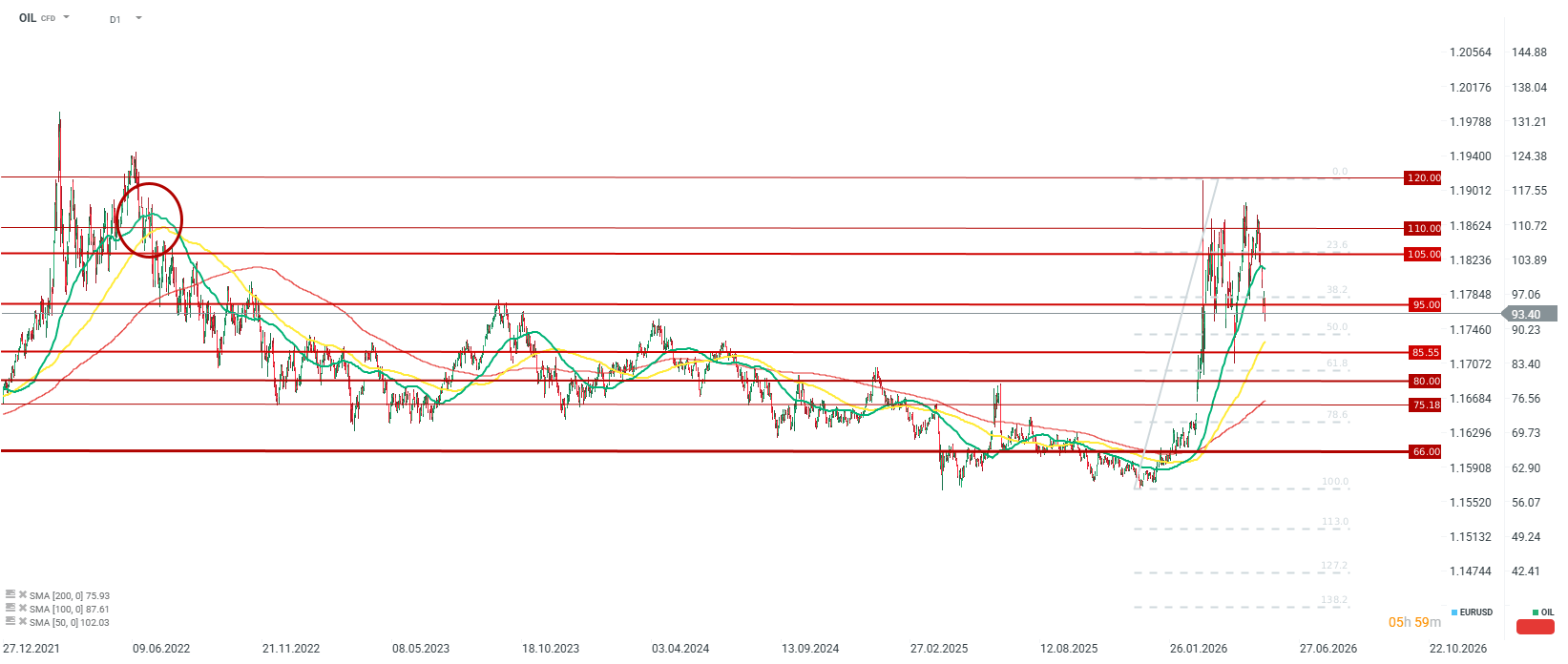


Daily Summary: Oil at five-month highs, indices under pressure (23.10.2026)


BREAKING: France slows down, Germany holds on. Euro falls below 1.12



Daily Summary: Valuations Under Pressure, Capital Moves Away From Technology

Market Wrap: "Decent" results are not enough – tech stocks fall further; oil highest since May (22.10.2026)
This content has been created by XTB S.A. This service is provided by XTB S.A., with its registered office in Warsaw, at Prosta 67, 00-838 Warsaw, Poland, entered in the register of entrepreneurs of the National Court Register (Krajowy Rejestr Sądowy) conducted by District Court for the Capital City of Warsaw, XII Commercial Division of the National Court Register under KRS number 0000217580, REGON number 015803782 and Tax Identification Number (NIP) 527-24-43-955, with the fully paid up share capital in the amount of PLN 5.869.181,75. XTB S.A. conducts brokerage activities on the basis of the license granted by Polish Securities and Exchange Commission on 8th November 2005 No. DDM-M-4021-57-1/2005 and is supervised by Polish Supervision Authority.