



Around lunchtime today, Andy Burnham will officially become Prime Minister. His inbox is already bulging, and the public and press are eager to prise apart his agenda, and his top picks for his cabinet. As Burnham steps into the role as PM, his agenda will come face to face with reality. The oil price is rising and another flare of tensions between the US and Iran are threatening to worsen the UK’s cost-of-living crisis that Burnham is keen to alleviate. Latest polls suggest that he has lost the support of southern voters and he will also face questions of legitimacy, especially if he breaks Labour’s 2024 manifesto pledges.
This could make it hard for Burham to deliver ‘the most significant change to politics in 40 years’, erasing both New Labour’s legacy and the legacy of Margaret Thatcher. However, before Burnham rolls back the decades, the new PM will come up against hard facts about the UK economy, including the latest public sector finance data, CPI, labour market data and retail sales.
This week’s data will highlight the state of the economy that Burnham has inherited from Rachel Reeves and Keir Starmer. While Reeves has been keen to tell the world that she left the economy in a better state than she found it, Burnham and his yet to be announced chancellor might beg to differ. The key details from this week’s data releases include:
- On Tuesday, the unemployment rate is expected to rise to 5%, which is further evidence that job growth in the UK has been hindered by Reeves’ s £25bn hike in employers national insurance.
- On Tuesday we will also get the latest public sector borrowing data, and analysts expect a continued rise in monthly public net sector borrowing. This would follow May’s much higher-than-expected borrowing rate. Surging welfare payments and elevated Gilt yields, mean that the UK is likely to continue to be mired in high debt levels for years to come.
- On Wednesday, the CPI data is expected to show an encouraging moderation in the headline and core CPI rate. However, Burnham won’t be able to bask in the glory for long, as price growth is still above the BOE’s target rate, and financial markets continue to price in one rate hike from the BOE this year. Rising tensions in the Middle East are putting more pressure on the oil price, which could feed through to higher core prices later this year. Added to this, rising interest rates in the UK will only make the cost of living harder for people, especially those with mortgages and other borrowings.
- On Friday, retail sales and the latest PMI readings could show a subdued UK consumer and a depressed service sector, which does not bode well for growth in the second half of this year.
Overall, this week’s data could show a worrying economic backdrop. When Burnham announces his plans for PM and his latest ‘manifesto within a manifesto’, he has promised to stick by Labour’s 2024 election pledges, there won’t be much wiggle room. Burnham has committed to sticking to the UK’s fiscal rules, which erases the possibility of a borrowing binge. He has said that he will stick to Starmer’s pledge not to hike VAT and income tax rates, and he has ruled out getting rid of the pension triple lock.
Burnham controls UK’s international reputation
Burnham must tread carefully and be mindful that he is not only a prime minister of the north, he also controls the UK’s international reputation. The IMF and the OECD have both made extremely granular recommendations to Burnham to get the UK’s public sector finances back in shape. The IMF warned the new PM not to raise taxes as this will weigh on growth, the OECD also recommended that the new PM scraps the pension triple lock, and instead indexes pension growth to wages. This could raise £60bn, much needed funds that could do wonders to the UK’s finances, lower interest rates and make a real difference to the cost of living to many millions of people around the UK. The question is, will his backbenchers let him do such radical action?
He has renewed North Sea oil licenses, much to the delight of President Trump, who posted on Truth Social that it will take the UK out of ‘poverty’. However, the likely next deputy PM has said that no new licenses will be granted.
Chancellor pick is key for financial markets this summer
Much of his economic policy will be shaped by his pick for Chancellor. Right now, it is still up in the air. Shabana Mahmood, the market’s favourite, would help to calm bond markets and restore confidence in the UK. Although she lacks direct financial market experience, it is the structure of the UK economy that needs to change, and she has proved that she can do hard things and push through change by facing up to Labour backbenchers if it is in the country’s interest. If Ed Miliband is chosen as Chancellor, we would expect a bond market sell off later today.
The bond market will judge Andy Burnham
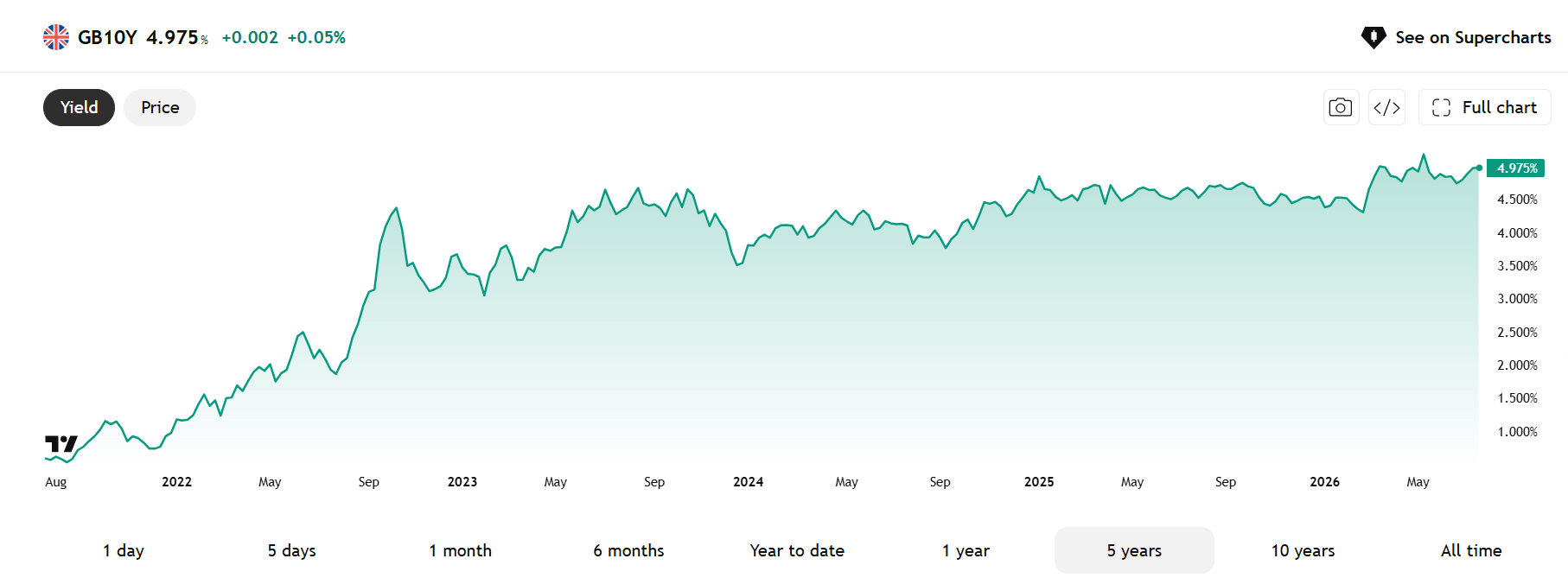
For now, Burnham must face up to facts. The bond market will judge him. The 10-year Gilt yield is hovering close to 5% and has risen by 1% since Labour took office in 2024. This is a tipping point for the UK economy, and he must focus on reversing this rise. A 5% yield weighs on economic growth, depresses investment and increases the government’s debt interest bill. He cannot risk anything that pushes yields up further. Drawing a line under inflation busting public sector pay rises, and welfare spend restraint will be the fastest way for Burnham to ease upward pressure on bond yields in the first months of his premiership.
We should know who Burnham’s chancellor is by this afternoon, Burnham is also expected to lay out his 10-year plan for the UK at Downing Street before 1330. Realistically, he only has 2.5 years as leader in the current parliament, so much of what he says could be meaningless, unless he lays out a timeline for a new election, which we don’t think that he will do. These events will be market-moving, and will be watched closely by investors.
Chart 1: UK 10-year bond yield
Source: XTB



Daily Summary: US100 Hits New Highs on Weak NFP 🚨


Oil down nearly 5% following the announcement that European diesel reserves will be released💡



BREAKING: US NFP data surprises to the downside; USD dips🔥


Market Wrap: Tech stocks stabilize sentiment in Europe 📈 Adidas and Puma resilient despite Nike’s sell-off?
This content has been created by XTB S.A. This service is provided by XTB S.A., with its registered office in Warsaw, at Prosta 67, 00-838 Warsaw, Poland, entered in the register of entrepreneurs of the National Court Register (Krajowy Rejestr Sądowy) conducted by District Court for the Capital City of Warsaw, XII Commercial Division of the National Court Register under KRS number 0000217580, REGON number 015803782 and Tax Identification Number (NIP) 527-24-43-955, with the fully paid up share capital in the amount of PLN 5.869.181,75. XTB S.A. conducts brokerage activities on the basis of the license granted by Polish Securities and Exchange Commission on 8th November 2005 No. DDM-M-4021-57-1/2005 and is supervised by Polish Supervision Authority.