

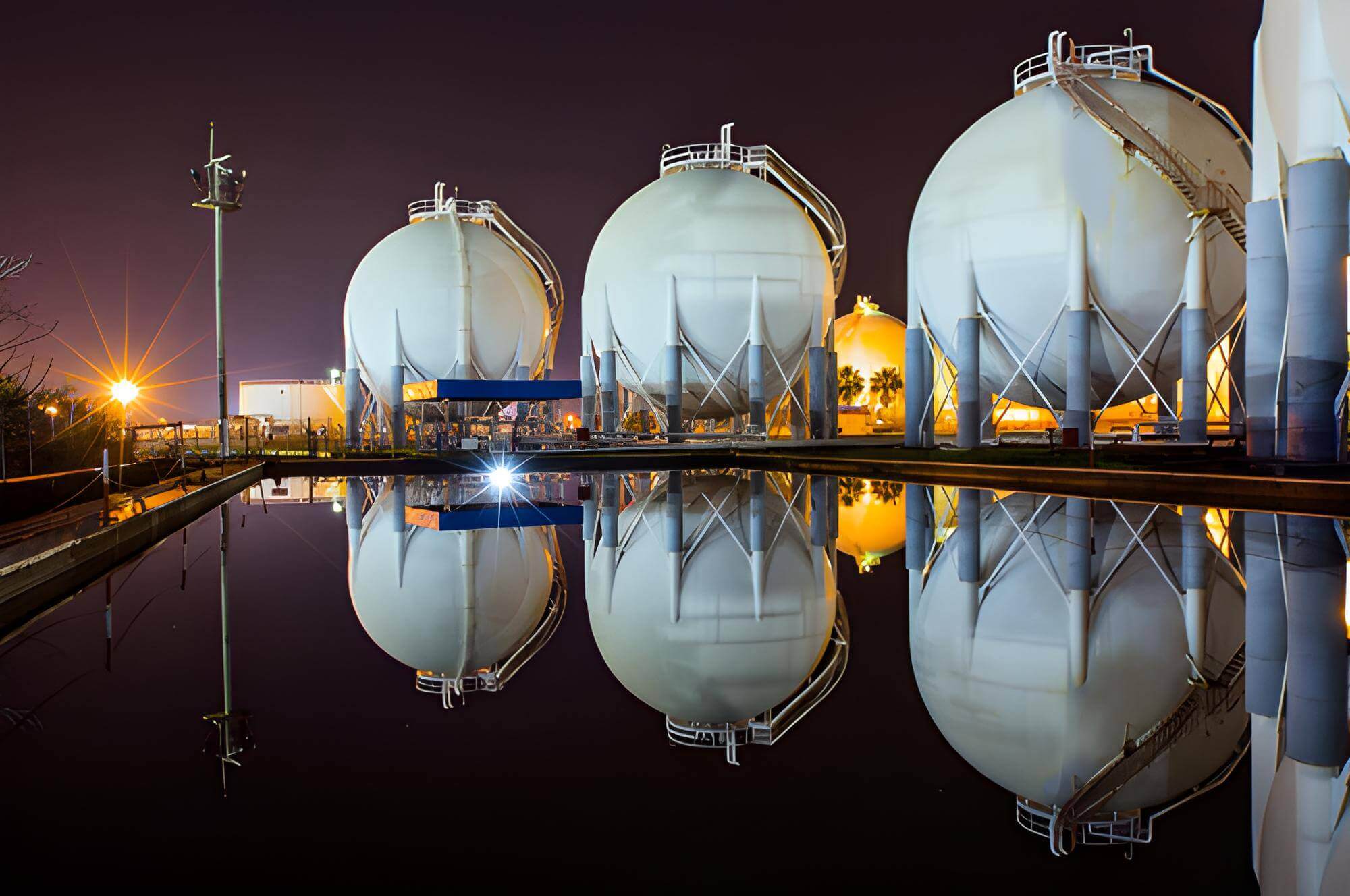

- European gas storage facilities were 61.4% full as of August 17, compared with nearly 74% a year earlier, leaving the region with a noticeably smaller buffer ahead of the heating season.
- In Germany, the situation is even tighter: storage levels stand at just 50.1%, versus around 67% at the same point last year.
- TTF gas futures have climbed to nearly EUR 66/MWh, the highest level in five months, while the more than 20% rise over two weeks shows how quickly the market has started repricing supply risk.
- Tensions around the Strait of Hormuz are increasing concerns over the availability of supplies from the Persian Gulf, while higher oil prices are also lifting the broader energy risk premium in Europe.
- High prices are themselves starting to complicate storage refilling, as some importers delay larger purchases in the hope of lower prices later or possible government support.
TTF futures chart (NATGAS.EU, D1 interval)
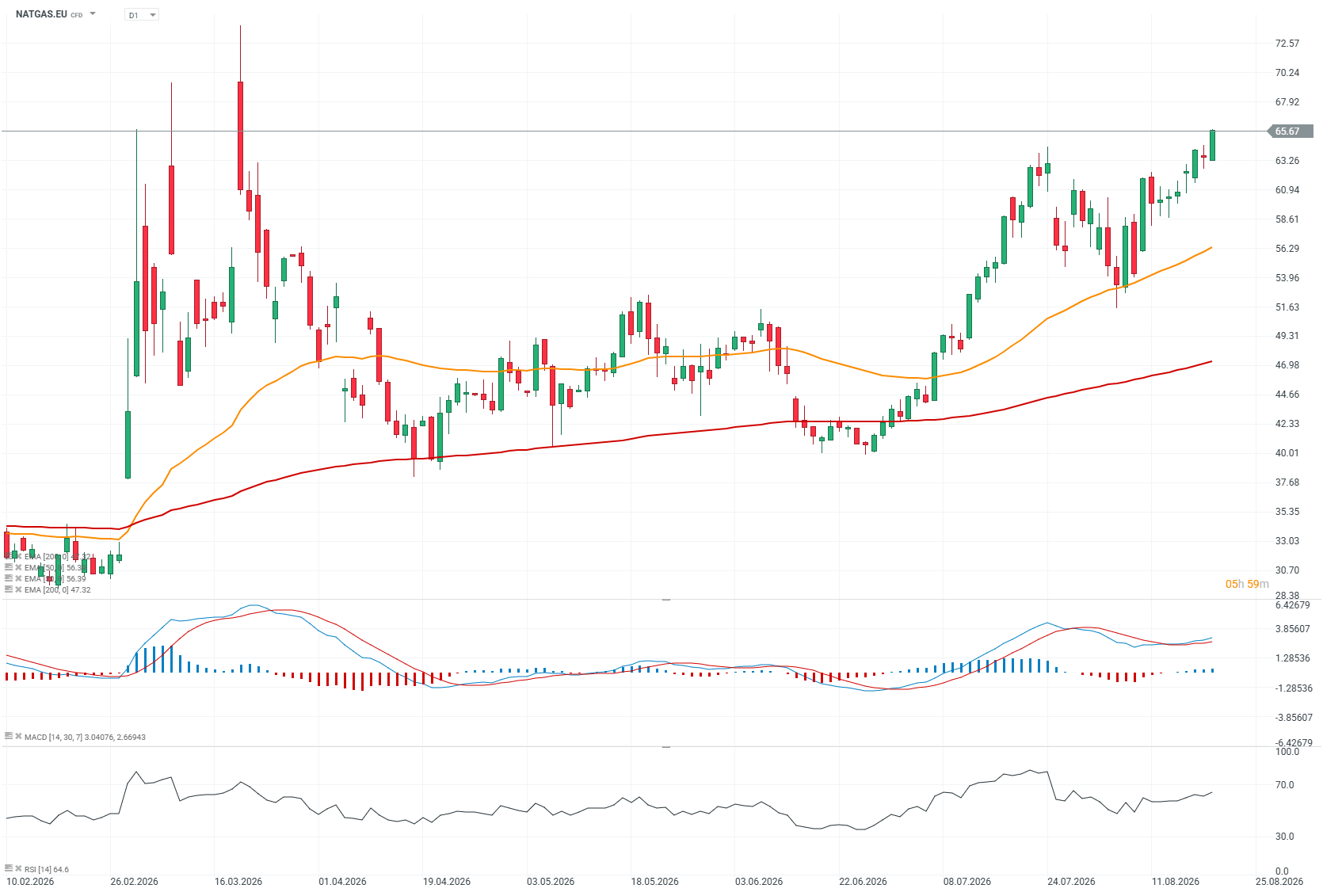
Source: xStation5
The market is paying for autumn risk, not today’s shortage
The key point is that Europe is not currently facing a classic physical gas crisis. Gas is flowing, LNG is arriving and storage facilities are not empty. The problem is that inventories are clearly lower than they were a year ago, while the time available to rebuild them is gradually running out. Futures are therefore starting to price not what is missing today, but how expensive the margin of safety could become in a few weeks. At the same stage last year, storage sites were almost three-quarters full, giving Europe a much larger cushion against colder weather or supply disruptions. Today, every additional LNG shock carries more weight.
Germany is especially important here. With storage only around 50% full, the country is entering the final part of the summer with a much smaller reserve than a year ago, and German demand often sets the tone for the continental balance. If the pace of injections does not accelerate, pressure may spread from the front contracts further along the curve. There is also an uncomfortable feedback loop at work: the higher gas prices rise, the less willing utilities become to buy aggressively for storage. The slower storage fills, the more risk premium the market begins to add.
The real test will come from LNG and storage
The Strait of Hormuz remains the main geopolitical source of tension because disruptions there affect not only oil, but also LNG shipments from the Persian Gulf. Any fresh report of attacks on vessels or shipping restrictions can therefore feed very quickly into TTF prices. With storage levels already lower than last year, the European market simply has less tolerance for this kind of headline risk.
That does not mean Hormuz alone will determine the next move. If LNG flows remain stable and storage injections accelerate in September, part of the current premium could disappear just as quickly as it appeared. The gas market has a long history of sharp moves in both directions, especially when positioning starts to run ahead of the physical data.
Three factors will now matter most for the market: the pace of storage injections, LNG availability and the weather. TTF does not need a full-scale supply disruption to remain elevated. It may be enough for Europe to spend several consecutive weeks buying gas at higher prices while rebuilding inventories more slowly. The latest move is a clear sign that the market no longer trusts a comfortable autumn scenario. If German storage remains around 50–55% over the coming weeks and Middle East risks persist, European gas has a solid basis for retaining a substantial risk premium. If storage catches up quickly, however, TTF could give back part of the recent rally just as sharply.



US Open: Further declines on Wall Street, Brent above 111 USD, AI correction continues (14.10.2026)


Chart of the Day: Is USDJPY running out of road? Inflation forces the BoJ to act, but the Fed could spoil the Yen’s rally



Macro Calendar: Preliminary PMI Readings and Earnings Ahead



Morning Wrap: AI profitability concerns spark market Sell-Off
This content has been created by XTB S.A. This service is provided by XTB S.A., with its registered office in Warsaw, at Prosta 67, 00-838 Warsaw, Poland, entered in the register of entrepreneurs of the National Court Register (Krajowy Rejestr Sądowy) conducted by District Court for the Capital City of Warsaw, XII Commercial Division of the National Court Register under KRS number 0000217580, REGON number 015803782 and Tax Identification Number (NIP) 527-24-43-955, with the fully paid up share capital in the amount of PLN 5.869.181,75. XTB S.A. conducts brokerage activities on the basis of the license granted by Polish Securities and Exchange Commission on 8th November 2005 No. DDM-M-4021-57-1/2005 and is supervised by Polish Supervision Authority.