


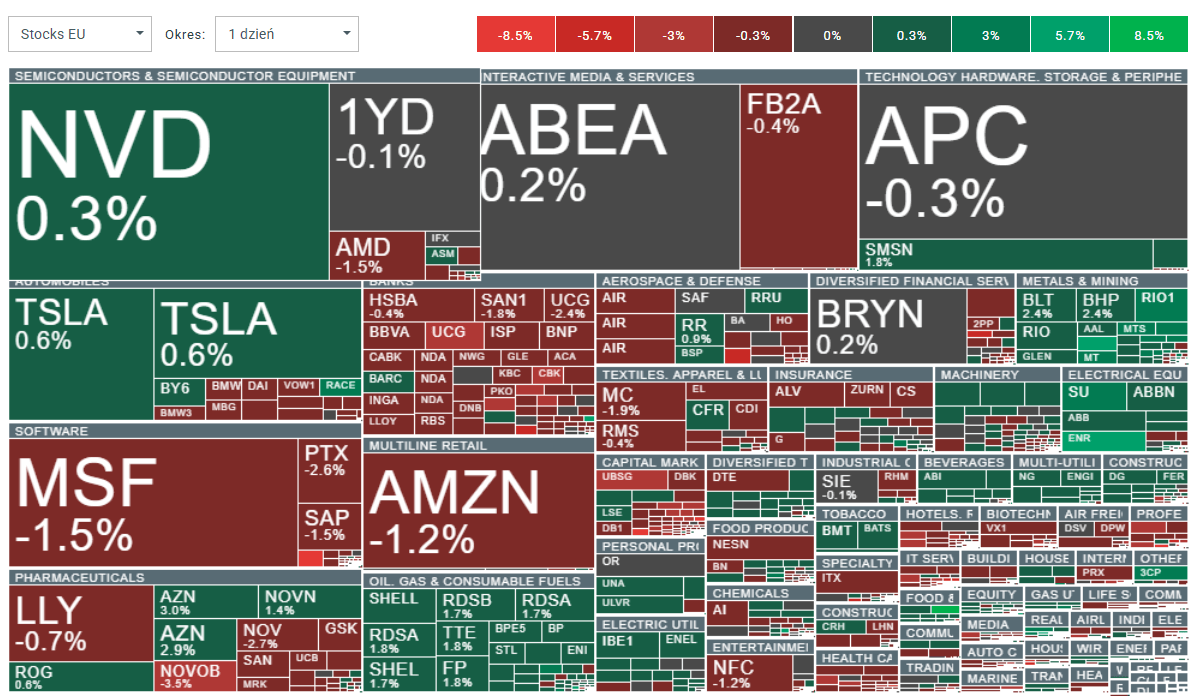
European indices are mostly trading slightly lower today. The Euro Stoxx 50 is down nearly 0.2%, with a similar pullback visible in Germany’s DAX. U.S. index futures are also edging lower. Meanwhile, precious metals are advancing: gold is up more than 1%, trading near $5,100/oz (its highest level since January 30), while silver is gaining around 3%.
Novo Nordisk shares are down more than 3.5%, cooling the recent rebound. Ferrari continues to extend yesterday’s post-earnings gains. Sentiment across the European banking sector remains weak. In contrast, mining and commodity-linked stocks are posting solid gains, extending their longer-term upward momentum.
-
Banks are driving Europe’s earnings season: The financial sector, which accounts for roughly one-third of MSCI Europe’s market capitalization, is posting the highest share of earnings beats (around 74%), with nearly three-quarters of its market cap having already reported. As a result, recent index gains are largely concentrated in banks.
-
Outside financials, the picture is less convincing: Technology is delivering solid upside surprises, but materials and energy are showing weaker beats, while consumer discretionary remains under pressure. For European indices to extend their rally, broader sector participation will likely be needed.
Source: xStation5
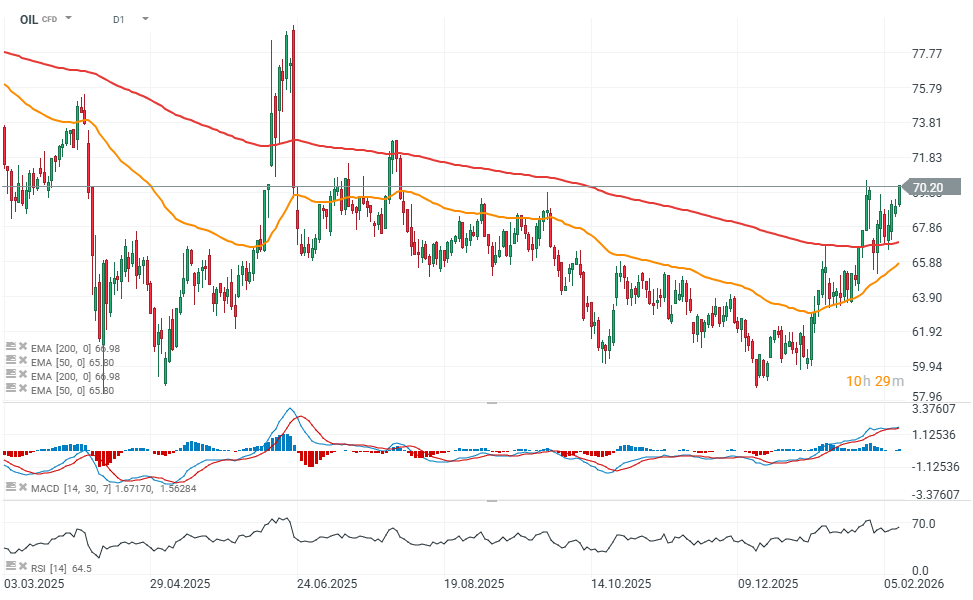
Oil rises on renewed Middle East escalation risk
Oil (OIL) is moving higher following comments from Donald Trump, who threatened to deploy a second aircraft carrier closer to Iran unless Tehran signs an agreement covering ballistic missiles and nuclear weapons. Today, Iran’s foreign ministry rejected any talks on limiting its ballistic capabilities. Markets are reading this as a signal of potential escalation in the Middle East and a higher perceived risk of U.S. military action against Iran.
Source: xStation5
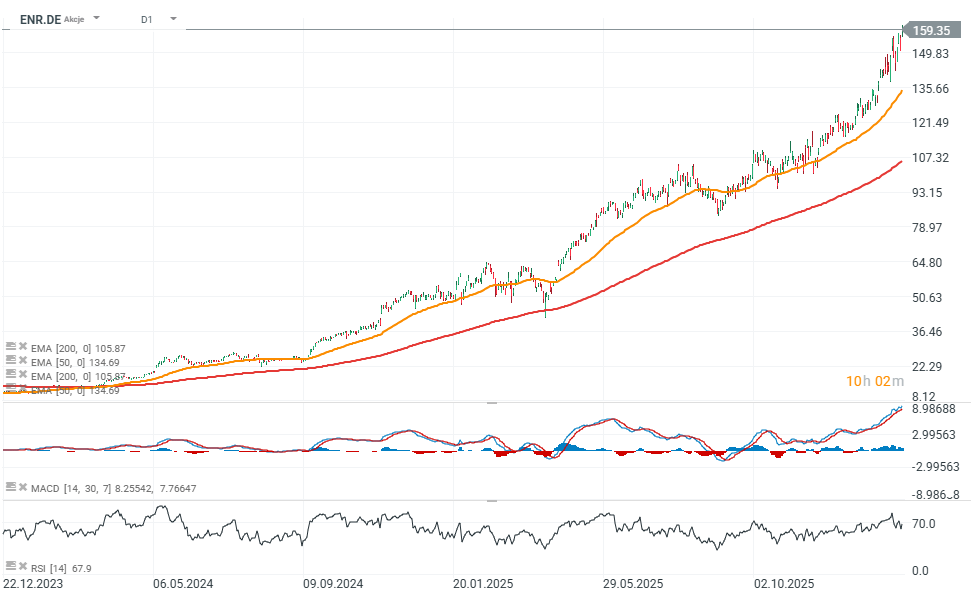
Siemens Energy at record highs
Siemens Energy is illustrating that the boom in power demand and grid infrastructure is translating into real orders — particularly in gas turbines and grid expansion, supported by industrial demand, data centers, and AI-driven electricity consumption.
Key points (per Bloomberg):
-
Group orders rose by more than one-third y/y to €17.6bn in fiscal Q1; the gas turbine business posted a record order intake.
-
Demand is being driven by rising electricity consumption from industry, data centers, and AI applications.
-
The stock is up about 25% since January, making it one of the strongest performers in the DAX this year.
-
Siemens Energy plans to invest $1bn in the U.S. (its largest single market) to expand production capacity for gas turbines and grid products; the U.S. accounted for roughly 40% of gas turbine orders in Q1.
-
Group profit more than doubled to around €1.1bn, supported by improvements in the grid technology business and productivity gains at Siemens Gamesa.
-
Gamesa orders fell 34%, which the company attributed to a tough comparison base a year earlier (including an offshore wind turbine deal worth about €1.4bn).
-
Management reaffirmed its 2026 guidance and still expects Gamesa to break even in the current fiscal year.
Source: xStation5


Three markets to watch next week (23.10.2026)


Daily Summary: Oil at five-month highs, indices under pressure (23.10.2026)

US Open: Further declines on Wall Street, Brent above 111 USD, AI correction continues (14.10.2026)


Macro Calendar: Preliminary PMI Readings and Earnings Ahead
This content has been created by XTB S.A. This service is provided by XTB S.A., with its registered office in Warsaw, at Prosta 67, 00-838 Warsaw, Poland, entered in the register of entrepreneurs of the National Court Register (Krajowy Rejestr Sądowy) conducted by District Court for the Capital City of Warsaw, XII Commercial Division of the National Court Register under KRS number 0000217580, REGON number 015803782 and Tax Identification Number (NIP) 527-24-43-955, with the fully paid up share capital in the amount of PLN 5.869.181,75. XTB S.A. conducts brokerage activities on the basis of the license granted by Polish Securities and Exchange Commission on 8th November 2005 No. DDM-M-4021-57-1/2005 and is supervised by Polish Supervision Authority.