



U.S. authorities are considering introducing limits on the export of advanced AI accelerators, which could significantly affect Nvidia Corporation’s presence in the Chinese market. The proposed limit of 75,000 H200 chips per Chinese customer is considerably lower than the initial expectations of the largest local players, who had requested over 150,000 units. The restrictions would also cover competing products, including AMD MI325, counted toward the same per-customer allocation, further complicating sales strategies and requiring more rigorous management of technology distribution.
In a broader regulatory context, previous approvals for H200 exports to China were already subject to certain restrictions. Export volumes were capped at half of what was sold on the U.S. market, verification by independent laboratories was required, and military applications were prohibited. Current discussions within the administration, however, go further by introducing per-company limits aimed at enabling more precise control over the flow of advanced AI technology and preventing the concentration of computing power in the hands of a few entities. These measures align with the broader strategy of the United States to maintain technological leadership in artificial intelligence amid growing competition from China.
The decision responds to rapidly increasing demand in China, which in many cases exceeds Nvidia’s production capacity, estimated at approximately 700,000 units per month. Implementing export limits will force the company to allocate resources more selectively, prioritize customers, and seek alternative markets where such restrictions do not apply. In the medium and long term, this may also accelerate China’s efforts toward technological self-sufficiency in AI, representing a significant strategic factor for the semiconductor sector as a whole.
For Nvidia, these restrictions primarily pose operational and strategic challenges. The company remains a leader in AI technology, with its products forming the foundation for global solutions in this segment, but adapting to new regulations may require revising expansion plans and short-term revenue forecasts. At the same time, production scale and the potential for growth in other regions and in future generations of chips provide Nvidia with the opportunity to partially offset the impact of limitations on the Chinese market.
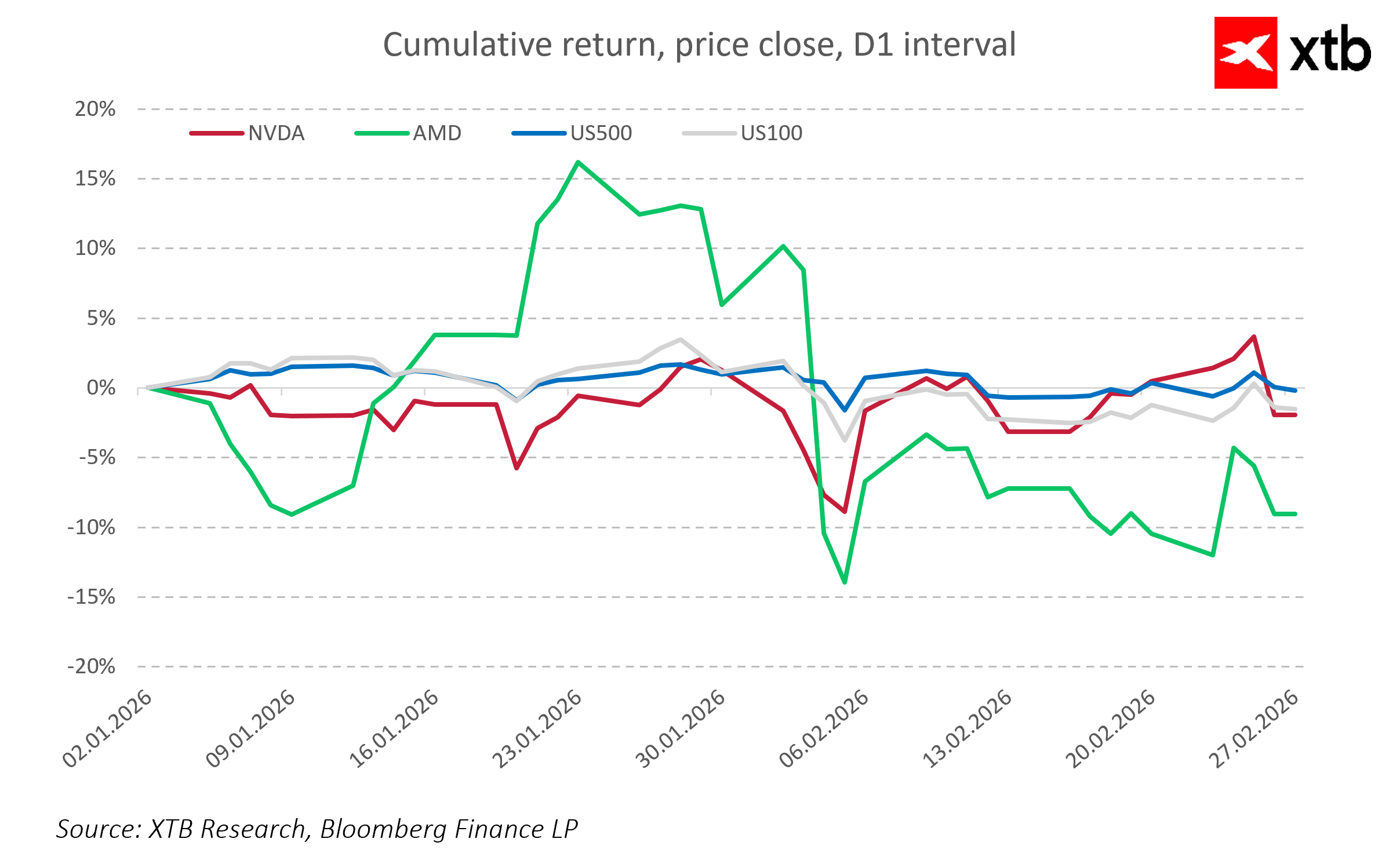
Ultimately, the decision regarding H200 export limits underscores the increasing role of geopolitics in the semiconductor sector and raises the level of uncertainty for investors. At the same time, it does not change Nvidia’s fundamental position as a global leader in AI technology.
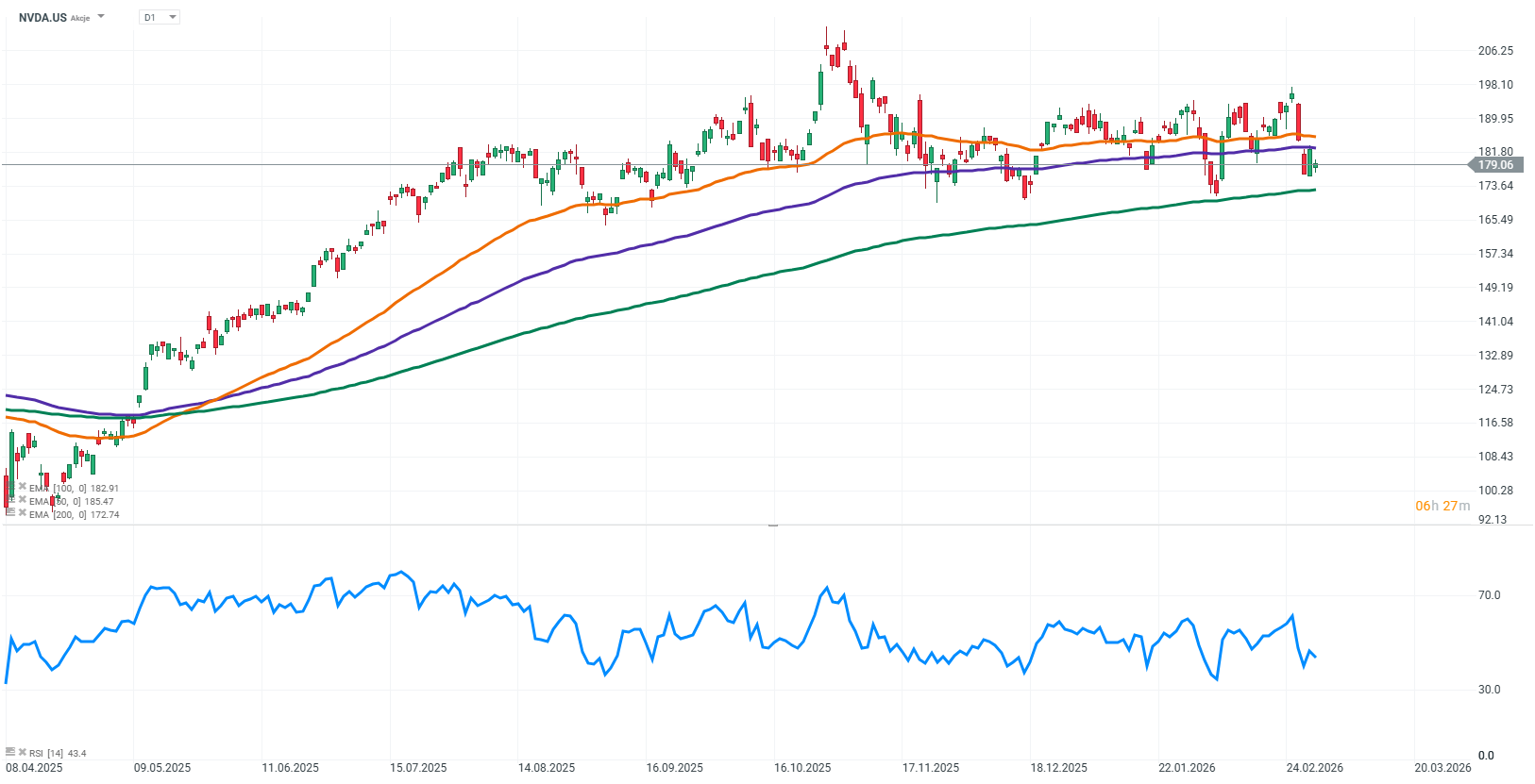
Source: xStation5



Daily Summary: OpenAI Revenue Concerns Weigh on Wall Street



Is Starbucks eyeing Chipotle❓ The market reacts nervously to the FT's reports of a takeover🔥

Stock of the Week: Marvell Technology and the Race for AI Infrastructure’s Most Valuable Resource



Market Wrap: A 4% surge in oil prices weighs on indices (08.10.2026)
This content has been created by XTB S.A. This service is provided by XTB S.A., with its registered office in Warsaw, at Prosta 67, 00-838 Warsaw, Poland, entered in the register of entrepreneurs of the National Court Register (Krajowy Rejestr Sądowy) conducted by District Court for the Capital City of Warsaw, XII Commercial Division of the National Court Register under KRS number 0000217580, REGON number 015803782 and Tax Identification Number (NIP) 527-24-43-955, with the fully paid up share capital in the amount of PLN 5.869.181,75. XTB S.A. conducts brokerage activities on the basis of the license granted by Polish Securities and Exchange Commission on 8th November 2005 No. DDM-M-4021-57-1/2005 and is supervised by Polish Supervision Authority.