


- Iran/ US tensions escalate further
- More global supply chains under threat
- Markets are absorbing geopolitical risks well
- UK corporate sector shows resilience in the face of rising sovereign yields
- A tough 24 hours for Burnham, as cost of living announcement backfires, and 10-year yield remains above 5%
- UK CPI moderates, for now
- Google and Tesla results crucial for the AI trade

- Iran/ US tensions escalate further
- More global supply chains under threat
- Markets are absorbing geopolitical risks well
- UK corporate sector shows resilience in the face of rising sovereign yields
- A tough 24 hours for Burnham, as cost of living announcement backfires, and 10-year yield remains above 5%
- UK CPI moderates, for now
- Google and Tesla results crucial for the AI trade
The major event on Wednesday is the jump in the oil price. Brent crude is higher by 4% and is trading above $94 per barrel, the highest level since early June. The Brent crude oil price is higher by more than 10% this week, which is major blow for global central banks, and new governments that are trying to control the cost-of-living. The issue for the global economy as we move through July, is that high prices will squeeze families’ cash in H2, which will have major economic consequences.
Iran/ US tensions escalate further
The rise in the oil price comes after President Trump played down the prospect of fresh talks with Iran. He also said that he would escalate tensions even further and will hit Iran’s Pickaxe Mountain, which contains an underground nuclear site. Secretary of State Marco Rubio, said earlier today that Iran has not honored the Strait of Hormuz deal, which may have been designed to justify the US hitting Iranian targets for the 11th consecutive day. Rubio justified this by saying the strikes are designed to degrade Iran’s ability to threaten commercial shipping in the Strait of Hormuz. This may undermine the Memorandum of Understanding, since Iran interpreted the original June agreement as giving them control of the Strait, which is the US does not agree with.
More global supply chains under threat
Reports suggest that US allies in the Gulf are getting tired of US strikes on Iran due to their ineffectiveness, however, there is no immediate solution to break the impasse. Should there be a wider war to bring Iran to its knees, or should the two sides commit to fresh peace talks? Markets would likely prefer fresh peace talks, especially now that the crisis is impacting global oil flows beyond the Strait of Hormuz. There are signs that tankers are avoiding or slowing down their approach to Bab El-Mandeb Strait near Yemen, after the Houthis threatened attacks on cargo ships in alliance with Iran. For now the Red Sea remains operational, but global supply chains are increasingly coming under threat as escalations in the conflict heat up. This will keep upward pressure on global supply chains, and inflation risks are ramping up every day this conflict escalates.
Markets are absorbing geopolitical risks well
At this stage the peace deal looks like it is over, even though Marco Rubio said that the US is committed to finding a diplomatic solution to the crisis. For now, there is no clear sign that this is causing panic in financial markets. Although US stock futures are falling on Wednesday, this comes on the back of a stunning rally for US chip stocks on Tuesday, including a 14% rally in memory chip maker SanDisk.
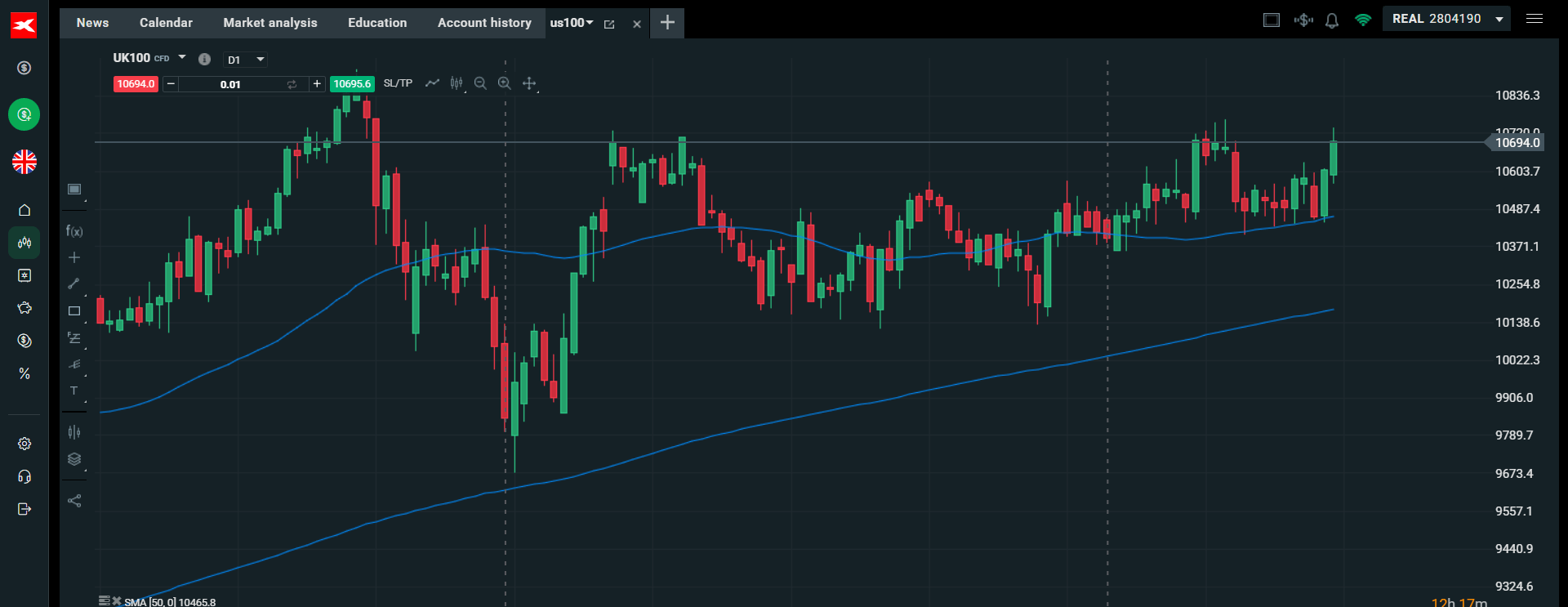
European stock indices are brushing off the rise in the oil price, and are higher today, after a stunning rally for US chip stocks on Tuesday. The FTSE 100 is the top performer in Europe and is higher by 0.7% on Wednesday and is being led higher by miners, oil companies, banks and insurers. For now, the UK index is in a good spot, as its defensive qualities and high number of miners and oil companies benefit from rising geopolitical tensions.
However, there are stresses building in the global financial system. For example, higher yields in advanced economies, especially the UK and Japan, and rising geopolitical tensions. For now, there has been no notable effect on global markets, which have mostly brushed off these concerns. Stock markets are showing stability in the face of sovereign concerns. This is partly because the corporate sector is showing more fiscal discipline and is better at generating cash than sovereigns, which is the benefit of global markets, and supply chains.
UK corporate sector shows resilience in the face of rising sovereign yields
Added to this, UK bond yields have diverged significantly from their German counterparts, but this has barely impacted the FTSE 100 or the more domestically focused FTSE 250. The UK’s corporate sector is showing resilience in the face of political turmoil, and a 5% 10-year Gilt yield.
A tough 24 hours for Burnham, as cost of living announcement backfires, and 10-year yield remains above 5%
It’s been a tough 24 hours for the new PM, who was ridiculed by a former Labour minister about how he would pay for the VAT cut to electricity bills, scheduled for October 1st. However, Wednesday is a new day, and CPI has moderated by more than expected, which is keeping UK yields in check. The 10-year yield is still hovering around 5%. This is an uncomfortable level for the new PM and Chancellor Healey, however, it has been well absorbed by markets so far, and although the pound has fallen in the past week, it is still the second-best performer out of the major FX pairs this morning.
UK CPI moderates, for now
The pound is inching higher after a larger moderation than expected in the UK’s CPI rate. UK CPI for June moderated to a 2.6% annual rate, down from 2.8% in May. Transport, food and non-alcoholic drinks were the largest downward impact on the index last month, while there were gains in the prices of restaurants and hotels and recreation. Overall, gains in prices were contained last month. The risk is that the rise in the oil price will push inflation higher in the coming months, even if the planned VAT cut for electricity prices dampens inflation to the tune of 0.1%.
Google and Tesla results crucial for the AI trade
Overall, markets remain steady in Europe, although the stop-start rally in the US persists. US equity futures are falling today, as the market waits for key economic results including Tesla and Google. The lead up to these results could be choppy, this nis because the AI trade is the most important theme in stock markets right now. Google’s capex plans and signs of whether it can monetise its AI investments will be incredibly important to the future direction of global financial markets.
Chart 1: FTSE 100 defies domestic and international threats
Source: XTB
Stock Market Commentary: Trump Signals a Major Drop in Oil Prices. Will U.S. Stocks Surge?


US Open: Nasdaq tries to recover loses 🗽 Fair Isaac shares in panic


🚩 Oil extends losses

Join Us Live: Market Update
This content has been created by XTB S.A. This service is provided by XTB S.A., with its registered office in Warsaw, at Prosta 67, 00-838 Warsaw, Poland, entered in the register of entrepreneurs of the National Court Register (Krajowy Rejestr Sądowy) conducted by District Court for the Capital City of Warsaw, XII Commercial Division of the National Court Register under KRS number 0000217580, REGON number 015803782 and Tax Identification Number (NIP) 527-24-43-955, with the fully paid up share capital in the amount of PLN 5.869.181,75. XTB S.A. conducts brokerage activities on the basis of the license granted by Polish Securities and Exchange Commission on 8th November 2005 No. DDM-M-4021-57-1/2005 and is supervised by Polish Supervision Authority.