



The cybersecurity industry is complex and changes rapidly. The same can be said about Palo Alto, the sector’s leader. This was reflected in the company’s earnings call on Tuesday.
The results can be considered good, but they are not as good as the raw figures and a superficial analysis might suggest. This indirectly justifies the market’s reaction: despite growth and beating expectations on revenue and earnings, the stock is down about 2% at the open.
Earnings
- The company’s revenue reached USD 3.41bn, up 34% year over year and slightly above expectations of around USD 3.35bn.
- Adjusted EPS came in at USD 1.02 versus consensus of roughly USD 0.98.
- Remaining performance obligations (RPO) increased to USD 21.2bn, about 34% year over year, compared with the company’s guidance of USD 20.9 to 21.0bn.
- FCF margin rose to 38.4% (+40 bps) in the last quarter.
The pace of growth is impressive, but it is not organic and does not fully address investor concerns.
It is worth remembering that Palo Alto currently trades at a P/E around 300, so “good” results are not enough.
What was missing
- The first disappointments appear in the (non-GAAP) operating margin, which fell by 70 bps versus the previous quarter. This is not as bad as more pessimistic observers had suggested, but it signals issues with the pace of monetization of solutions (the platform) and with integrating newly acquired companies.
- GAAP EPS looks much worse. On a GAAP basis, the company posted a total net loss of USD 282m. This looks terrible, but context is necessary. The company recorded USD 487m in stock-based compensation “costs,” USD 281m in amortization losses, and USD 524m related to impairment or changes in the value of financial and debt instruments. The business model remains healthy and promising, but if some of these costs recur, it could prompt difficult questions.
- Palo Alto’s “new” acquisitions, CyberArk and Chronosphere, are a double-edged sword for valuation. Diversification, consolidation, and expansion improve the outlook, but they dilute the core business and pressure profits because acquisitions and integration are costly.
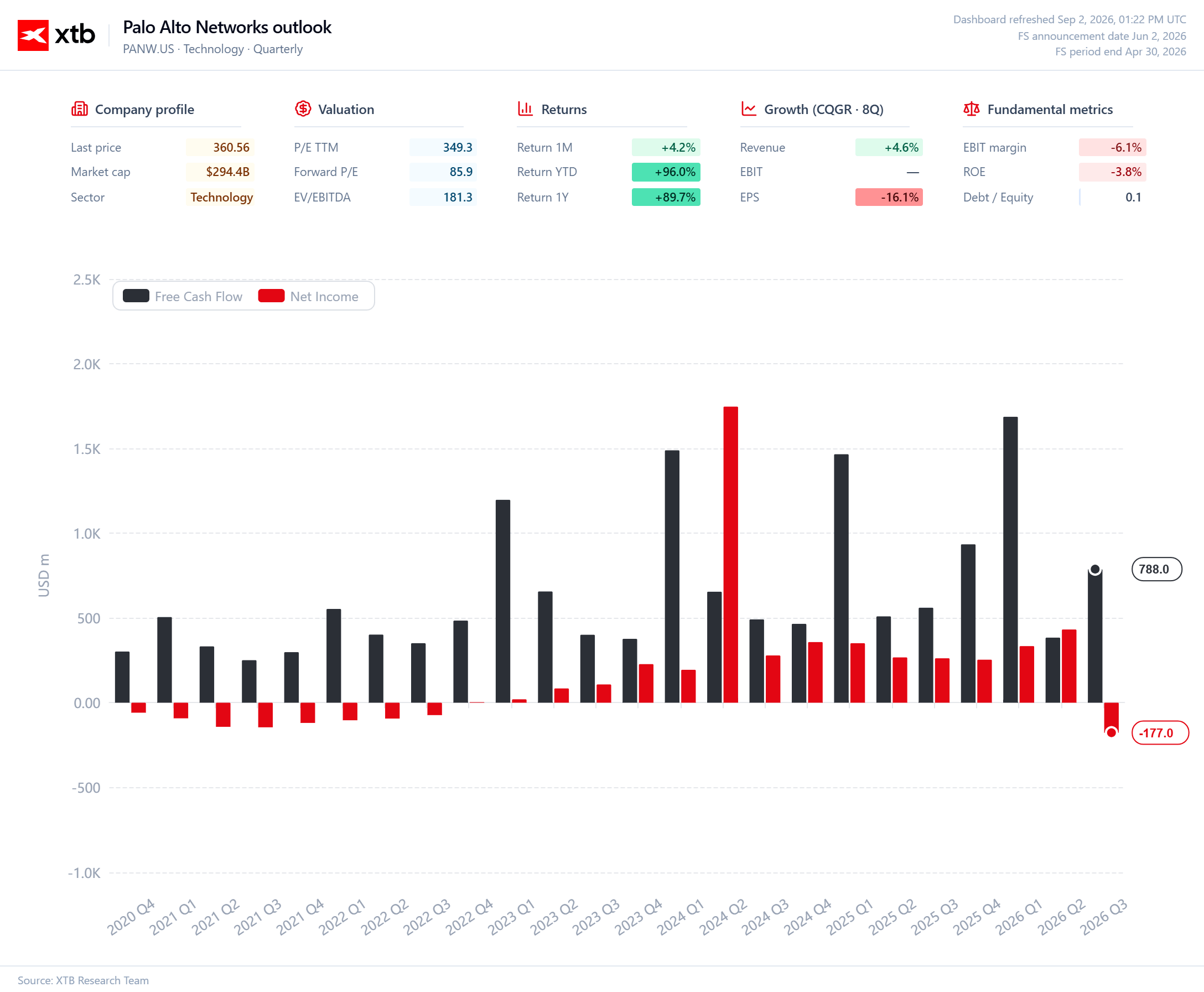
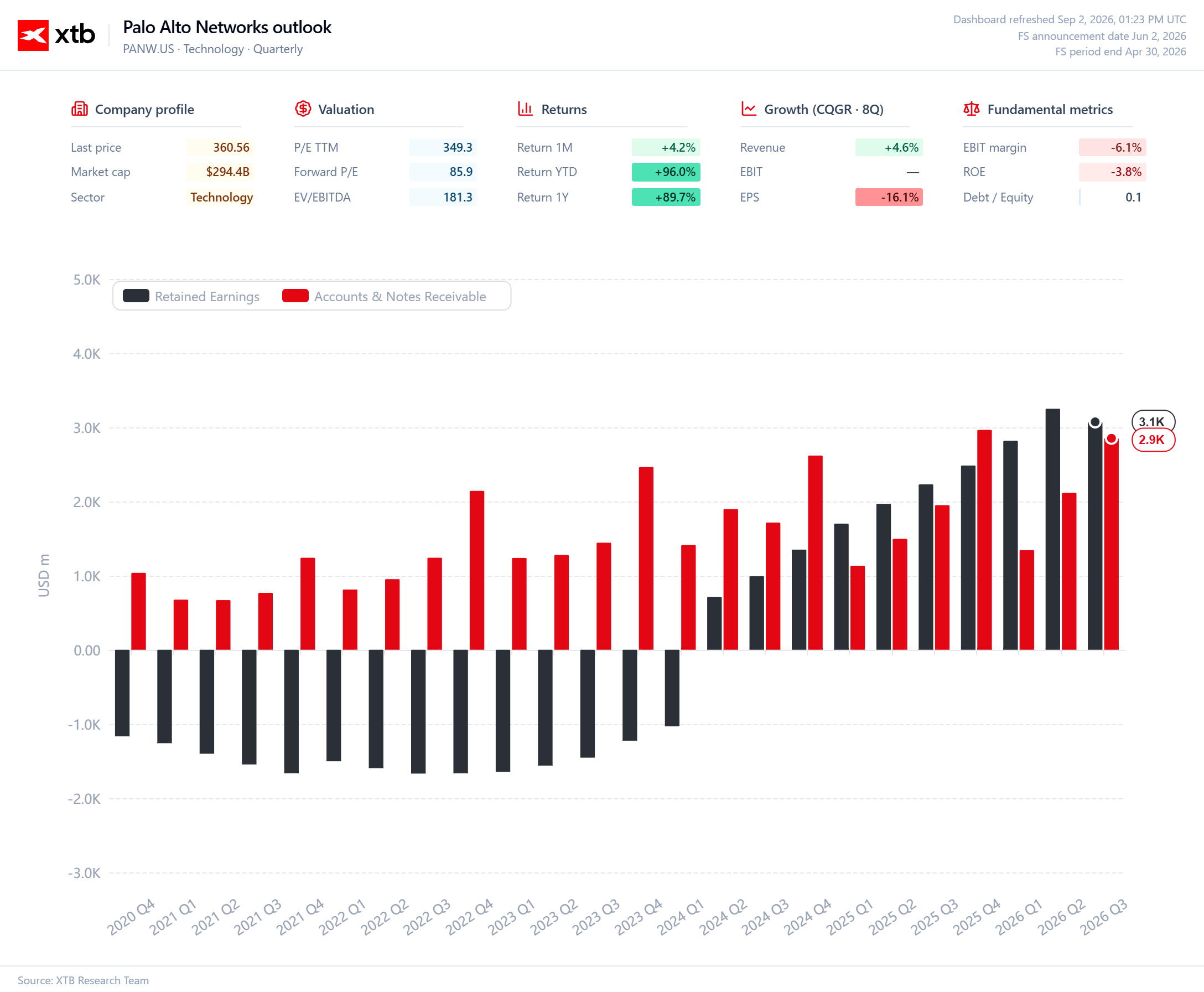
- The 34% revenue growth is also partly misleading. A large portion of the increase comes from acquiring CyberArk and Chronosphere solutions and customers, as well as deepening synergy across products.
- A breakdown by segment shows that the company’s “core” business, “Network & AI,” grew by a solid but less impressive 17%.
- Customer growth is impressive. Most of the company’s platforms and solutions show customer-base increases around 200% and sales growth in key subsegments of about 50% per year. This is not the issue, but the way the company presents its data leaves a lot to be desired and does not allow for high-quality forecasts of how much of the growth in sales, traffic, and customers will actually be retained or continue to expand.
Guidance
- For “growth” companies like Palo Alto, which it clearly aims to be, guidance is as important as results. The trend held and remained mixed.
- The company reaffirmed its earlier targets of USD 20bn in (NSG) ARR by the end of 2030 and an addressable market of about USD 340bn over the same period.
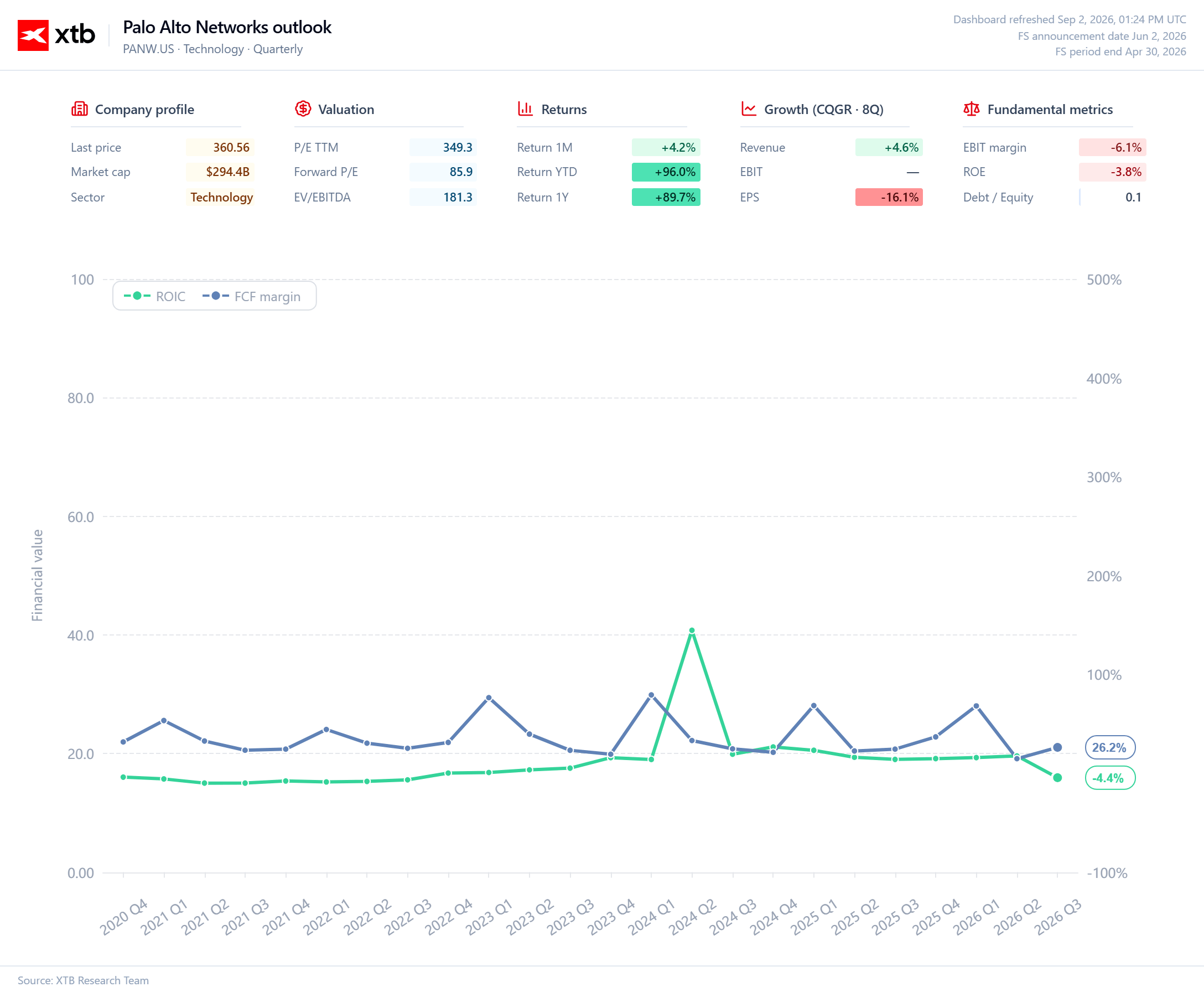
The company also raised its outlook for the end of the next fiscal year. It expects revenue to rise to over USD 14bn, ARR to USD 11bn, and RPO to exceed USD 25bn. Importantly, all of this is expected while maintaining the current margin, which implies the company will grow without improving profitability. This is bad news in the short term, but it does not undermine the long-term investment thesis.
Conclusion
With valuation multiples this high, investors are less focused on whether the business model is good and more on whether it can sustain exceptional growth consistently for many years to justify optimistic valuations.
Palo Alto’s business is a leader in an extremely demanding industry, so there is no doubt about its quality. The bigger question may be the pace and scale of future growth. AI-related risks remain central. The market has already recognized that they are symmetric, both a threat and an opportunity, but it is currently almost impossible to make a high-quality forecast of market size and how much value the company will capture.
Kamil Szczepański
Financial Market Analyst at XTB



US Open: Earnings season kicks off on a high note (13.10.2026)


🖥️Chart of the Day - US100: Is the KOSPI crash a foretaste of Nasdaq's troubles?



Morning Wrap: Tech Crash in Asia and Hawkish Central Banks in the Shadow of an Oil Shock (13.10.2026)


Morning Wrap: Oil cheaper despite attacks on Saudi Arabia, markets await CPI (12.10.2026)
This content has been created by XTB S.A. This service is provided by XTB S.A., with its registered office in Warsaw, at Prosta 67, 00-838 Warsaw, Poland, entered in the register of entrepreneurs of the National Court Register (Krajowy Rejestr Sądowy) conducted by District Court for the Capital City of Warsaw, XII Commercial Division of the National Court Register under KRS number 0000217580, REGON number 015803782 and Tax Identification Number (NIP) 527-24-43-955, with the fully paid up share capital in the amount of PLN 5.869.181,75. XTB S.A. conducts brokerage activities on the basis of the license granted by Polish Securities and Exchange Commission on 8th November 2005 No. DDM-M-4021-57-1/2005 and is supervised by Polish Supervision Authority.