



The launch of the new Intel Xeon 600 line is primarily a strategic event, which the market interprets as a signal that Intel wants to be an active player in the professional computing solutions segment again. Although the announcement of the new processors will not immediately translate into revenue, it reinforces the narrative of rebuilding the company's position in areas key to the development of the technology market, including infrastructure for artificial intelligence.
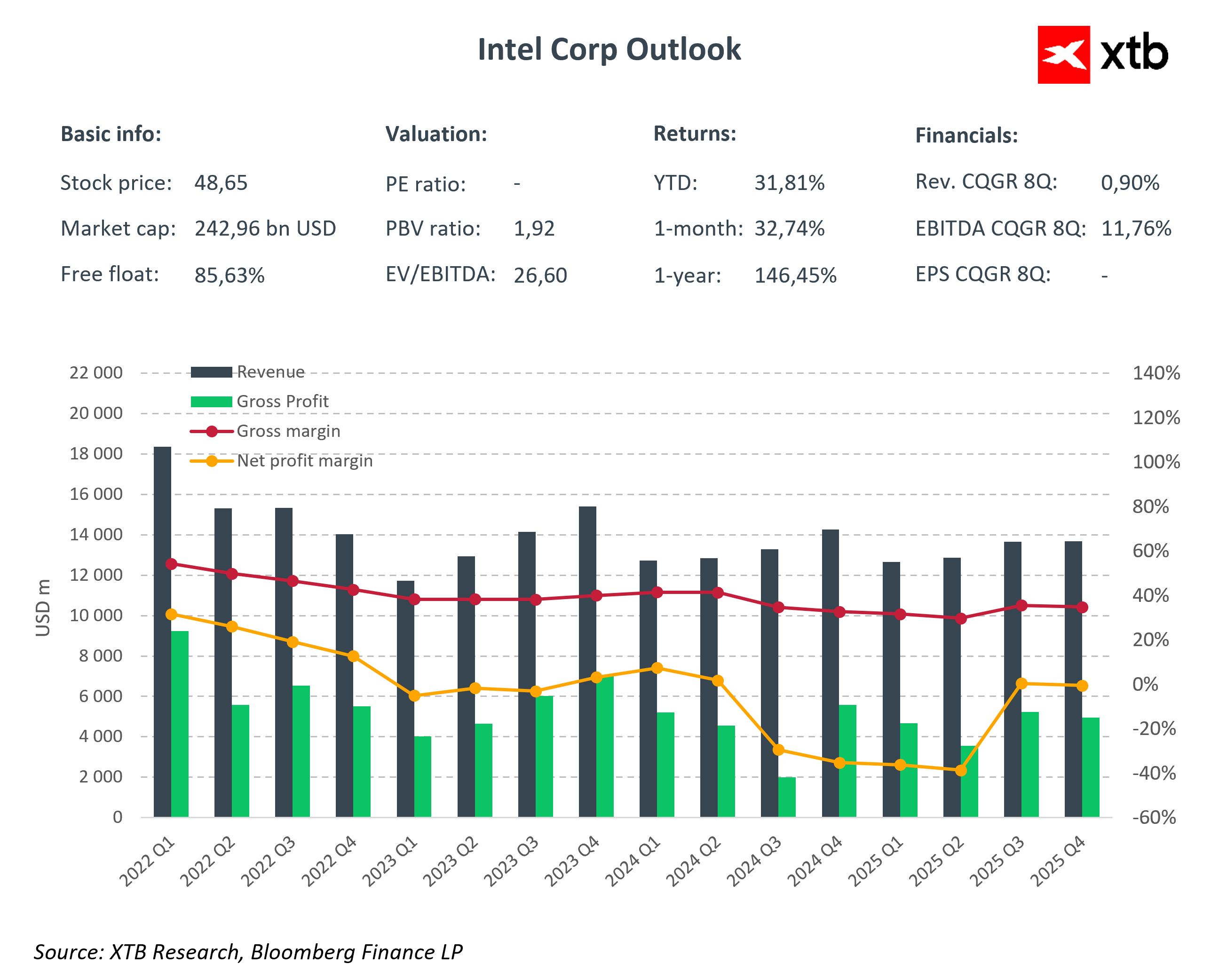
This positive product narrative has been further reinforced by the latest collaboration with Japan's SoftBank and its subsidiary SAIMEMORY on the development of a new generation of Z-Angle Memory, designed for data centers supporting artificial intelligence. The partners aim to create high-capacity, high-bandwidth, and lower-power solutions to meet the growing demand for efficient memory in AI and professional computing environments. Although commercialization is not planned until 2029, the markets reacted positively, with Intel shares rising at the opening of trading.
From an investor perspective, it is important that Intel is no longer seen solely through the prism of the personal computer market, which remains weaker and more cyclical. The return to the professional and corporate segments is an attempt to diversify revenue sources and improve the margin structure in the longer term. The market interprets this as a step in the right direction, although with the caveat that the real effects of projects such as Z-Angle Memory will only be seen in a few years' time, and memory remains an area of strong competition from the current leaders.
Nevertheless, Intel's latest quarterly results paint a mixed picture of the company's condition. On the one hand, the company surprised positively, exceeding analysts' expectations in terms of both revenue and profits, which suggests operational improvement in selected segments and the effectiveness of restructuring measures. On the other hand, management decided to lower its full-year forecasts, indicating that competitive pressure and demand uncertainty remain a serious challenge. It is the lowered guidance, rather than the results themselves, that is dampening investor enthusiasm and limiting short-term optimism about the stock.
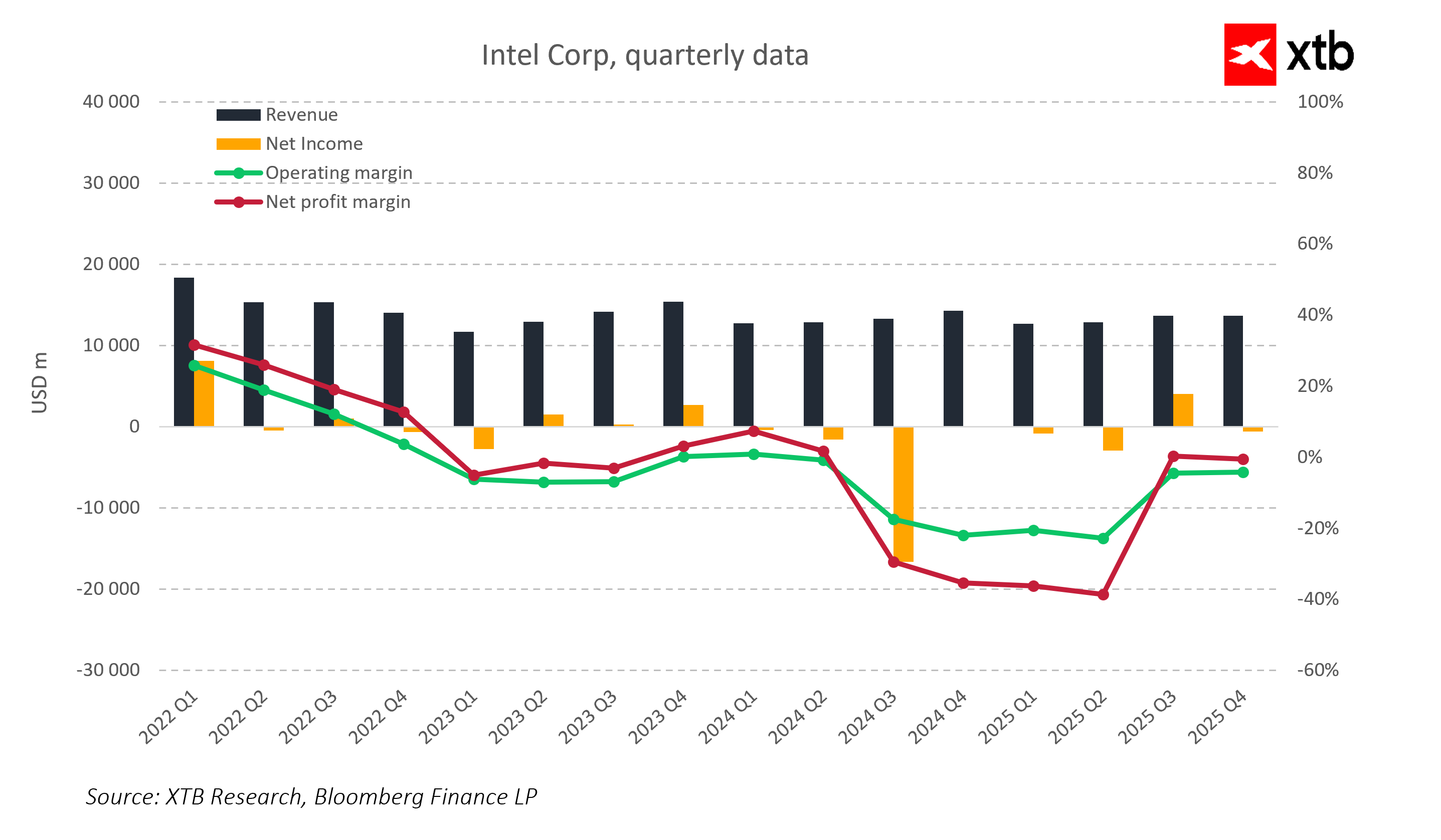
Current events show the company undergoing a phase of thorough restructuring and strategic investments. On the one hand, there are positive signs in the form of new products and better-than-expected quarterly results, but on the other hand, lowered forecasts and the long-term nature of key initiatives, such as the partnership with SoftBank, clearly indicate that Intel is still struggling with market uncertainty. For investors, this means a period requiring careful observation. The key will be the pace at which the company manages to translate new product initiatives and strategic partnerships into sustainable revenue growth and improved margins, which could ultimately translate into a more stable stock valuation.


Tesla was supposed to burn $5 billion, but posted a positive result. Will Tesla still be a car company in a year?

Record-breaking Meta, though with a cash loss. Investors (for now) are buying Zuckerberg's plan anyway


US OPEN: Preparations for Tesla's mega-merger with SpaceX. Diplomatic stalemate with Iran cools Wall Street's enthusiasm
Meta Preview: Billions in AI spending, but when will the investments start paying off?
This content has been created by XTB S.A. This service is provided by XTB S.A., with its registered office in Warsaw, at Prosta 67, 00-838 Warsaw, Poland, entered in the register of entrepreneurs of the National Court Register (Krajowy Rejestr Sądowy) conducted by District Court for the Capital City of Warsaw, XII Commercial Division of the National Court Register under KRS number 0000217580, REGON number 015803782 and Tax Identification Number (NIP) 527-24-43-955, with the fully paid up share capital in the amount of PLN 5.869.181,75. XTB S.A. conducts brokerage activities on the basis of the license granted by Polish Securities and Exchange Commission on 8th November 2005 No. DDM-M-4021-57-1/2005 and is supervised by Polish Supervision Authority.