EUR/CZK

Trade EUR/CZK CFD

Past performance or future forecasts does not constitute a reliable indicator of future performance.

Fees

Less cost, more investments

Competitive fees

Trade with leverage and keep costs low

Free deposits/withdrawals

Manage your funds. Take advantage of free deposits and withdrawals.

No custody fees

No custody fees up to 250,000 EUR. After that, 0.02% per annum, minimum £10.

Learn

What is CFD trading?

New to CFDs? Learn how CFD trading works and how you can trade on both rising and falling prices without owning the underlying asset. We explain the basics, financial leverage, potential benefits and risks in simple terms.

Read the Beginner’s Guide

Create an account

Open your XTB account in just a few simple steps. Get access to global markets and a wide range of investment opportunities.

Make a deposit

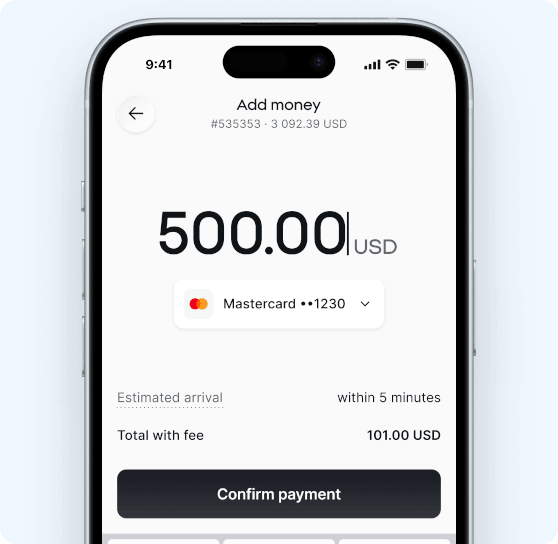
Add funds to your account using one of the available payment methods. Once your funds are available, you’re ready to start investing.

Trade EUR/CZK

Find EUR/CZK in XTB App, choose how much you want to invest and place your order. Start building your portfolio on your terms.

And make your money work in many ways

Explore more ways to put your money to work - from global stocks and ETFs to more. Discover Investment Plans and earn interest on uninvested funds while you wait for your next investment opportunity.

Popular in the markets

Most traded CFDs

Discover where CFD traders are most active. Explore some of the most traded CFDs across global markets and see which instruments are in focus.

News

Keep your finger on the pulse with our latest market news

We are regulated by leading financial regulatory authorities across multiple markets worldwide.

About instrument

Invest in EUR/CZK CFD

The EUR/CZK currency pair represents the exchange rate between the Euro (EUR) and the Czech Koruna (CZK). It shows how many Czech Koruna are required to purchase one Euro.

EUR/CZK is influenced by differences between the eurozone and Czech economies, particularly interest rates, inflation, economic growth, trade and investor sentiment. Monetary policy decisions from the European Central Bank (ECB) and Czech National Bank (CNB) are among the key factors affecting the pair.

EUR/CZK trading through contracts for difference (CFDs) is among the investment options offered by XTB.

Key Factors Influencing EUR/CZK

Czech National Bank Monetary Policy

The Czech National Bank (CNB) plays an important role in determining the value of CZK. Interest rate decisions and changes in the central bank's monetary policy outlook can influence demand for the Koruna and cause movements in EUR/CZK.

A relatively hawkish CNB stance can support CZK and potentially push EUR/CZK lower, while expectations of easier Czech monetary policy can put downward pressure on CZK.

European Central Bank Monetary Policy

The ECB influences the Euro through its interest rate decisions and monetary policy guidance. A relatively hawkish ECB stance can support EUR and potentially push EUR/CZK higher, while expectations of lower eurozone interest rates can weigh on the Euro.

Inflation

Inflation in both the eurozone and Czech Republic can affect expectations for future monetary policy.

Higher-than-expected Czech inflation could increase expectations of tighter CNB policy and support CZK, while stronger eurozone inflation could increase expectations of tighter ECB policy and support EUR.

Czech Economic Growth

The Czech economy has significant manufacturing and export exposure, making economic activity in Europe an important consideration for CZK.

GDP, industrial production, employment and trade data can influence expectations for Czech economic growth and therefore affect EUR/CZK.

Eurozone Economic Conditions

Economic developments across the eurozone can influence EUR/CZK through their effect on EUR and demand for Czech exports.

Data from major economies such as Germany can be particularly relevant because of the close economic and manufacturing links between Germany and Czechia.

Risk Sentiment

CZK can be sensitive to changes in European and global investor sentiment. During periods of heightened uncertainty, investors may reduce exposure to Central European currencies, potentially putting upward pressure on EUR/CZK.

Trading Characteristics of EUR/CZK

EUR/CZK is a Central European currency pair that is generally less liquid than major forex pairs such as EUR/USD.

The pair can experience increased volatility around CNB and ECB interest rate decisions, inflation releases and major economic data from Czechia and the eurozone.

Trading activity is generally higher during European market hours, when the main markets for both currencies are active. Liquidity can be lower outside these periods, potentially resulting in wider spreads.

Potential Volatility Drivers

Interest Rate Differentials

Differences between ECB and CNB interest rates can influence capital flows between euro- and koruna-denominated assets. Changes in expectations for either central bank can therefore cause significant movements in EUR/CZK.

Czech Inflation

Czech inflation is closely monitored because it can influence expectations for future CNB policy. Higher inflation may increase expectations of tighter monetary policy and support CZK, while weaker inflation may have the opposite effect.

Eurozone and German Economic Data

The Czech economy is closely integrated with European manufacturing and supply chains. Changes in eurozone or German economic activity can therefore affect Czech growth expectations and demand for CZK.

Trade and Export Activity

Czech exports are an important component of the economy. Changes in European demand, particularly for manufactured goods, can affect trade flows and influence the value of CZK.

European Geopolitical Developments

Geopolitical uncertainty affecting Central and Eastern Europe can influence investor sentiment towards CZK. Increased risk aversion may lead to greater demand for EUR and other perceived safer assets, potentially pushing EUR/CZK higher.

Important Macroeconomic Data and Events

  1. CNB Interest Rate Decisions – Changes in Czech monetary policy can have a direct impact on CZK.
  2. ECB Interest Rate Decisions – ECB policy affects demand for EUR and the EUR side of the pair.
  3. Czech Inflation (CPI) – Inflation influences expectations for future CNB policy.
  4. Eurozone Inflation (CPI) – Eurozone inflation can affect expectations for ECB monetary policy.
  5. Czech GDP – Provides insight into economic growth and domestic conditions.
  6. Czech Industrial Production – Important for assessing activity in the country's manufacturing sector.
  7. Eurozone and German GDP – Economic growth in major European economies can affect demand for Czech exports.


Minimal spread

0.021

Margin

5%

Leverage

20

Commission

-

Market hours

24 h from Sunday 11:00 pm to Friday 10:00 pm CET

Interesting Facts

What to know before investing in EUR/CZK

EU Membership Without the Euro: Czechia joined the European Union in 2004 but continues to use the Czech Koruna rather than the Euro. This means the country remains closely integrated with the EU while maintaining its own monetary policy through the CNB.

CNB Currency Intervention: Between 2013 and 2017, the Czech National Bank used a currency floor to limit excessive Koruna appreciation. The policy kept EUR/CZK above a targeted level before the CNB ended the intervention in 2017.

Manufacturing Exposure: Czechia has a strong manufacturing sector and close economic links with Germany. Changes in German and wider European industrial demand can therefore influence Czech economic expectations and the value of the Koruna.

Central Bank Sensitivity: EUR/CZK can react significantly to changes in expectations for ECB and CNB monetary policy. Differences in interest rates and future policy guidance can influence capital flows between EUR and CZK assets.

European Risk Sentiment: The Czech Koruna can be affected by changes in investor appetite for Central European assets. During periods of heightened uncertainty, weaker demand for regional currencies can contribute to upward pressure on EUR/CZK.

Trade and Export Links: Czechia has a highly open economy with strong trade connections across Europe. Changes in external demand, particularly from major European trading partners, can influence economic growth and CZK performance.

FAQ

Do you have more questions?

Find answers to our most commonly asked questions. Still have a question? Please contact our customer support team.

EUR/CZK is the forex currency pair representing the exchange rate between the Euro and Czech Koruna. It shows how many Czech Koruna are needed to purchase one Euro.

Key factors include ECB and CNB monetary policy, interest rate differentials, inflation, Czech economic growth, eurozone economic data, trade conditions and global risk sentiment.

A relatively higher interest rate in the eurozone can increase demand for EUR and potentially push EUR/CZK higher. Conversely, relatively higher Czech rates can support CZK and potentially push the pair lower.

Czech inflation can influence expectations for CNB monetary policy. Higher-than-expected inflation may increase expectations of tighter policy and support CZK, while weaker inflation may reduce those expectations.

EUR/CZK generally sees greater activity during European trading hours, when markets in Czechia and the wider eurozone are active. Liquidity can be lower outside the main European session.

Analysis can include monitoring CNB and ECB decisions, Czech and eurozone inflation, GDP and industrial production, European economic conditions, trade data and broader market sentiment.

At XTB, EUR/CZK is available for trading through contracts for difference (CFDs). CFDs are leveraged products and carry a high level of risk, so traders should consider whether CFD trading is appropriate for them.

It is best to preced trading in FOREX with proper education - you can start with the Knowledge base we have prepared for you. Once you have the proper knowledge you should open a demo account to get a feel for the market and practice your trading strategy before investing real money. Remember that you can never have to much knowledge and you should constantly educate yourself during your presence on the financial markets.

There is no recipe for succes in the FOREX market. However, there are some aspects that will help you become a better trader. Here are some tips: start with demo account (before risking real money - get a feel for the market and practice your trading strategy), develop a trading plan (it's important to have a clear plan in place before starting trading), use risk management tools (manage your risk when trading, through eg. Stop Loss orders), do not overtrade (it's easy to get caught up in the excitement of trading, but it's important to stick to your plan and not overtrade).

Financial markets are a very complex topic, as they are influenced by various factors, such micro- and macroeconomic events, policies or social changes. You should start your trading experience with proper education about the concepts, assumptions and laws that govern the markets - you can start with the Knowledge base we have prepared for you. Once you have the proper knowledge you should open a demo account to get a feel for the market and practice your trading strategy before investing real money. Remember that you can never have to much knowledge and you should constantly educate yourself during your presence on the financial markets.

Yes, FOREX investing can be risky. The value of currencies can fluctuate significantly due to a variety of factors, including economic conditions, political events and market speculation. It is important for individuals to carefully consider their own financial situation and risk tolerance before investing in FOREX.

When choosing a broker, you should consider a number of aspects related to its activity and offer. These things you should definitely consider: credibility of the invesment firm, cost and fees, instruments offered, investment platform, customer support and additional benefits. If you want to learn more about how to choose your broker visit: investresponsibly.com.

When choosing a FOREX platform there are several factors you should consider: platform ownership (proprietary platform are usually designed in the most intuitive way), availability of DEMO account (where you can test your knowledge practice strategies before risking real money), fees (commissions, spreads etc.), access to educational materials and market news . Before commiting to one platform you should carefully consider all above-mentioned aspects, as they will particulary contribute to the effectiveness of your trading.