BRAComp

Trade BRAComp CFD

Past performance or future forecasts does not constitute a reliable indicator of future performance.

Fees

Less cost, more investments

Competitive fees

Trade with leverage and keep costs low

Free deposits/withdrawals

Manage your funds. Take advantage of free deposits and withdrawals.

No custody fees

No custody fees up to 250,000 EUR. After that, 0.02% per annum, minimum £10.

Learn

What is CFD trading?

New to CFDs? Learn how CFD trading works and how you can trade on both rising and falling prices without owning the underlying asset. We explain the basics, financial leverage, potential benefits and risks in simple terms.

Read the Beginner’s Guide

Create an account

Open your XTB account in just a few simple steps. Get access to global markets and a wide range of investment opportunities.

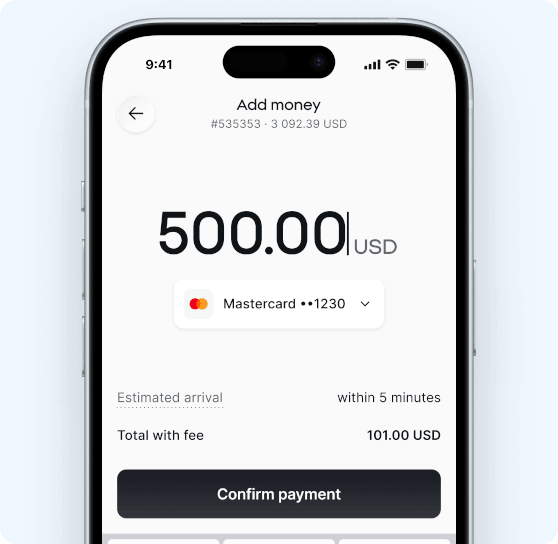
Make a deposit

Add funds to your account using one of the available payment methods. Once your funds are available, you’re ready to start investing.

Trade BRAComp

Find BRAComp in XTB App, choose how much you want to invest and place your order. Start building your portfolio on your terms.

And make your money work in many ways

Explore more ways to put your money to work - from global stocks and ETFs to more. Discover Investment Plans and earn interest on uninvested funds while you wait for your next investment opportunity.

Popular in the markets

Most traded CFDs

Discover where CFD traders are most active. Explore some of the most traded CFDs across global markets and see which instruments are in focus.

News

Keep your finger on the pulse with our latest market news

We are regulated by leading financial regulatory authorities across multiple markets worldwide.

About instrument

Invest in BRAComp CFD

BraCOMP is a Contract for Difference (CFD) that tracks the performance of the BOVESPA Index (Ibovespa), the benchmark index of the Brazilian stock market. This instrument offers traders and investors exposure to the largest and most liquid companies listed on B3 (Brazil Stock Exchange). As a CFD, BraCOMP allows for leveraged trading, enabling risky speculating on BOVESPA price movements.

The BOVESPA Index, often referred to as Ibovespa, is the main performance indicator of the Brazilian equity market. It includes the 84 most actively traded stocks on the São Paulo Stock Exchange and represents a broad spectrum of Brazil's economy, encompassing sectors such as finance, energy, materials, and consumer goods. The index is weighted by market capitalization, ensuring that larger companies have a more significant impact on its performance.

BraCOMP provides traders with the opportunity to leverage their positions, amplifying both potential gains and losses. This means that with a relatively small initial investment, traders can control a larger exposure to the index, which can be advantageous in volatile markets. 

However, it also means increased risk, as price movements are magnified. BraCOMP allows for both long / short positions, enabling opening positions on both rising or falling markets. As the emerging market, Brasil stock exchange may be highly volatile and procyclical. Usually, strengthening US dollar and Wall Street declines has a negative influence on BOVESPA index sentiments.

Trading Hours and Volatility 

The BraCOMP CFD can be traded almost 24 hours a day during weekdays, providing flexibility for traders to react to global market events and news. Key trading sessions coincide with the Brazilian market hours, which are typically from 10:00 AM to 5:30 PM BRT. Due to the diverse sectors represented in the Ibovespa, the index can experience significant volatility, particularly around economic data releases, corporate earnings reports, and geopolitical events.

Best Times to Trade

  • Brazilian Market Hours: The most active trading occurs during the Brazilian market hours (10:00 AM - 5:30 PM BRT).
  • Global Market Overlaps: Volatility can increase during overlaps with European and U.S. market hours, providing additional trading opportunities.
  • Economic Data Releases: Key economic indicators, such as GDP growth, inflation data, and central bank announcements, can cause substantial market movements.

5 biggest Ibovespa stocks include

Petrobras (Petróleo Brasileiro S.A.):

  • Petrobras is the largest publicly traded company in Brazil, specializing in the exploration, production, refining, and distribution of oil and gas.
  • As a state-controlled entity, it plays a critical role in Brazil's energy sector and has a significant influence on the national economy.
  • The company's extensive offshore oil reserves make it a key player in the global energy market.

Vale S.A.:

  • Vale is one of the world's largest mining companies, primarily engaged in the production of iron ore, nickel, and other minerals.
  • It has a global presence, with operations and projects on several continents, significantly contributing to Brazil's export revenues.
  • Vale's iron ore production is essential for the steel industry, making it a critical supplier globally.
  • What’s more, Vale is focused also on commodities freight, which helps the company achieve higher ROIC and margins

Itaú Unibanco Holding S.A.:

  • Itaú Unibanco is the largest private sector bank in Brazil and one of the largest financial institutions in Latin America.
  • The bank offers a wide range of financial services, including retail banking, corporate banking, investment banking, and insurance.
  • Its strong market position and extensive network of branches and ATMs underscore its influence in the Brazilian financial sector.

Bradesco (Banco Bradesco S.A.):

  • Bradesco is one of the leading banks in Brazil, providing comprehensive financial services to individual and corporate clients.
  • It is known for its extensive distribution network, including a large number of branches and service points across the country.
  • The bank's diverse portfolio includes banking, insurance, and asset management services.

Ambev S.A.:

  • Ambev is a major beverage company in Brazil, primarily involved in the production and distribution of beer, soft drinks, and other non-alcoholic beverages.
  • It is part of the larger Anheuser-Busch InBev group, the world's largest beer brewer.
  • Ambev's popular brands and extensive distribution network make it a dominant player in the Brazilian and Latin American beverage markets.


Minimal spread

82

Margin

10%

Leverage

10

Commission

-

Market hours

1:05 pm - 9:55 pm CET
2:05 pm - 10:55 pm CEST

Interesting Facts

What to know before investing in BRAComp

Historical Significance: The BOVESPA Index was created in 1968 and has grown to become the primary barometer of the Brazilian stock market, reflecting the economic development of Brazilian businesses over the decades.

Diverse Sector Representation: The index includes companies from various sectors, with significant weights in finance, energy, and materials, providing a broad view of the Brazilian economy.

Global Influence/Economic Indicator: Due to Brazil's role as a major emerging market, the Ibovespa's performance can influence global investment flows and sentiment towards Latin American markets. The Ibovespa is closely watched by investors, analysts, and policymakers as an indicator of Brazil's economic health and market sentiment.

Volatility Drivers: The index is particularly sensitive to commodity prices, given Brazil's significant exports of oil, iron ore, and agricultural products, making it a crucial gauge for global commodity markets.

Brazil during GFC crash: The Brazilian stock market experienced a significant crash in 2008. The BOVESPA Index plunged by around 60% from its peak earlier that year. This dramatic decline was driven by widespread investor panic and a sharp drop in commodity prices, which heavily impacted Brazil's export-driven economy.

FAQ

Do you have more questions?

Find answers to our most commonly asked questions. Still have a question? Please contact our customer support team.

The BOVESPA Index, also known as Ibovespa, is the benchmark stock index of the Brazilian stock market, comprising the 84 most actively traded stocks on the São Paulo Stock Exchange.


BraCOMP is a leveraged CFD based on the BOVESPA Index, allowing traders to speculate on the index's price movements with less capital and without owning the underlying shares. It offers both long and short positions.


The index includes companies from various sectors, with significant representation from finance, energy, materials, consumer goods, and industrials.


Investors can gain exposure to the BOVESPA Index through ETFs, mutual funds, and index funds that track the index. To gain risky, leveraged exposure, traders can use BraCOMP CFDs.


Companies must be among the most actively traded on the São Paulo Stock Exchange and meet specific market capitalization and liquidity requirements to be included in the index.


The BOVESPA Index is rebalanced quarterly to ensure it accurately reflects the most actively traded and largest companies on the Brazilian stock market.


Indices and stocks are not the same thing. An index is a statistical measure of the change in a portfolio of stocks. It is not itself a stock, but rather a composite of the performance of a group of stocks. Stocks, on the other hand, are individual securities that represent ownership in a particular company.

There is no one "best" index for trading. The best index to trade depends on your investment goals, risk tolerance, and other personal factors. Some popular indices for trading include the S&P 500, NASDAQ Composite, and Dow Jones Industrial Average.

It is difficult to rank indices, as different indices are designed to track different types of market segments and have different methodologies. Some of the most well-known indices include: S&P 500, NASDAQ Composite, Dow Jones Industrial Average, FTSE 100, Nikkei 225.

It is possible to trade on FOREX and to trade indices, but they are quite different instruments. FOREX is about trading currencies, while indices represent the performance of a group of stocks. It is not possible to say whether one is "better" than the other, as the choice of which instrument to trade will depend on the individual trader's goals and risk tolerance.