



01:30 PM BST, Canada - Employment Data for August:
-
Employment Change: actual -65.5K; forecast 4.9K; previous -40.8K;
-
Unemployment Rate: actual 7.1%; forecast 7.0%; previous 6.9%;
-
Avg hourly wages Permanent employee: actual 3.6%; previous 3.5%;
-
Full Employment Change: actual -6.0K; previous -51.0K;
-
Part Time Employment Change: actual -59.7K; previous 10.3K;
-
Participation Rate: actual 65.1%; previous 65.2%;
Canadian employment fell by 66,000 (-0.3%) in August, marking a second consecutive monthly decline, mostly due to part-time losses. The employment rate dropped to 60.5%, while unemployment rose to 7.1%, the highest since 2016 outside the pandemic years.
Core-aged men (-58,000) and women (-35,000) drove the decline, hitting their lowest employment rates in several years, while youth and older workers saw little change. Self-employment also decreased significantly, continuing its downward trend.
Industry-wise, losses were concentrated in professional, scientific and technical services (-26,000), transportation and warehousing (-23,000), and manufacturing (-19,000), partially offset by gains in construction (+17,000). Despite employment declines, average hourly wages rose 3.2% year over year to $36.31.
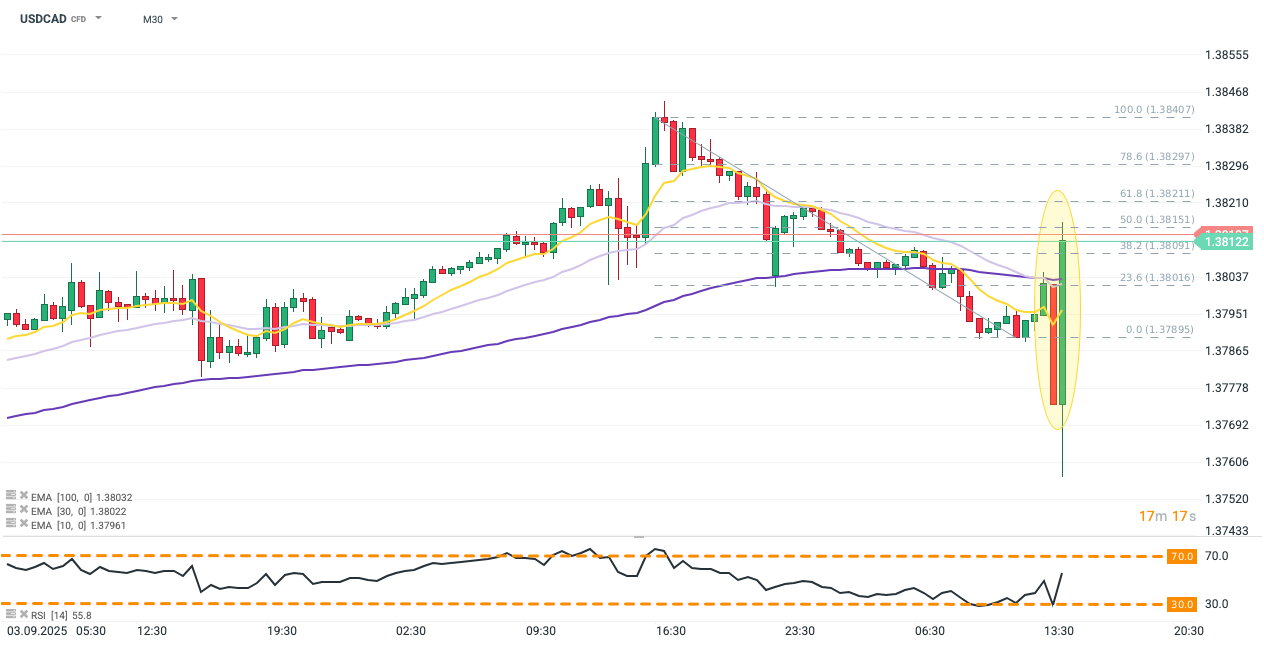
USDCAD swinged back up 0.3% after the release of labour market data for Canada and the US. Candian NFP report came in relatively weaker than its US counterpart, which pushes for more agressive easing from Bank of Canada. Source: xStation5



Daily Summary: Buyers Refuse to Give In

US Natural gas extends declines 🔥📉



US OPEN: The wave of AI concerns is building again, oil returns near highs



Macro Calendar - UK Labor Market, ZEW Sentiment, and Wall Street Giants' Reports