


Geopolitics: Markets are pricing in the possibility of an end to the war
-
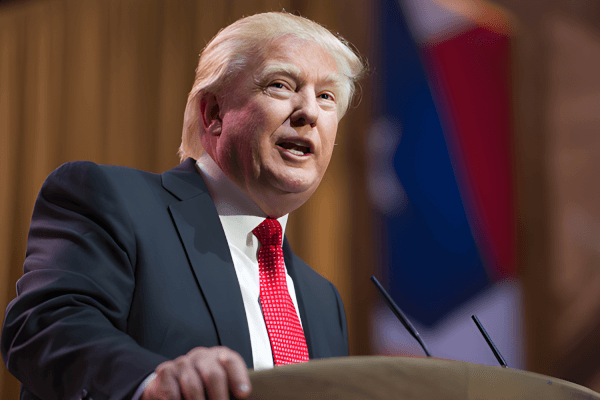
Wednesday’s trading session marks the best day for European markets in over a year—the catalyst being Trump’s Tuesday speech, in which he stated that the U.S. could withdraw from Iran in as little as two to three weeks and that a formal diplomatic agreement isn’t even necessary to end military operations; the markets immediately interpreted this as a signal of a shift to a “mission accomplished” narrative
-
Added to this is a statement by Iranian President Pezeshkian, who declared his willingness to end the conflict—but only in exchange for formal security guarantees. That was enough for Asian stock markets to post their strongest one-day gains in over three years (MSCI Asia Pacific +4.9%, Kospi +8.5%, Nikkei +5%).
-
However, wary investors point out that Israel still isn’t talking about a ceasefire, the Wall Street Journal reports on the UAE’s possible entry into the conflict, and Iran has so far shown no real willingness to negotiate—which is why some strategists, including those at Mizuho, are advising skepticism regarding the scale of the rally
-
The highlight of the evening will be Trump’s speech at 3:00 a.m. (Thursday), in which the U.S. president is expected to address Iran and potentially the NATO alliance, which Trump has recently described as “weak.” Furthermore, The Telegraph reported today that Trump is even considering withdrawing from the alliance.
The dollar is weakening, while gold and bonds are gaining ground
-
EURUSD is up 0.40% to 1.1599, reaching near three-month highs; GBPUSD is up 0.63% to 1.3304; the zloty is strengthening significantly – USDPLN is down 0.42% to 3.6907, while EURPLN is hovering around 4.2808
-
Gold continues its upward trend (+1.40%, $4,731/oz) – this time not as a barometer of fear, but as a hedge against inflation that could be driven by a potential economic recovery and ongoing uncertainty in supply chains; 10-year Treasuries are recovering, with yields falling by 3.4 basis points to 4.277%
Oil prices are falling – the market is pricing in an end to the war
-
WTI briefly dipped below the symbolic $100-per-barrel mark and is currently trading at $99.87 (-1.59%); Brent is down 0.35% to $102.89
-
However, the market remains somewhat cautious—prices aren’t falling freely because the geopolitical risk premium remains in place until the Strait of Hormuz is formally reopened and troops begin returning home
European stock indices – gains almost across the board
-
The Stoxx 600 jumps more than 2%—its strongest daily gain in a year; the DE40 rises 0.84% to 23,399 points, and the ITA40 gains 1.60% to 44,949
-
The top performers by sector are banks (UCG +6.0%, BNP +4.92%, BBVA +4.4%, HSBC +4.0%) and defense companies (Rolls-Royce +7%, Rheinmetall +6.8%, Safran +3.6%)—paradoxically, the defense sector is rising in price because markets assume that the dispute with the U.S. is a signal for further European investment in defense and the continent’s move toward self-reliance.
-
Following Tuesday’s session on Wall Street, where the S&P 500 gained 2.9% and the Nasdaq 100 rose as much as 3.4%—one of the strongest daily gains since May 2025. – U.S. index futures are trading moderately higher again today: US500 futures +0.75% (6,616), US100 +0.96% (24,135)
European Manufacturing PMI – a pleasant surprise
-
The March PMI readings for European industry generally delivered positive surprises: the eurozone at 51.6 points (forecast: 51.4), Germany 52.2 points (forecast: 51.7) – this signals that Europe’s largest economy is effectively emerging from months of industrial weakness, driven in part by disruptions in global supply chains
-
Switzerland is the standout performer, with an index of 53.3 points compared to a consensus forecast of just 47.0 points—one of the largest positive deviations from forecasts in the history of this reading; Spain, however, is a disappointment (48.7 vs. a forecast of 50.4), as is Poland (48.7—above forecasts, but still in contraction territory below 50 points)
-
It is worth noting that part of the improvement in the PMI is a statistical effect caused by supply chain disruptions—higher prices and logistical difficulties are artificially inflating the index; Reuters rightly points out that “supply chain disruptions have inflated growth figures,” so the data should be interpreted with a degree of caution
Companies – What to Watch Today
-
The chemical sector is one of the biggest beneficiaries of the conflict and is performing exceptionally well this quarter—the Stoxx 600 Chemicals index has gained ~6% year-to-date (vs. -1.5% for the broader market); BASF raised detergent prices by 30%, Lanxess announced a 40% price hike for sulfur products; Morgan Stanley notes that European chemical companies may be regaining market share lost over the years to Asia
-
Nike sent the sports apparel sector into a tailspin after yesterday’s market close – the company forecast a 2–4% decline in revenue for the current quarter (vs. an expected 2% increase), and its shares plummeted 9.1% in after-hours trading; Citi warns of a negative ripple effect for Adidas, Puma, and JD Sports—JD Sports is particularly vulnerable due to its high exposure to Nike products in Europe
-
LVMH closed out the worst quarter in its history – shares fell 28% in Q1 2026, worse than during the 2008 financial crisis, the COVID-19 pandemic, and the dot-com bubble; Bernard Arnault’s fortune shrank by $55.4 billion; the company is currently trading at less than 20x forward earnings
-
Citi is upgrading three defense stocks to "Buy" today: Babcock, Leonardo, and TKMS, citing attractive valuations following the recent correction; JPMorgan, meanwhile, is upgrading Unibail-Rodamco-Westfield to "Overweight" and Engie to "Overweight"; Ferrari receives a "Buy" rating from Jefferies with a target price of 350 euros
-
Equinor has been placed on SEB Equities’ “sell” list – analysts point to “significant downside” at current valuations, as they believe the period of superprofits stemming from the current conflict is temporary; this is an interesting contrarian view amid the general enthusiasm
-
Orlen has signed a preliminary agreement to acquire Polyolefins from Grupa Azoty – a significant consolidation move in the Polish petrochemical sector amid global supply chain disruptions
-
OpenAI has been valued at $852 billion following a $122 billion funding round—one of the largest private investment rounds in the history of technology; for European AI companies, this signals that investment appetite for artificial intelligence remains strong despite geopolitical turbulence


Daily Summary: Trump and OpenAI keep the market on a roller coaster💡



U.S. attacks on Iran suspended 💥



Is Starbucks eyeing Chipotle❓ The market reacts nervously to the FT's reports of a takeover🔥


Stock of the Week: Marvell Technology and the Race for AI Infrastructure’s Most Valuable Resource
The content of this report has been created by XTB S.A., with its registered office in Warsaw, at Prosta 67, 00-838 Warsaw, Poland, (KRS number 0000217580) and supervised by Polish Supervision Authority ( No. DDM-M-4021-57-1/2005). This material is a marketing communication within the meaning of Art. 24 (3) of Directive 2014/65/EU of the European Parliament and of the Council of 15 May 2014 on markets in financial instruments and amending Directive 2002/92/EC and Directive 2011/61/EU (MiFID II). Marketing communication is not an investment recommendation or information recommending or suggesting an investment strategy within the meaning of Regulation (EU) No 596/2014 of the European Parliament and of the Council of 16 April 2014 on market abuse (market abuse regulation) and repealing Directive 2003/6/EC of the European Parliament and of the Council and Commission Directives 2003/124/EC, 2003/125/EC and 2004/72/EC and Commission Delegated Regulation (EU) 2016/958 of 9 March 2016 supplementing Regulation (EU) No 596/2014 of the European Parliament and of the Council with regard to regulatory technical standards for the technical arrangements for objective presentation of investment recommendations or other information recommending or suggesting an investment strategy and for disclosure of particular interests or indications of conflicts of interest or any other advice, including in the area of investment advisory, within the meaning of the Trading in Financial Instruments Act of 29 July 2005 (i.e. Journal of Laws 2019, item 875, as amended). The marketing communication is prepared with the highest diligence, objectivity, presents the facts known to the author on the date of preparation and is devoid of any evaluation elements. The marketing communication is prepared without considering the client’s needs, his individual financial situation and does not present any investment strategy in any way. The marketing communication does not constitute an offer of sale, offering, subscription, invitation to purchase, advertisement or promotion of any financial instruments. XTB S.A. is not liable for any client’s actions or omissions, in particular for the acquisition or disposal of financial instruments, undertaken on the basis of the information contained in this marketing communication. In the event that the marketing communication contains any information about any results regarding the financial instruments indicated therein, these do not constitute any guarantee or forecast regarding the future results.