


The UK’s budget will be delivered on Wednesday 28th October, it will be announced by the new Chancellor John Healey, and comes nearly a month before Rachel Reeves delivered her final budget in 2025.
The UK’s budget will be delivered on Wednesday 28th October, it will be announced by the new Chancellor John Healey, and comes nearly a month before Rachel Reeves delivered her final budget in 2025.
In the weeks leading up to this event, John Healey and the Prime Minister have been careful to limit speculation and leaks to the press have been few and far between. However, at the recent Labour Party conference, Healey said that this budget will meet the fiscal rules.
This has placated the bond market to some extent, and UK Gilts outperformed their European peers during the period of French financial stress. However, there are several issues that the chancellor will have to face in this budget, including declining fiscal headroom caused by rising Gilt yields in recent months, and an energy price spike that is pushing up inflation. This has led to speculation about how the Chancellor will balance the books later this month.
Is this a tax and spend budget?
With more than half the fiscal headroom reportedly gone since March, which has been blamed on the Iran war, the chancellor will need to find money from somewhere. Tax hikes could be a possibility, however, Rachel Reeves has already tapped this vein and raised taxes by more than £66bn in the last two budgets, and even Andy Burnham has said that further tax rises are not credible when tax rates are already at multi-decade highs.
The Labour party have not been amenable to spending cuts in the past, and more borrowing is unlikely to be announced to plug any fiscal gaps due to volatility in global sovereign bond markets. To sum it up, John Healey’s hands are tied.
Amid all of this uncertainty, it can be overwhelming to think about trading around this Budget. But, there are plenty of opportunities. Below, we breakdown how to trade the budget.
Before the Budget
- Don't treat it as a one-day trade. Although Healey and Burnham have been tight-lipped so far, budgets are usually priced in through the leaks, so the move often happens in the run-up and on the day itself.
- Watch gilts and sterling first. Gilt yields and the pound are the key gauge. If Healey’s Budget does not convince the market that it will improve the UK’s fiscal position and boost growth then a credibility wobble is likely to hit the pound, gilts, and domestic stocks, including housebuilders, banks and retailers all at the same time.
- Use the pre-Budget briefings. Newspaper briefings and any OBR forecast leaks tend to be the big drivers of what moves prices. Fade the rumours you think are overpriced, and expect headlines to reverse.
- Keep sizing small. Any event risk is binary. Avoid the overuse of leverage and use stops and take profit levels to protect your positions and your capital. This will also help you to stick to your trading plan and remain within your risk tolerance limits.
Sectors to watch
- Housebuilders, property and landlords: these sectors are exposed to stamp duty or property-tax changes. The housing sector received a boost in late September when it was announced that the ‘help to buy scheme’ would be resurrected. This sent homebuilders’ share prices soaring, however, they remain under pressure on a YTD basis as rising interest rates and bond yields weighs on the sector.
- Banks and insurers: exposed to bank levies and gilt moves. The financial sector has been hit hard in recent months by volatility in sovereign bond markets, and banks will be especially sensitive to the outcome of this budget.
- Gilt-sensitive and domestic-focused stocks: exposed to fiscal credibility, and any sign that the Budget could make inflationary pressures worse.
- Dividend payers: exposed to any change in dividend taxation.
- UK-listed internationals (FTSE 100 exporters): often benefit if sterling weakens.
If you're a retail investor
- Use your allowances now. ISA, pension contributions and capital gains harvesting are the most useful pre-Budget moves. Wrapper rules can change, so using allowances early costs little.
- Don't rush into big decisions. Tax changes usually start from a future date, so selling preemptively can be a costly mistake.
After the Budget
- Wait for the details. The temptation is to rush to make changes to your investments, however, this is often the wrong approach. A more reasonable course of action is to read the OBR forecast and the small print, because the headline often differs from the detail.
- Expect delayed reactions. The first move on the day is often partly reversed once the OBR numbers are released and digested, which can take some time after the chancellor delivers his Budget.
Overall, this Budget comes at a sensitive time for financial markets. Traders and investors are dealing with rising interest rates, inflation worries and unprecedented bond market volatility. The chancellor has a difficult balancing act, whether he succeeds or fails, financial markets will be the first to let you know.
Chart 1: GBPUSD, protected above $1.30 for now.
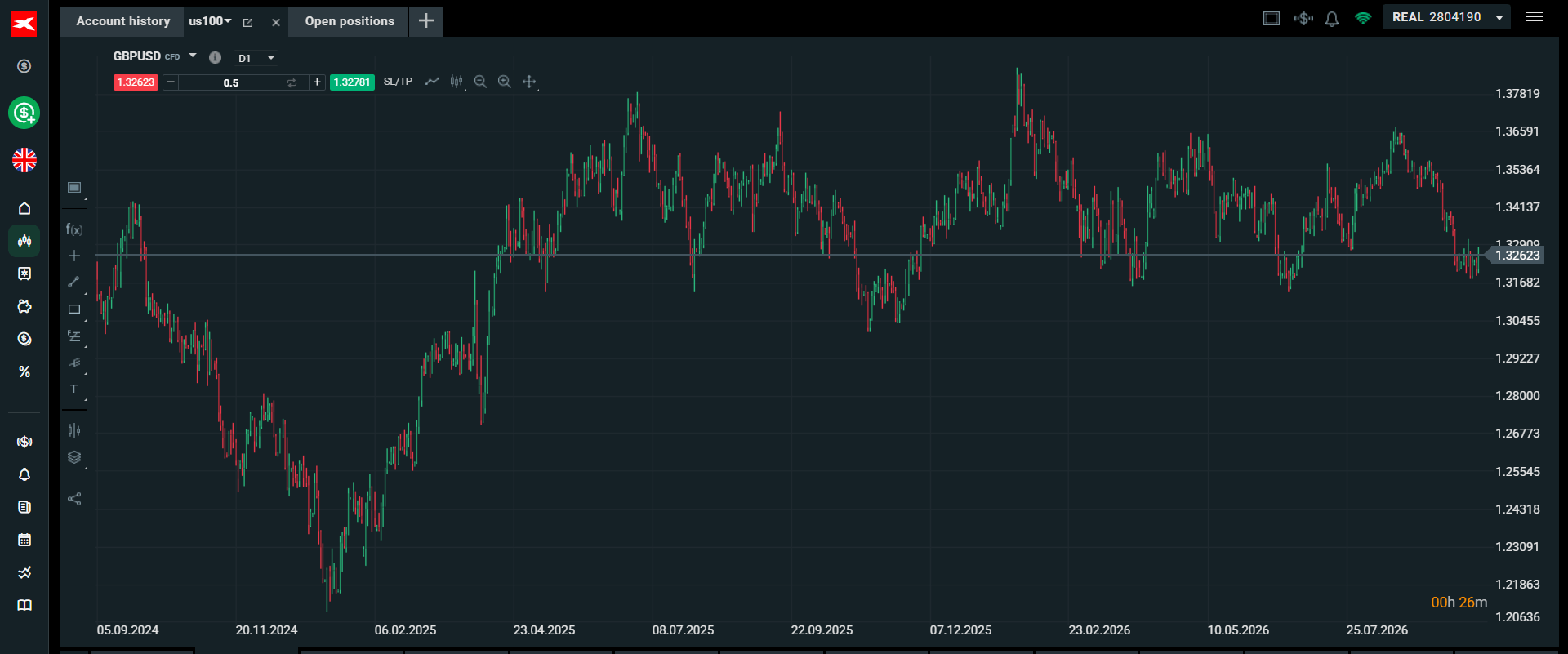
Source XTB. Past performance is not a reliable indicator of future results.
Chart 2: FTSE 100, approaching record highs
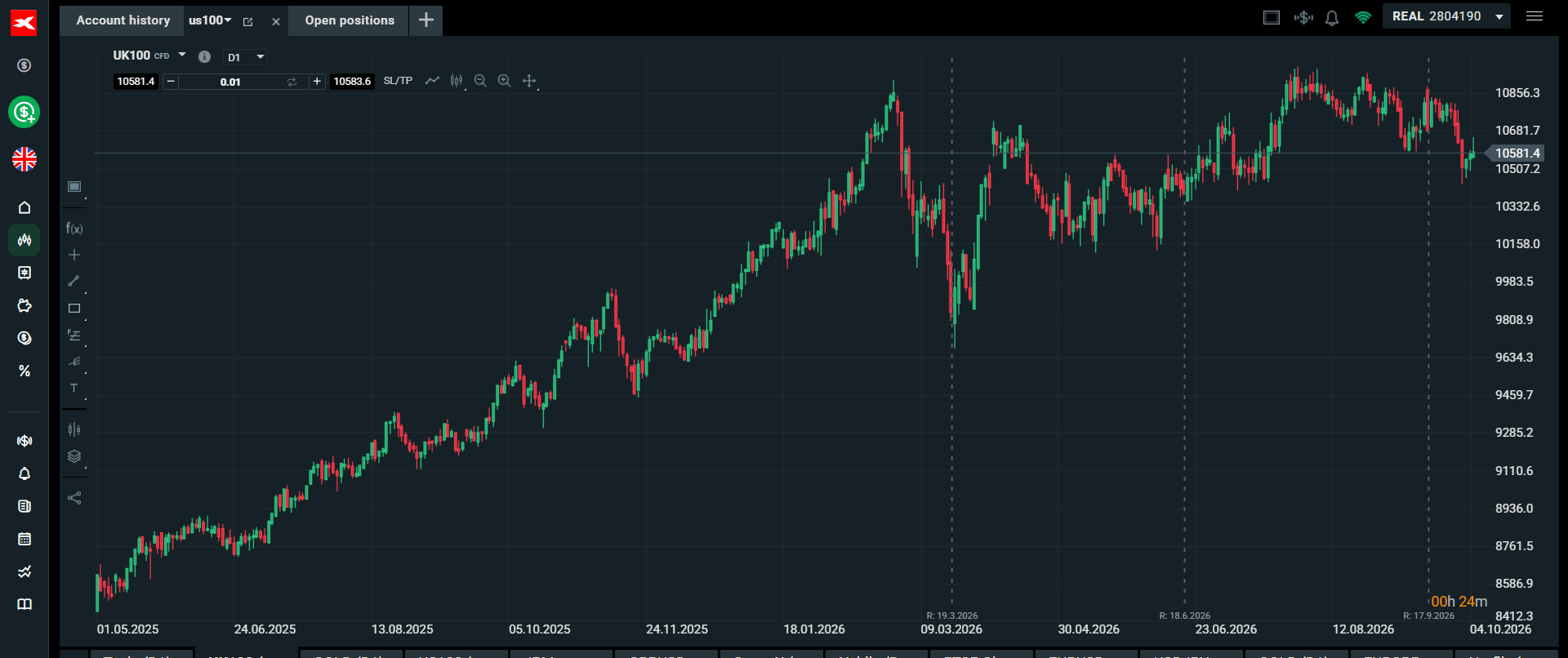
Source: XTB. Past performance is not a reliable indicator of future results.

GBP/EUR 2025 Forecast: Euro, Pound Exchange Trends

How To Trade and Invest in the S&P 500

Understanding Forex Volatility: Causes, Effects, and Strategies
This content has been created by XTB S.A. This service is provided by XTB S.A., with its registered office in Warsaw, at Prosta 67, 00-838 Warsaw, Poland, entered in the register of entrepreneurs of the National Court Register (Krajowy Rejestr Sądowy) conducted by District Court for the Capital City of Warsaw, XII Commercial Division of the National Court Register under KRS number 0000217580, REGON number 015803782 and Tax Identification Number (NIP) 527-24-43-955, with the fully paid up share capital in the amount of PLN 5.869.181,75. XTB S.A. conducts brokerage activities on the basis of the license granted by Polish Securities and Exchange Commission on 8th November 2005 No. DDM-M-4021-57-1/2005 and is supervised by Polish Supervision Authority.