US2000

Trade US2000 CFD

Past performance or future forecasts does not constitute a reliable indicator of future performance.

Fees

Less cost, more investments

Competitive fees

Trade with leverage and keep costs low

Free deposits/withdrawals

Manage your funds. Take advantage of free deposits and withdrawals.

No custody fees

No custody fees up to 250,000 EUR. After that, 0.02% per annum, minimum £10.

Learn

What is CFD trading?

New to CFDs? Learn how CFD trading works and how you can trade on both rising and falling prices without owning the underlying asset. We explain the basics, financial leverage, potential benefits and risks in simple terms.

Read the Beginner’s Guide

Create an account

Open your XTB account in just a few simple steps. Get access to global markets and a wide range of investment opportunities.

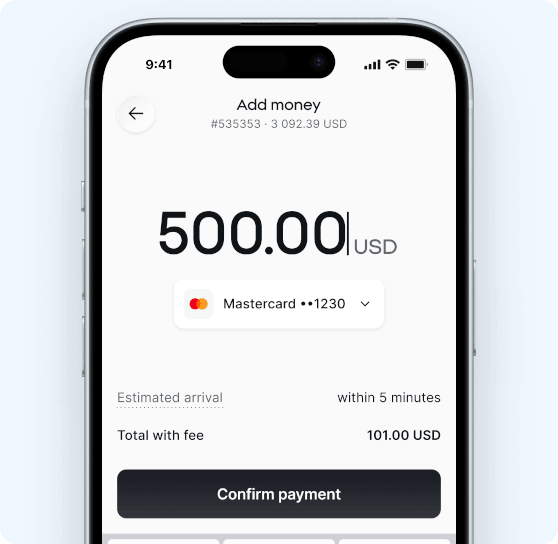
Make a deposit

Add funds to your account using one of the available payment methods. Once your funds are available, you’re ready to start investing.

Trade US2000

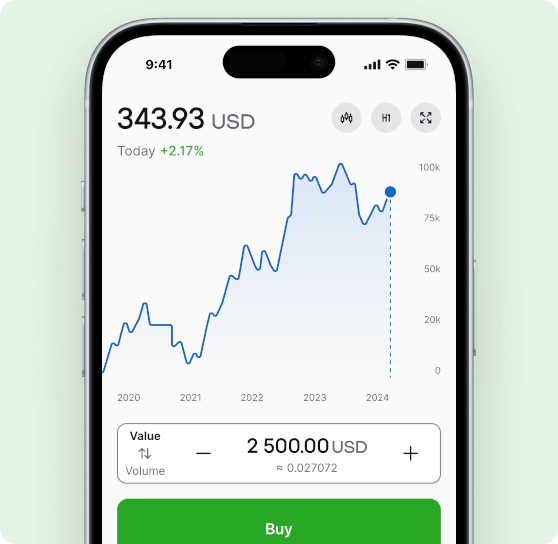
Find US2000 in XTB App, choose how much you want to invest and place your order. Start building your portfolio on your terms.

And make your money work in many ways

Explore more ways to put your money to work - from global stocks and ETFs to more. Discover Investment Plans and earn interest on uninvested funds while you wait for your next investment opportunity.

Popular in the markets

Most traded CFDs

Discover where CFD traders are most active. Explore some of the most traded CFDs across global markets and see which instruments are in focus.

News

Keep your finger on the pulse with our latest market news

We are regulated by leading financial regulatory authorities across multiple markets worldwide.

About instrument

Invest in US2000 CFD

The US2000, also known as the Russell 2000, monitors the performance of 2,000 small-cap companies in the United States. It is a favoured index for investors seeking to diversify their portfolios beyond large-cap stocks.

Various financial instruments, including CFDs, allow traders to invest in US2000. CFDs, or contracts for difference, enable traders to speculate on the price fluctuations of an underlying asset without owning it directly. Traders can profit from both rising and falling markets while using leverage to increase their market exposure when investing in CFDs.

Thanks to the XTB offering, it is possible for traders to invest in the US2000 using CFDs.

The ideal time to trade the US2000 CFD is dependent on the trader's strategy and time zone. However, the US stock market operates from 9:30 AM to 4:00 PM Eastern Time (from 13:30 to 20:00 GMT times), with most trading volume occurring during these hours. Traders who desire to avoid the busiest hours may consider trading during the first or last hour of the trading day when there tends to be higher volatility.

An interesting fact about the US2000 is that it serves as a barometer of the US economy as it comprises small-cap companies that are more sensitive to changes in the domestic economy. Additionally, the index was established in 1984 and is maintained by FTSE Russell, a subsidiary of the London Stock Exchange.

Over extended periods, US2000 has historically outperformed the broader market, including the S&P 500. However, it is more volatile than its larger-cap counterparts, which means that investing in the index entails higher risks, but also higher potential returns.

The US2000 is often used as a benchmark for actively managed small-cap funds, which aim to surpass the index's returns. Many financial professionals believe that beating the US2000 is difficult because it is well diversified and encompasses a wide range of small-cap companies from diverse industries.


Minimal spread

0.4

Margin

10%

Leverage

10

Commission

-

Market hours

12:05 am - 11:00 pm

Interesting Facts

What to know before investing in US2000

US2000, The Small-Cap Index: The Russell 2000, also known as US2000, is a stock index that includes approximately 2,000 small publicly traded companies in the United States. It focuses on smaller companies with market capitalisations ranging from a few million to a few billion dollars. 

Diversified Sector Representation: US2000 offers a diversified sector representation, comprising various industries such as healthcare, technology, financial services, consumer goods, and more. This diversity can provide investors with exposure to a broad range of sectors, reducing the risk associated.

Equal Weighting Methodology: Unlike market-cap-weighted indices, US2000 adopts an equal weighting methodology, where each constituent company is given an equal weight in the index. This means that smaller companies have the same impact on the index's performance as larger ones. 

Growth Potential: US2000 is often associated with higher growth potential compared to large-cap indices. Small-cap companies have more room for expansion and may experience faster growth rates, which can be beneficial for investors seeking higher returns.

Indicator of Domestic Economic Health: Due to its focus on smaller, domestically-oriented companies, US2000 can serve as an indicator of the overall health of the U.S. economy. When the index performs well, it may indicate that smaller businesses are thriving, which can have positive implications for the broader economy.

Influence of Economic Cycles: US2000's performance can be influenced by different economic cycles. During periods of economic expansion, small-cap stocks tend to outperform; however, during economic downturns, they may face greater challenges due to limited resources and access to capital.

Long-Term Historical Performance: Over the long term, US2000 has demonstrated the potential for attractive returns. However, it's essential to note that small-cap stocks can also be more volatile than large-cap stocks, requiring a careful consideration of risk tolerance and investment horizon.

International Exposure: While US2000 primarily consists of U.S.-based companies, some of these firms might have international operations. As a result, investing in US2000 can provide indirect exposure to global markets through companies with international revenue streams.

Correlation with Other Indices: US2000's performance can show a varying degree of correlation with other indices, like the S&P 500 or international small-cap indices. Understanding these correlations can be crucial when constructing a diversified investment portfolio.

Influence on Emerging Technologies: US2000 often includes smaller companies engaged in cutting-edge technologies and innovations. As these companies grow and succeed, they can have a significant impact on the development and adoption of emerging technologies, influencing various industries and sectors in the process.


FAQ

Do you have more questions?

Find answers to our most commonly asked questions. Still have a question? Please contact our customer support team.

Indice US2000 is a stock market index that tracks the performance of around 2,000 small-cap companies in the US.


Indice US2000 is calculated based on the market capitalisation of the small-cap companies it represents. The index is calculated using a formula that takes into account the current market value of the companies and the number of shares outstanding.


The small-cap companies included in Indice US2000 represent various industries, such as healthcare, technology, consumer discretionary, industrials, and financials.


Over the past few decades, Indice US2000 has shown a positive long-term trend, with occasional dips and fluctuations due to economic and geopolitical factors.


Indice US2000 can be a useful benchmark for small-cap stocks, provide portfolio diversification, and aid in making tactical and strategic asset allocation decisions for investors.


Indices and stocks are not the same thing. An index is a statistical measure of the change in a portfolio of stocks. It is not itself a stock, but rather a composite of the performance of a group of stocks. Stocks, on the other hand, are individual securities that represent ownership in a particular company.

There is no one "best" index for trading. The best index to trade depends on your investment goals, risk tolerance, and other personal factors. Some popular indices for trading include the S&P 500, NASDAQ Composite, and Dow Jones Industrial Average.

It is difficult to rank indices, as different indices are designed to track different types of market segments and have different methodologies. Some of the most well-known indices include: S&P 500, NASDAQ Composite, Dow Jones Industrial Average, FTSE 100, Nikkei 225.

It is possible to trade on FOREX and to trade indices, but they are quite different instruments. FOREX is about trading currencies, while indices represent the performance of a group of stocks. It is not possible to say whether one is "better" than the other, as the choice of which instrument to trade will depend on the individual trader's goals and risk tolerance.