



Gold continues to sell off, falling below $3,800 per ounce and reaching its lowest level in more than a year. The precious metal has declined toward $3,780, down 1.95% today, breaking through a key support zone that had prevented further losses as recently as early November. The sell-off comes despite the ongoing conflict in the Middle East, which would traditionally boost demand for safe-haven assets. This time, however, the dominant factor remains Federal Reserve monetary policy. Markets are currently pricing in approximately a 96% probability of a rate hike in December, whereas just a year ago, investors were expecting a cycle of rate cuts.
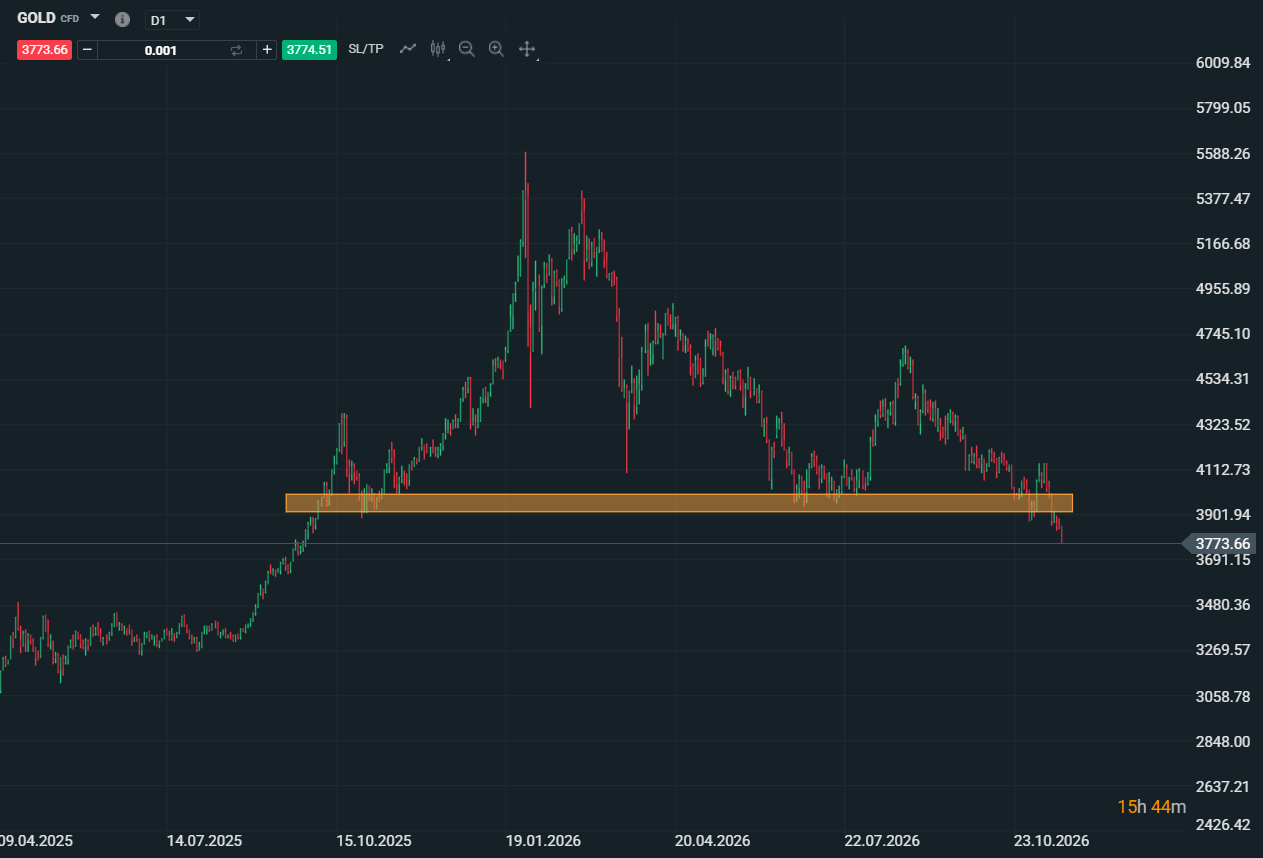
From a technical perspective, the break below $3,800 confirms buyer weakness and increases the risk of further downside. The former support level at $3,800 could now act as the nearest resistance level.
The 10-year U.S. Treasury yield remains near 5.1%, while the dollar is trading close to a 19-month high. The rising opportunity cost of holding non-yielding gold is currently the main obstacle to a recovery. Moreover, an escalation of the conflict with Iran could paradoxically work against gold. Higher oil prices sustain inflationary pressures, limiting the scope for monetary easing. As a result, the positive impact of geopolitical tensions on safe-haven demand is being offset by expectations of further Fed rate hikes and a stronger dollar.
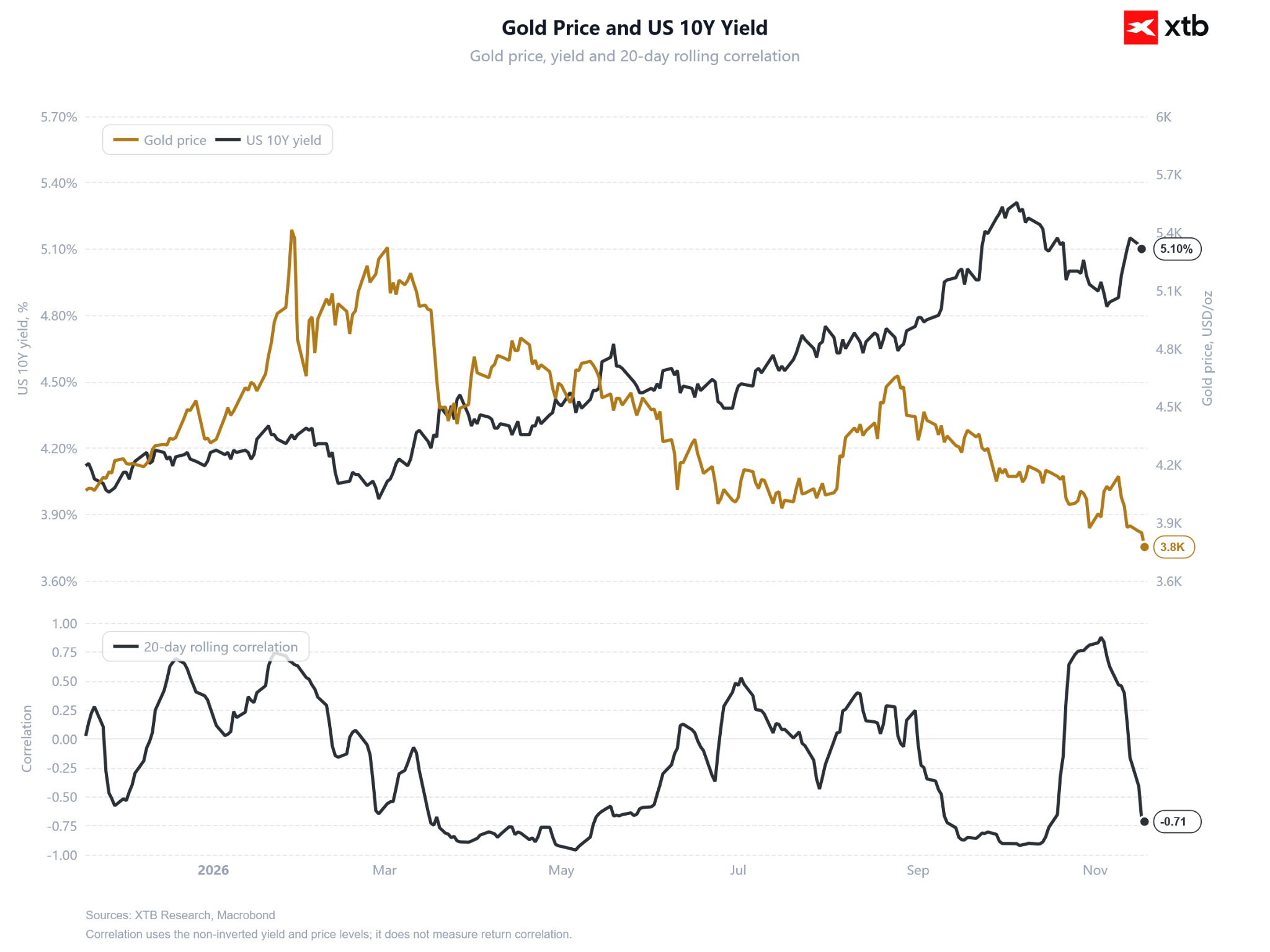
Gold has shown a strong negative correlation with 10-year U.S. Treasury yields in recent weeks.
Despite the pronounced weakness in prices, long-term demand fundamentals remain relatively solid. The World Gold Council's Q3 analysis highlighted continued central bank buying activity and the important role of ETFs in supporting global demand. On the other hand, a recovery in mine production has increased gold supply, while speculative funds reduced their long positions in early November.
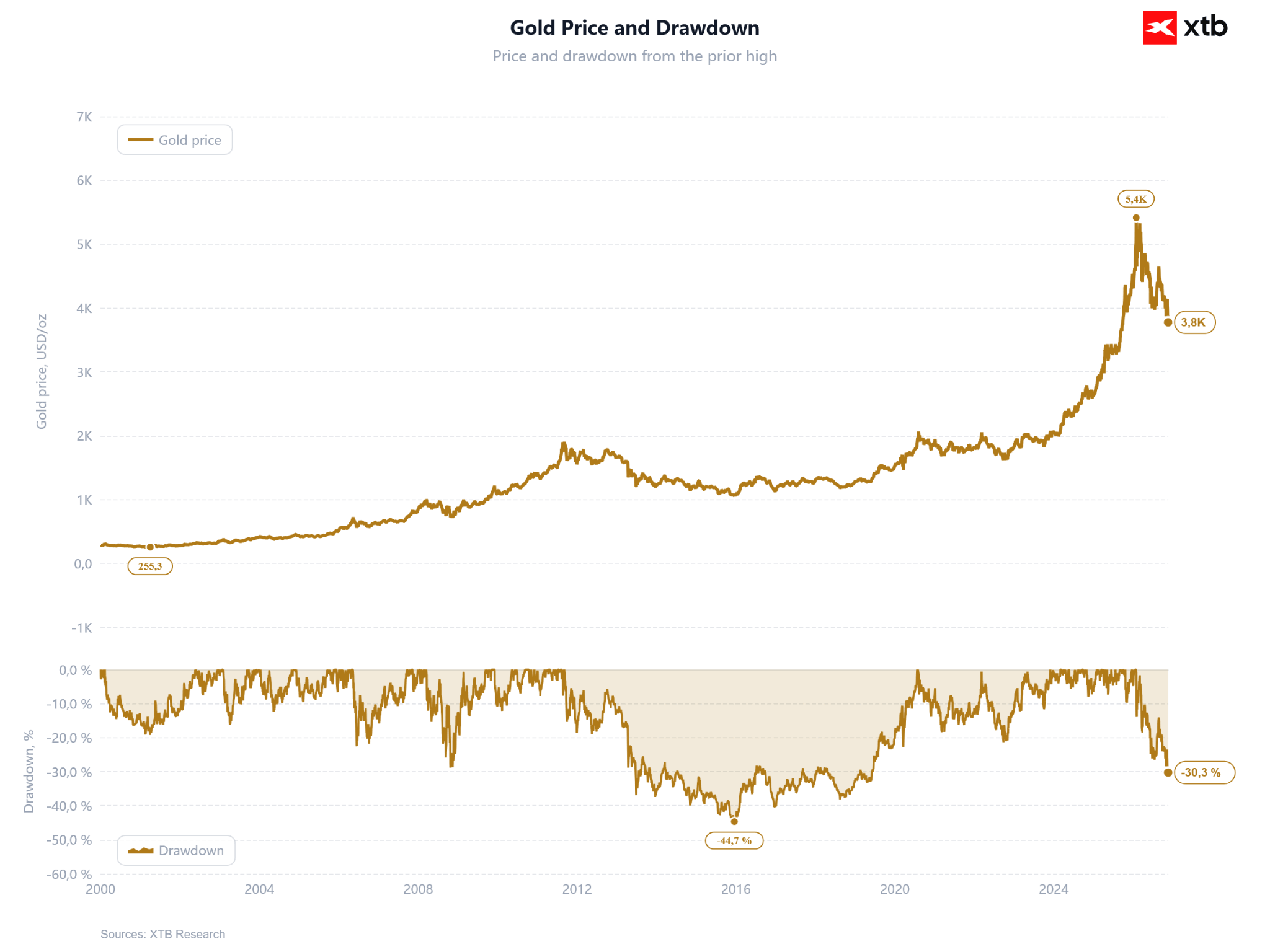
Gold has fallen more than 30% from its all-time high. The precious metal has declined from a record $5,400 to around $3,800 per ounce. This represents one of the deepest corrections in recent years, although historically the decline remains smaller than during the 2012–2015 bear market, when the maximum drawdown reached 44.7%.



Morning wrap (18.11.2026)
Nasdaq extends losses 📉 Will the Wall Street correction last longer?


🔼 Oil gains 1.5%


US Open: Wall Street on Edge Ahead of Nvidia Earnings 🚩 Could Rising Oil Prices Weigh on Stocks?
This content has been created by XTB S.A. This service is provided by XTB S.A., with its registered office in Warsaw, at Prosta 67, 00-838 Warsaw, Poland, entered in the register of entrepreneurs of the National Court Register (Krajowy Rejestr Sądowy) conducted by District Court for the Capital City of Warsaw, XII Commercial Division of the National Court Register under KRS number 0000217580, REGON number 015803782 and Tax Identification Number (NIP) 527-24-43-955, with the fully paid up share capital in the amount of PLN 5.869.181,75. XTB S.A. conducts brokerage activities on the basis of the license granted by Polish Securities and Exchange Commission on 8th November 2005 No. DDM-M-4021-57-1/2005 and is supervised by Polish Supervision Authority.