



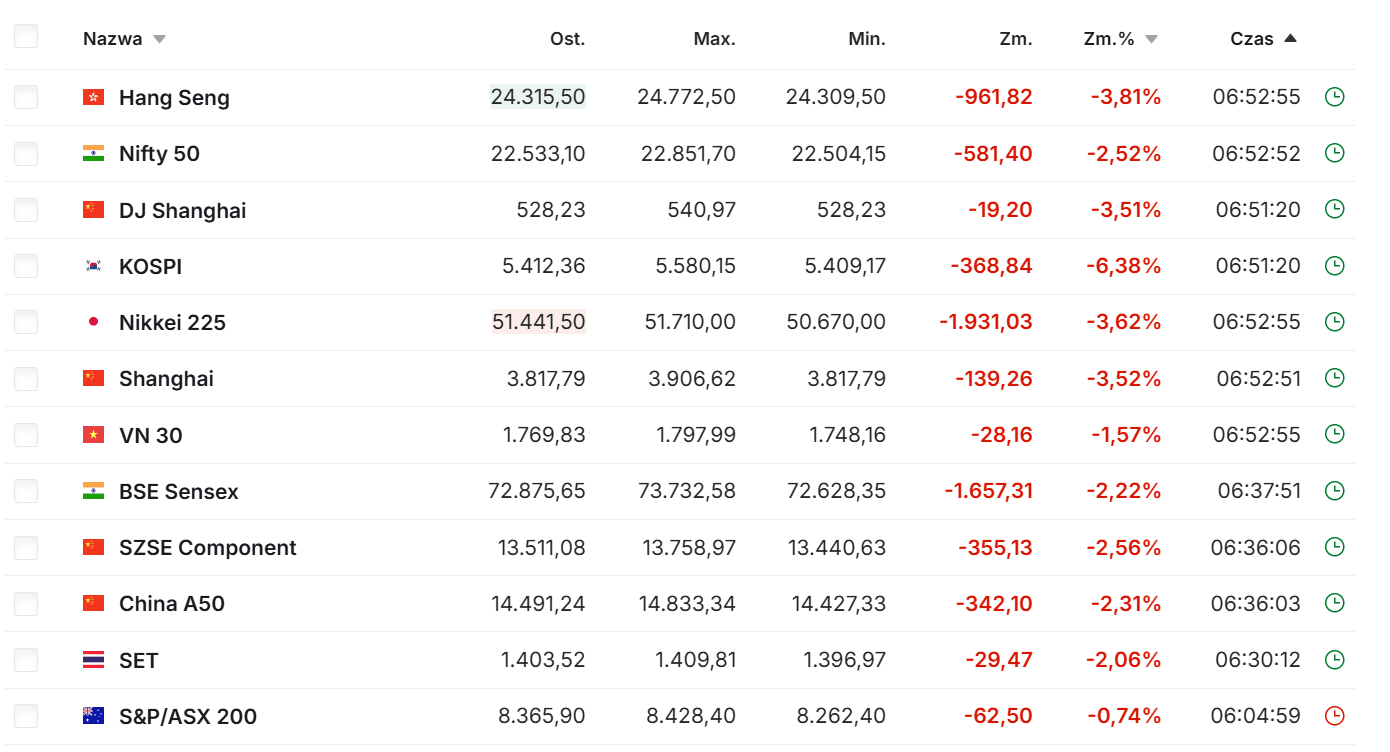
Source: investing
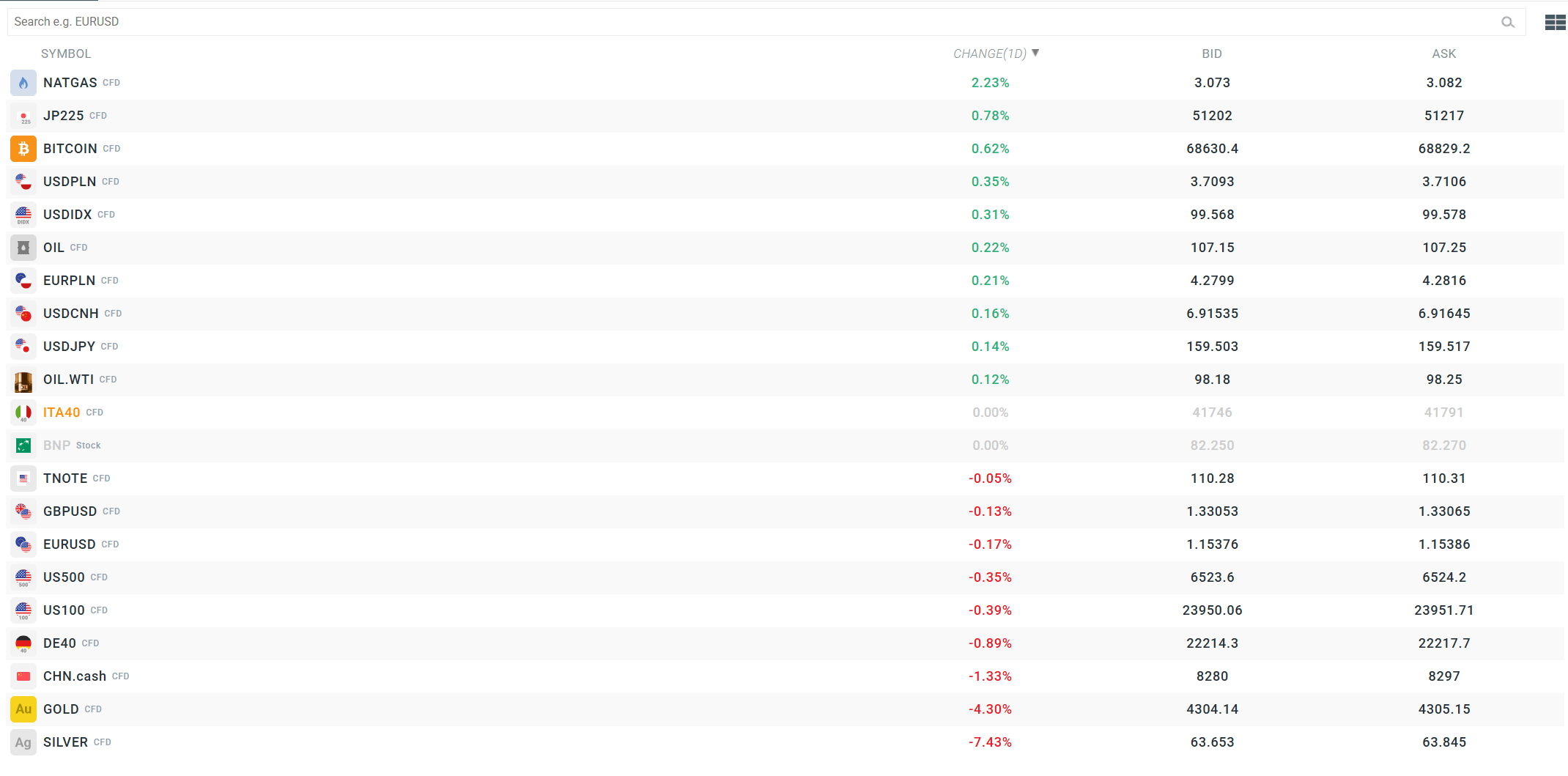
Volatility currently observed in the major contracts. Source: xStation
- The markets started the week on a very tense note, still dominated by the escalating geopolitical tensions in the Middle East.
- U.S. President Donald Trump has given Iran a 48-hour ultimatum, demanding that the Strait of Hormuz be reopened or face potential attacks on key infrastructure.
- The deadline expires on Monday evening, which is why the markets remain on high alert in case the conflict escalates further.
- Iran responded firmly, warning that any such actions would trigger retaliatory attacks targeting energy facilities throughout the Persian Gulf region, as well as desalination plants and nuclear power plants in neighboring Gulf Cooperation Council (GCC) countries.
- Fatih Birol, head of the International Energy Agency, described the situation as “very serious” and potentially worse than the oil crises of the 1970s. Birol noted that current disruptions are estimated at around 11 million barrels per day, which exceeds the combined losses from the two major oil shocks of that era.
- In this environment, the U.S. dollar and the Canadian dollar are once again dominating the Forex market. The USDJPY pair has once again risen above the 159.500 yen per dollar level. Meanwhile, the currencies of the Antipodes are performing very poorly.
- However, the most significant movements capturing investors’ attention are being seen in precious metals, specifically gold and silver. Gold is down 4% and has fallen to $4,320 per ounce, while silver is down 5.6% and is trading near $65.
- The decline in the prices of these metals may be partly due to the continued appreciation of the U.S. dollar, which has historically shown a strong inverse correlation with sharp movements in the gold market.
- Futures contracts on U.S. and European indices point to declines in stock prices for companies in those regions during Monday’s trading session. The German DE40 is currently down 0.82%, the U.S. US500 is down 0.32%, and the Chinese CHN.Cash is down 1.29%. On the other hand, however, the contract for the Japanese JP225 is currently up nearly 0.72%, indicating that sentiment is mixed.
- The situation is quite different in the spot market, however. Here, stock markets are seeing very sharp declines. The Korean KOSPI and the Japanese Nikkei 225 are faring the worst, falling 6.3% and 3.6%, respectively.
- Crude oil prices—currently the main indicator of perceived inflationary risk from the Middle East—are rising, but by a relatively small margin given the geopolitical context of ultimatums and attacks on oil infrastructure. Brent prices are currently hovering near $107, up about 0.3%, while WTI prices are climbing to $98.


Chart of the Day: Is USDJPY running out of road? Inflation forces the BoJ to act, but the Fed could spoil the Yen’s rally



Macro Calendar: Preliminary PMI Readings and Earnings Ahead



Morning Wrap: AI profitability concerns spark market Sell-Off



Daily Summary: Valuations Under Pressure, Capital Moves Away From Technology
This content has been created by XTB S.A. This service is provided by XTB S.A., with its registered office in Warsaw, at Prosta 67, 00-838 Warsaw, Poland, entered in the register of entrepreneurs of the National Court Register (Krajowy Rejestr Sądowy) conducted by District Court for the Capital City of Warsaw, XII Commercial Division of the National Court Register under KRS number 0000217580, REGON number 015803782 and Tax Identification Number (NIP) 527-24-43-955, with the fully paid up share capital in the amount of PLN 5.869.181,75. XTB S.A. conducts brokerage activities on the basis of the license granted by Polish Securities and Exchange Commission on 8th November 2005 No. DDM-M-4021-57-1/2005 and is supervised by Polish Supervision Authority.