


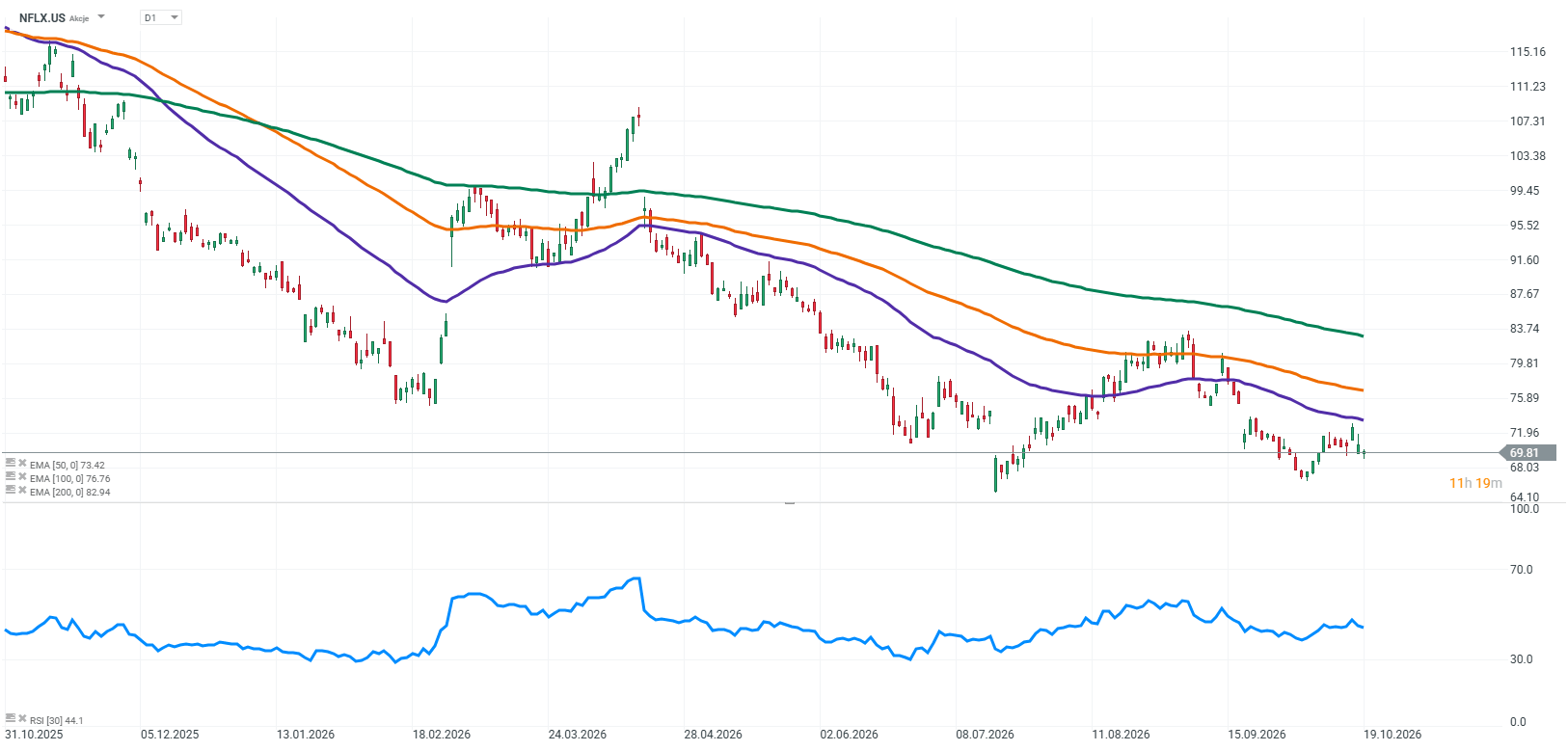
For years, Netflix was one of those companies the market was willing to forgive for occasional missteps. Investors only had to look at the scale of the changes the company had brought to the entertainment industry and how effectively it had turned the global popularity of its productions into growing revenue. They were not just buying shares in a streaming platform, but also a stake in a business that seemed to keep redefining the limits of its own growth. Today, the picture looks different. Netflix shares are down around 20% year to date, and the company is increasingly being valued as a mature media business that must deliver growth, control costs, and consistently give viewers reasons to keep their subscriptions.
This does not mean Netflix has suddenly become a weak company. The problem is more subtle. Double digit revenue growth and high profitability are still impressive, but they may no longer be enough to convince investors to pay more for the stock. The market already knows the story of Netflix's global scale, recognizable brand, and growing advertising business. It wants to know what comes next. And the answer cannot simply be that Netflix will continue to be Netflix.
Key Market Expectations:
• Third quarter revenue: Approximately $12.9 billion
• Expected year over year revenue growth: Approximately 11.7%
• Projected operating margin: Approximately 33.2%
• Expected revenue growth in 2027: Approximately 11.2%
• Earnings per share: $0.82
• Content spending in 2026: Approximately $20 billion
• The key question: Can Netflix rebuild viewer engagement, sustain advertising growth, and continue improving margins at the same time?
Revenue Is One Thing. Viewership Is Another.
Expectations for the third quarter are solid. Revenue growth of 12% and an operating margin of 33% would confirm that Netflix can still combine scale with high profitability. However, they would not resolve the more important question: how long can the company maintain this pace without losing its ability to surprise the market to the upside?
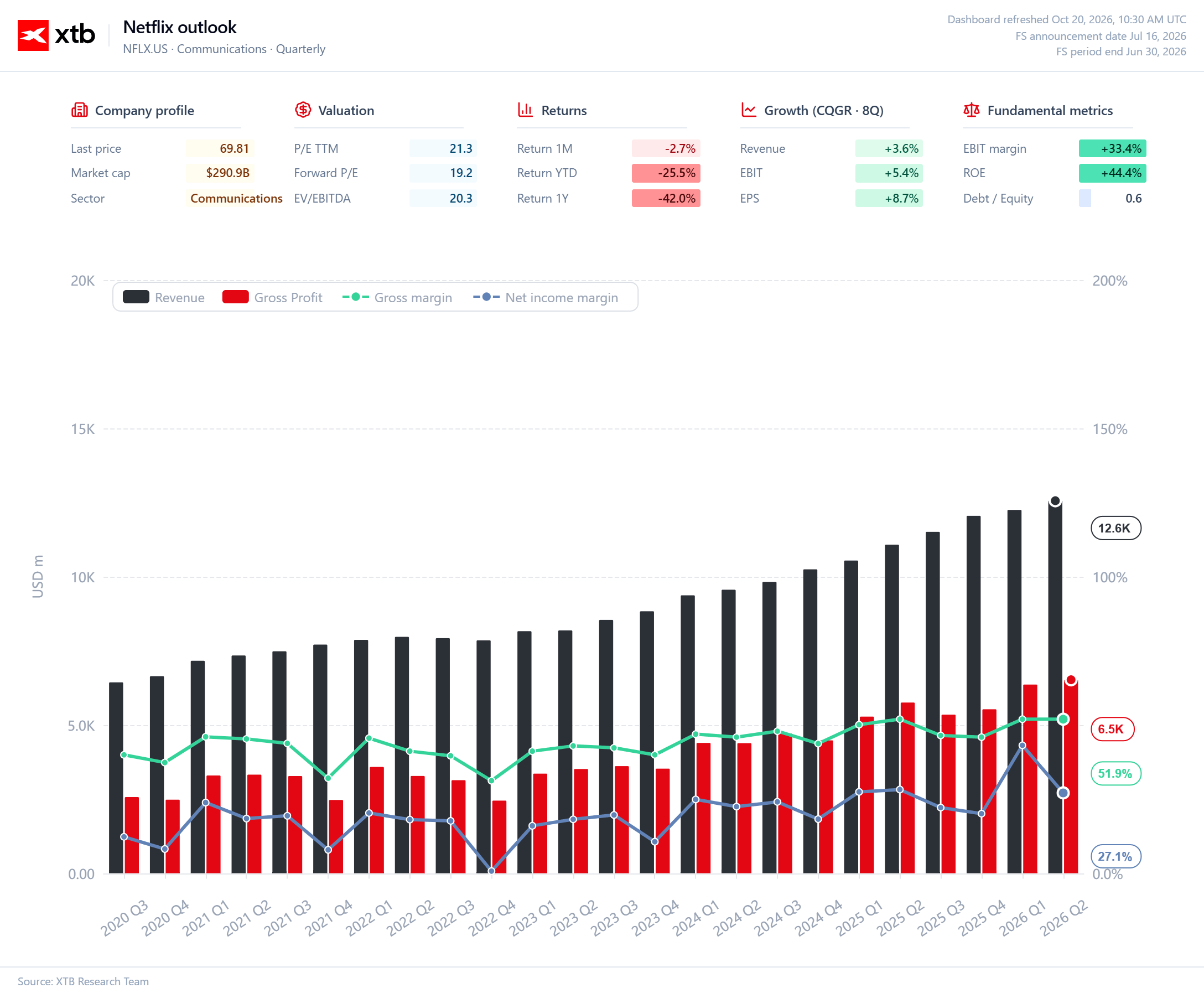
The consensus for 2027 points to revenue growth of around 11% and an operating margin of approximately 33.5%. That is the outlook for a healthy business, but it offers no obvious catalyst for the stock. With shares down around 20% year to date, investors will be looking for reasons to believe the market is being too cautious about Netflix's future, rather than simply confirmation that the business is performing as expected.
Viewership is the biggest source of concern. In the third quarter, total viewing hours for titles featured in the Top 10 rankings fell by around 11% year over year, while the number of viewers declined by 17%. The comparison is challenging because Netflix had an exceptionally strong content lineup a year earlier, including KPop Demon Hunters, Happy Gilmore 2, the second season of Wednesday, and the third season of Squid Game. This year's releases attracted viewers, but failed to match the scale of those earlier successes.
A weaker quarter does not necessarily signal a lasting problem. The real question is whether Netflix can consistently produce shows and films that reach beyond its core subscriber base and become cultural events. A broad content library alone does not provide that kind of competitive advantage. The most valuable titles are those that attract new users, retain existing subscribers, and keep the platform at the center of everyday conversations. Easier year over year comparisons and a stronger content lineup in the fourth quarter could improve viewing figures, but they cannot replace evidence that Netflix can still produce global hits.
More Expensive Productions, Greater Risk
The change in leadership of Netflix's content division could signal a greater emphasis on more expensive, prestige productions. In 2026, Netflix allocated approximately $20 billion to content, 10% more than a year earlier. Spending could increase at a similar pace or even faster next year.
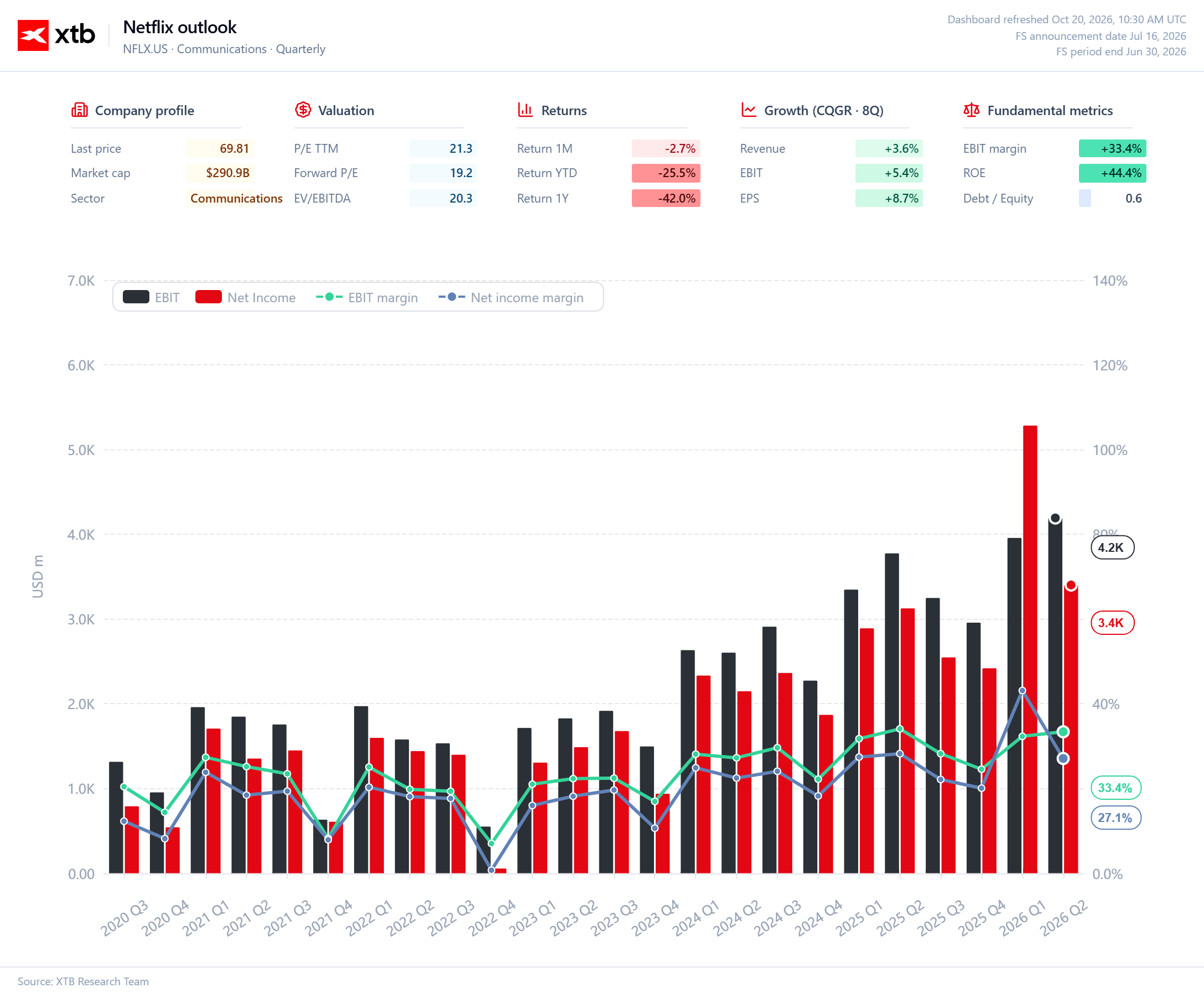
This strategy could pay off if new productions boost viewership and help retain subscribers. However, there is no guarantee that bigger budgets will deliver bigger hits. Higher spending also means greater cash outflows and amortization expenses, potentially leaving less room for margin improvement. Netflix must convince investors that it is not simply spending more, but successfully turning that money into content viewers genuinely want to watch.
Advertising remains another source of growth. Better targeting and expansion into additional markets could increase revenue without relying exclusively on subscriptions. The fourth quarter will bring several potential audience draws, including NFL events and major film and series releases.
However, advertising growth will not solve the problem if viewership weakens. Advertisers pay for audience attention, and Netflix must capture that attention first. This is precisely why the content strategy and monetization efforts should be evaluated together rather than treated as two independent reasons for optimism.
Netflix Needs to Recapture Its Ability to Surprise
Netflix still has strong foundations: global scale, a recognizable brand, high profitability, and investment capacity that smaller competitors cannot match. However, that does not mean the coming years will be as easy as the period when the expansion of streaming itself provided a natural source of growth. Today, Netflix must maintain financial discipline, expand advertising, and finance productions capable of attracting mass audiences, all at the same time.
Third quarter results could be strong, and the year end outlook could prove reassuring. For the stock, however, the more important factor will be whether management presents a compelling picture of 2027. With content spending on the rise, investors will want to understand where further earnings growth will come from and whether the company can return to consistently producing hits.
Netflix does not have to stop being a good company for its stock to disappoint. It simply needs to grow in line with expectations that the market has already priced in. Following this year's selloff, the question is therefore not just whether the company can deliver its numbers. It is whether Netflix still has the ability to surprise investors.
Strong numbers can support the business. Rebuilding the stock price will require a story the market is willing to believe in again.
Source: XTB Research



The Week Ahead


Chart of the Day: US100 (Nasdaq 100). Rebound in AI trade vs. weakening technical picture



Macro Calendar - UK Labor Market, ZEW Sentiment, and Wall Street Giants' Reports



Market Wrap: Rebound in China and Falling Oil Prices, France Leads EU Declines
This content has been created by XTB S.A. This service is provided by XTB S.A., with its registered office in Warsaw, at Prosta 67, 00-838 Warsaw, Poland, entered in the register of entrepreneurs of the National Court Register (Krajowy Rejestr Sądowy) conducted by District Court for the Capital City of Warsaw, XII Commercial Division of the National Court Register under KRS number 0000217580, REGON number 015803782 and Tax Identification Number (NIP) 527-24-43-955, with the fully paid up share capital in the amount of PLN 5.869.181,75. XTB S.A. conducts brokerage activities on the basis of the license granted by Polish Securities and Exchange Commission on 8th November 2005 No. DDM-M-4021-57-1/2005 and is supervised by Polish Supervision Authority.