

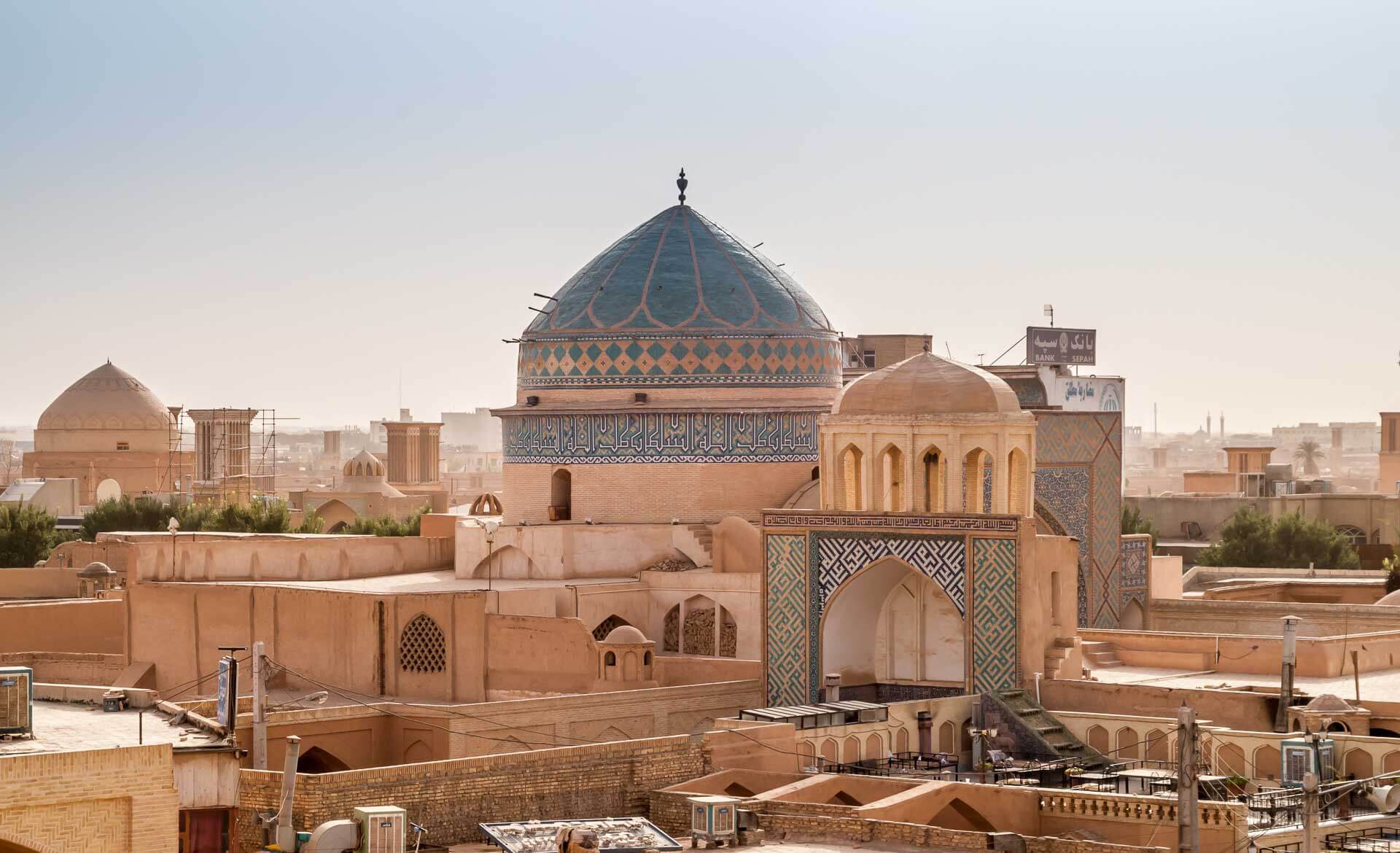

Even people who are not connected with the financial market realize how important the Persian Gulf is for the hydrocarbons market, which still plays a partial or direct role in most supply chains necessary for the functioning of the economy.
Market participants interested in commodities and aware of less obvious interdependencies also know that the Strait of Hormuz is a “choke point” that is particularly important for more specialized types of fuels, such as jet fuel, but also, for example, for aluminium.
However, this is not the end of the list of raw materials and goods for which a large share of global supply passes through the Strait of Hormuz—goods that are often inconspicuous, yet absolutely essential for the functioning of entire industries and even sectors of the economy.
Fertilizers and logistics
Persian Gulf countries (the GCC) account for 30–40% of global urea and ammonia production. These chemicals are hugely important across many industries, but one of their most important uses is as fertilizers. The leading producers of these compounds are mainly Russia, Poland, and the Persian Gulf countries.
The key difference, however, is that both Russia and the GCC countries are fully self-sufficient when it comes to natural gas, which is necessary to produce these products. Poland, by contrast, needs imported feedstock.
Urea is also the main ingredient in so-called selective catalytic reduction agents, commonly known as "AdBlue". This fuel additive is fundamental to road transport in the European Union.
Sulfur
Natural gas and its semi-products are not the only export goods from the Gulf that are crucial for fertilizer production. The simplest way to obtain sulfur in industrial quantities is by desulfurizing fossil fuels; as a result, Saudi Arabia alone accounts for more than 70% of global sulfur exports.
However, sulphur is important not only for fertilizer production; it is also used, for example, in manufacturing many pharmaceutical products. In terms of volume, the most common use of sulfur is the production of sulfuric acid, used in metallurgy and mining. The use of sulfuric acid is key to the extraction and refining of, among others, copper, cobalt, and a range of rare earth metals.
Gypsum
Price increases could also affect the construction sector over the longer term. Oman, Iran, and Saudi Arabia are among the leaders in gypsum production, which is essential for a range of products commonly used in the installation and construction industry.
Production, extraction, and export of gypsum are not as concentrated in the GCC as in the case of other commodities, but delays and shortages may be sufficient to affect the broader market for this raw material.
Gold
There are a number of gold mines in the region, but their impact is small; the Persian Gulf region is primarily a powerful hub for processing, refining, and trading precious metals. The United Arab Emirates is the world’s second-largest exporter of gold. Mining in the region itself has a marginal impact on global gold supply, but significant disruptions in precious metals flows—at a time when the market is so volatile—can manifest in large price moves.
Helium
Helium production is concentrated almost entirely in the United States, Russia, and Qatar. This is because industrial helium production is significantly linked to natural gas.
Helium is an element that is hard to spot in export statistics by volume or even value, yet it is a key link in many niche but highly important technological processes. Helium is needed, among others, for MRI machines, semiconductor fabs, precision manufacturing, and the aerospace sector.
A steady inflow of the raw material is also essential for many research institutes, whose equipment may be damaged without continuous supplies. The Persian Gulf sends about 30% of the total global helium supply to the world.


📊Market Wrap: Europe Rebouns Despite Higher Oil and Dollar (12.10.2026)

Chart of the Day: Will the RBI's bold regulatory package rescue the rupee? (12.10.2026)


Economic Calendar: Where will stock exchanges remain closed today? (12.10.2026)

Morning Wrap: Oil cheaper despite attacks on Saudi Arabia, markets await CPI (12.10.2026)
This content has been created by XTB S.A. This service is provided by XTB S.A., with its registered office in Warsaw, at Prosta 67, 00-838 Warsaw, Poland, entered in the register of entrepreneurs of the National Court Register (Krajowy Rejestr Sądowy) conducted by District Court for the Capital City of Warsaw, XII Commercial Division of the National Court Register under KRS number 0000217580, REGON number 015803782 and Tax Identification Number (NIP) 527-24-43-955, with the fully paid up share capital in the amount of PLN 5.869.181,75. XTB S.A. conducts brokerage activities on the basis of the license granted by Polish Securities and Exchange Commission on 8th November 2005 No. DDM-M-4021-57-1/2005 and is supervised by Polish Supervision Authority.