Visa Visa

Visa • Visa INC - class A

Invest in V.US stock

Past performance is not necessarily indicative of future results, and any person acting on this information does so entirely at their own risk.

Fees

Less costs, more investments

0% commission*

Enjoy no commission on stocks and ETFs up to EUR 100 000 of monthly turnover, above this amount the commission is only 0.2% (min. EUR 10). Remember that 0.5% currency conversion cost may apply.

Free deposits and withdrawals

Manage funds without costs using selected payment methods.

Free account opening

Complete the process in 15 minutes without unnecessary formalities.

Create an account

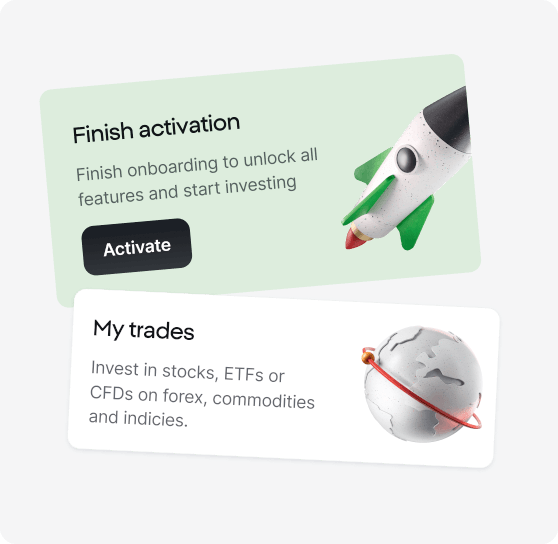
Open your XTB account in just a few simple steps. Get access to global markets and a wide range of investment opportunities.

Make a deposit

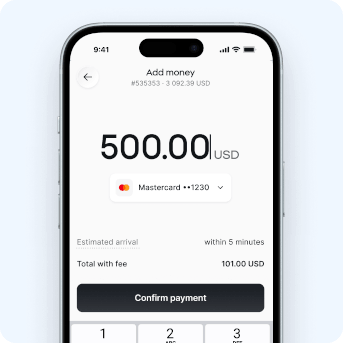
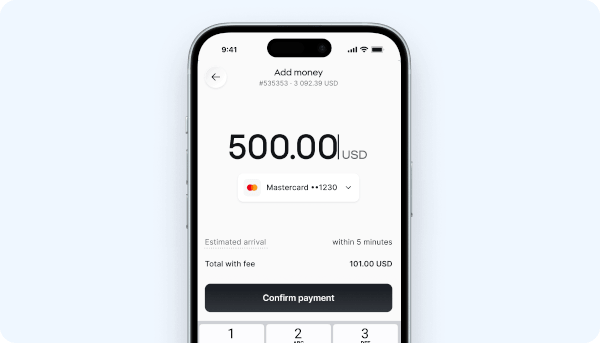
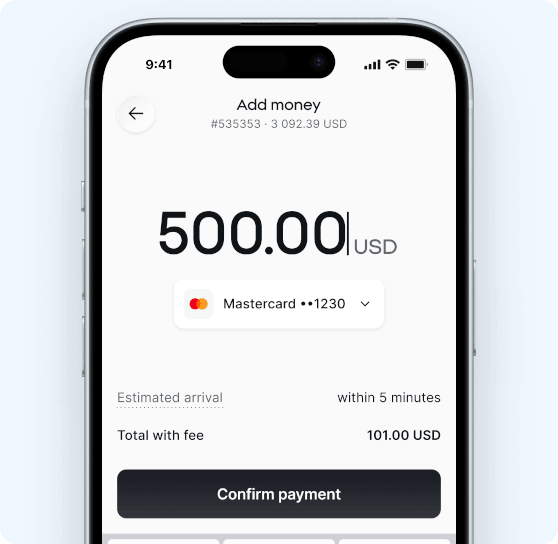
Add funds to your account using one of the available payment methods. Once your funds are available, you’re ready to start investing.

Buy V.US

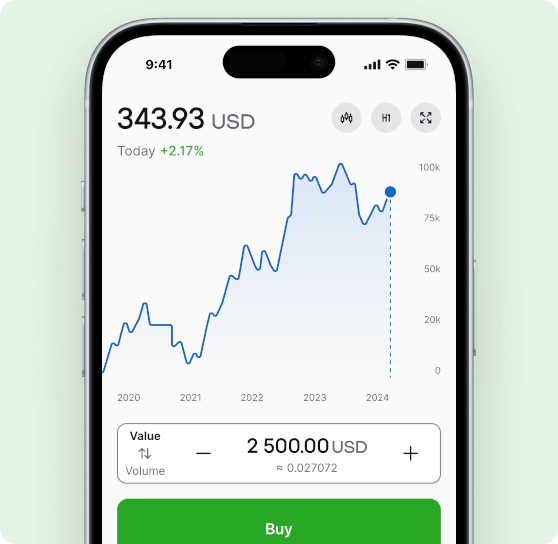
Find V.US in XTB App, choose how much you want to invest and place your order. Start building your portfolio on your terms.

And make your money work in many ways

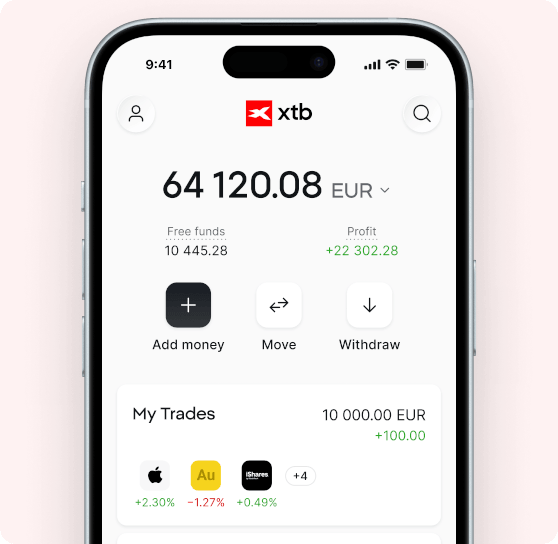
Explore more ways to put your money to work - from ETFs to CFDs on commodities, indices, crypto and more. Discover Investment Plans while you wait for your next investment opportunity.

Popular in the markets

Most traded stocks

See what the world is trading. Explore some of the most actively traded stocks and discover popular companies from global markets.

News

Keep your finger on the pulse with our latest market news

We are regulated by leading financial regulatory authorities across multiple markets worldwide.

About instrument

Invest in V.US with ZERO commission

Visa touches nearly every part of the global economy, acting as the invisible engine that moves trillions of dollars each year. It provides the rails on which banks and businesses rely to process payments securely, instantly, and globally.

Key Takeaways

  • Visa is the world’s largest electronic payments network by volume.
     
  • It earns revenue from transaction fees, not from issuing cards or lending money.
     
  • Strongly positioned in the shift toward digital and contactless payments.
     
  • A highly scalable model with limited credit risk.
     
  • Visa's revenues are sensitive to global economic health and cross-border travel trends.

Business Model

Visa's business model is simple but powerful: It provides the infrastructure for digital payments and earns a small fee from each transaction processed. Visa does not issue credit or debit cards. Instead, it partners with banks and merchants, offering a scalable, asset-light, and highly profitable system.

Business Segments

  • Service Revenues: Fees for providing services to financial institutions.
     
  • Data Processing Revenues: Fees for processing card transactions.
     
  • International Transaction Revenues: Fees on cross-border transactions.
     
  • Other Revenues: Risk management, value-added services, and consulting.

Investing Characteristics

Visa is the invisible bridge that moves trillions of dollars across the global economy. It doesn’t lend money like a bank; instead, it runs the toll booths of the payment highways, collecting a fee every time someone swipes, taps, or clicks. Visa’s business model is asset-light, highly scalable, and generates strong margins.

The company benefits from the long-term global trend toward digital payments and away from cash. Its revenues are tied to transaction volumes, not interest rates or debt levels, making it more resilient than traditional banks. However, Visa’s fortunes are still linked to consumer spending and economic activity — downturns can temporarily reduce its transaction volumes. Regulation and rising competition in fintech also pose long-term considerations.

Key Investing Summary:

  • Asset-light business model focused on transaction processing
     
  • Highly defensive and benefits from global cashless trends
     
  • Revenue sensitive to economic cycles and consumer spending levels
     
  • Faces growing competition from fintech disruptors
     
  • Strong global brand and trusted infrastructure

Major Catalysts & Risks

Catalysts

  • Digital Payment Growth: Cashless payments rising globally, especially in emerging markets.
     
  • Expansion into New Payment Flows: B2B, cross-border, and person-to-person (P2P) payments.
     
  • E-commerce Boom: Online shopping and mobile payments continue expanding Visa's reach.
     
  • Partnerships with Fintechs: Collaborations with digital banks and payment apps can deepen market share.

Risks

  • Regulatory Scrutiny: Increased global regulation on interchange fees and competition practices.
     
  • Fintech Competition: New entrants offering alternative payment solutions (e.g., buy-now-pay-later).
     
  • Economic Slowdowns: A sharp recession would cut into payment volumes.
     
  • Cybersecurity Threats: Breaches or failures could harm Visa’s brand and trust.

Short Company History & Major Milestones

Visa’s roots trace back to 1958 with the launch of the BankAmericard credit program. It evolved into a consortium of financial institutions, later becoming Visa International. The company went public in 2008, marking one of the largest IPOs in U.S. history. Today, Visa stands at the forefront of the shift to digital money, embracing everything from contactless payments to fintech partnerships.


 

ISIN

-

Trading days

-

Market hours

15:30 - 22:00

Commission

0 USD

Minimum order value

10 USD

Interesting Facts

What to know before investing in V.US

Birth of Visa: Originally launched as BankAmericard by Bank of America in 1958, Visa began as one of the first large-scale consumer credit card programs. The system introduced a new way for customers to make payments while allowing merchants and banks to participate in a growing electronic payments network. 

World’s Largest Card Network: Visa operates one of the world’s largest electronic payment networks, processing hundreds of billions of transactions each year across its global ecosystem. The network connects billions of payment cards with millions of merchants, financial institutions, and consumers in countries around the world.

Zero Fraud Liability: Visa introduced Zero Liability policies to help protect cardholders from unauthorized transactions, establishing a higher standard for security and consumer confidence in the payments industry. These protections ensure that eligible customers are not held responsible for fraudulent purchases made with their Visa cards.

Contactless Surge: Visa experienced significant growth in contactless payments after 2020, as consumers and businesses increasingly adopted faster, safer, and more convenient ways to pay. The shift was especially strong in Europe and Asia, where contactless cards and mobile payment options became a preferred choice for everyday transactions.

Innovation Lab Network: Visa operates a global network of Innovation Centers designed to collaborate with fintech companies, developers, financial institutions, and businesses to explore the future of payments. 

Visa Direct Expansion: Visa is expanding beyond traditional card payments through Visa Direct, a platform that enables fast, secure money transfers directly to eligible bank accounts, digital wallets, and other financial platforms.

FAQ

Do you have more questions?

Find answers to our most commonly asked questions. Still have a question? Please contact our customer support team.

 Visa operates the largest electronic payments network, connecting banks, businesses, and consumers globally.


 No, Visa only provides the network; banks and other financial institutions issue Visa-branded cards.


 Mainly through transaction fees on card payments processed through its network.


 Visa is actively exploring digital currencies and partnering with crypto platforms to expand payment options.


 North America remains the biggest region, but emerging markets like India and Africa are strategic growth areas.


 Mastercard, American Express, and increasingly new fintech disruptors like PayPal and Block (formerly Square).


 With AI-powered fraud detection systems and tokenization technologies that secure card details.


 While resilient, Visa’s revenues can fluctuate with consumer spending patterns and economic cycles.


 Visa Direct enables instant money transfers between accounts, supporting peer-to-peer payments, gig economy payouts, and more.


 Visa is committed to achieving net-zero emissions by 2040 and advancing financial inclusion worldwide.


A stock is a type of security that represents ownership in a company. It represents a claim on part of the company's assets and earnings.

By owning stocks, you can potentially benefit from the growth and success of the company. There are several ways that stocks can make you money: dividend payments (some stocks pay dividends, which are payments made to shareholders out of the company's profits) or capital appreciation (when the price of a stock you own increases, you can sell the stock for a profit).

There are three main types of stocks: common stock (gives its owner voting rights at shareholder meetings and entitles to a portion of the company's profits through dividends), preferred stock (pays dividends at a fixed rate and has a higher claim on assets and earnings than common stock; does not typically come with voting rights), and warrants (type of security that gives the holder the right, but not the obligation, to buy or sell a specific number of shares of stock at a predetermined price within a certain time frame).

It is not possible to determine a "good" first stock to buy, as what constitutes a good stock can vary depending on an individual's financial goals and risk tolerance. It is important for individuals to thoroughly research any potential investment and consider their own financial situation before making a purchase.

The financial instruments we offer, especially CFDs, can be highly risky. Fractional Shares (FS) is an acquired from XTB fiduciary right to fractional parts of stocks and ETFs. FS are not a separate financial instrument. The limited corporate rights are associated with FS.
This page was not created for investors residing in Brazil. This brokerage is not authorized by the Comissão de Valores Mobiliários (CVM) or the Brazilian Central Bank (BCB). The content of this page should not be characterized as an investment offer in Brazil or for investors residing in that country.
Losses can exceed deposits