



Richmond Fed President Thomas Barkin adopted a cautiously hawkish tone, stating that tax cuts, deregulation, and the expected rate reductions should provide stimulus to the economy this year. At the same time, he emphasized that future policy decisions will need to be carefully considered given risks on both sides of the Fed’s mandate. Barkin noted that inflation has fallen but remains above target, and that the labor market should not weaken much further in the coming months. Importantly, he described the current policy stance as “within the neutral range,” marking a shift from last year’s characterization of policy as “moderately restrictive,” and suggested that a stronger consumer and economy this year could justify keeping rates unchanged for longer.
In contrast, Fed Board member Miran — known for his consistently dovish outlook — warned that leaving policy too restrictive could “choke off growth in its early stages.” Miran argued that core inflation is already close to target, fiscal policy will support activity, and distortions in housing components are temporarily skewing the data. He said the Fed should cut rates by more than 100 bps this year and expects incoming data to continue supporting policy easing.
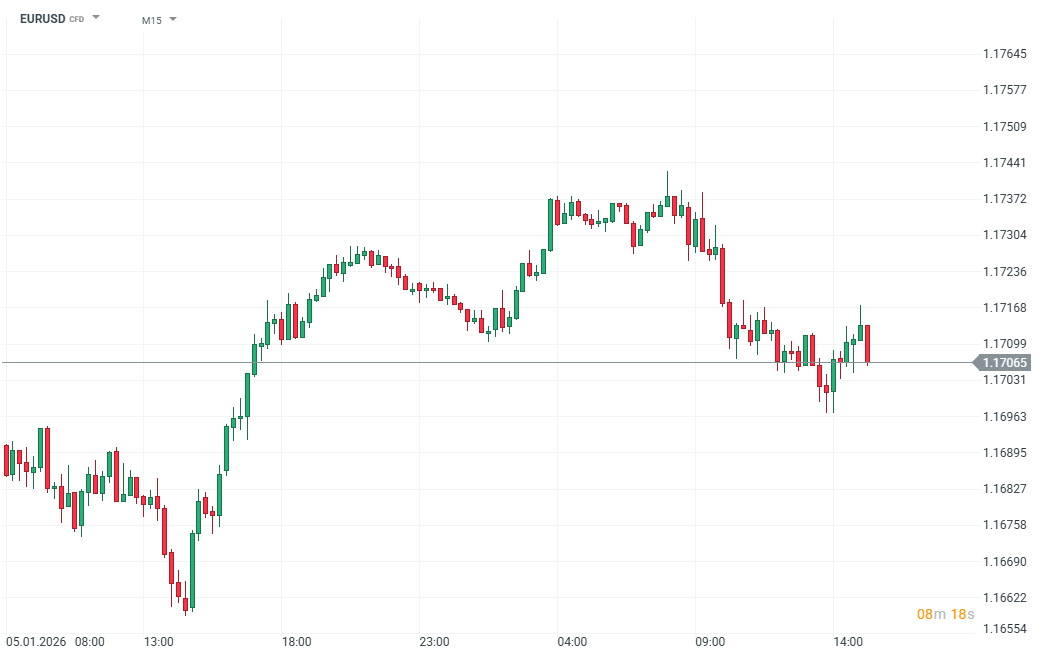
The EURUSD pair has rebounded slightly after a pullback driven by weaker German CPI and PMI readings across Europe. Markets currently price the first potential rate cut no earlier than the April or June FOMC meeting.


Daily Summary: Trump and OpenAI keep the market on a roller coaster💡



U.S. attacks on Iran suspended 💥


Market Wrap: A 4% surge in oil prices weighs on indices (08.10.2026)

EURUSD falls below 1.12 amid hawkish Fed's Waller remarks