



According to the minutes from the Federal Reserve’s September meeting, all 19 Fed officials supported the latest interest-rate increase. Most participants also judged that another rate hike in 2026 would likely be appropriate.
- Many Fed officials said the rate increase was also justified from a risk-management perspective, particularly given persistent inflationary pressures.
- Several participants assessed that the underlying momentum of the US economy was stronger than previously expected.
- Several Fed officials also noted that the scale of investment related to artificial intelligence continued to surprise to the upside, potentially supporting economic activity and investment demand.
- Participants generally expected conditions in the labor market to remain stable.
- Several Fed officials judged that the current level of interest rates was either no longer restrictive or only mildly restrictive.
Fed sees the economy as solid, but inflation remains a concern
The Fed assesses that the US economy continues to expand at a solid pace despite the gradual cooling of the labor market. Consumer spending and private investment remain relatively strong, while available indicators suggested that domestic demand growth accelerated in the first half of the year and continued to outpace overall GDP growth. Business investment related to artificial intelligence was particularly strong, also supporting imports of high-tech capital goods.
The labor market, however, is less dynamic than before. The unemployment rate fell to 4.1% in July and August, but nonfarm payroll growth slowed markedly, while wage and labor-cost growth remained below year-ago levels. The Fed does not appear to view this as a sharp deterioration in employment conditions, but rather as a further normalization following an earlier period of very strong labor-market growth.
Inflation remains the biggest concern. The Fed estimated that PCE inflation rose to around 3.3% year over year in August, while core PCE inflation remained close to 3.4%. Price pressures were driven mainly by higher goods prices related to tariffs, energy costs and geopolitical tensions, as well as rising technology-related spending linked to the expansion of AI infrastructure. Overall, the Fed’s assessment of the economy remains relatively strong: activity and investment are resilient, the labor market is gradually cooling, but inflation remains clearly above target, supporting a cautious and restrictive approach to monetary policy.
EURUSD chart (H1 timeframe)
EURUSD initially moved slightly higher following the release of the Fed minutes, although part of the gain was subsequently erased. Overall, the pair is stabilizing around 1.12 after the recent decline, while the minutes did not trigger a significant increase in volatility.
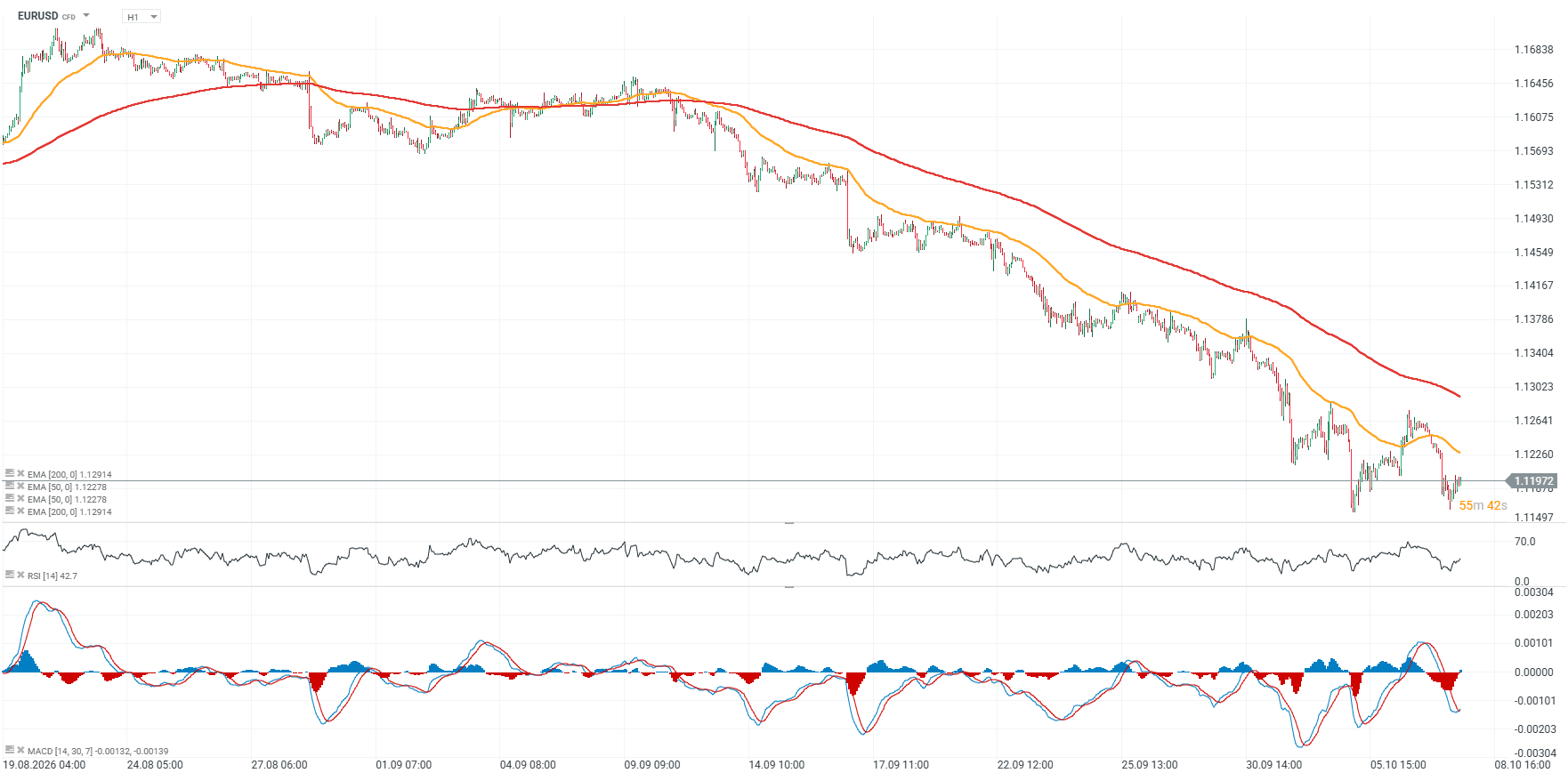
Source: xStation5


Daily summary: Wall Street recovers losses despite a surge in yields 🗽 Gold and silver retreat



Large decline in crude inventories 🛢️📉


📉 Gold loses 1.7%



US Open: Wall Street in the Red 🚩 Nasdaq Falls 1% From Record Highs, Constellation Brands Back at March 2020 Level