



Iranian President Masoud Pezeshkian issued a statement on Tuesday that immediately sent shockwaves through global financial markets. His message was clear: Iran does not seek war and is ready to end it—but only in exchange for formal security guarantees protecting the country from further attacks.
Pezeshkian emphasized that Iran had engaged in diplomatic talks in good faith prior to the outbreak of the conflict, and that it was only after these talks that military attacks by the U.S. and Israel took place. He described the military actions of both countries as unprecedented crimes and violations of international law. He also criticized countries in the region hosting U.S. military bases, accusing them of passivity regarding the use of these facilities to strike Iran. He appealed to Europe for “professional engagement in accordance with international law” and a departure from its current stance. Guarantees that attacks on Iran will not resume remain a key condition for peace.
Market reaction
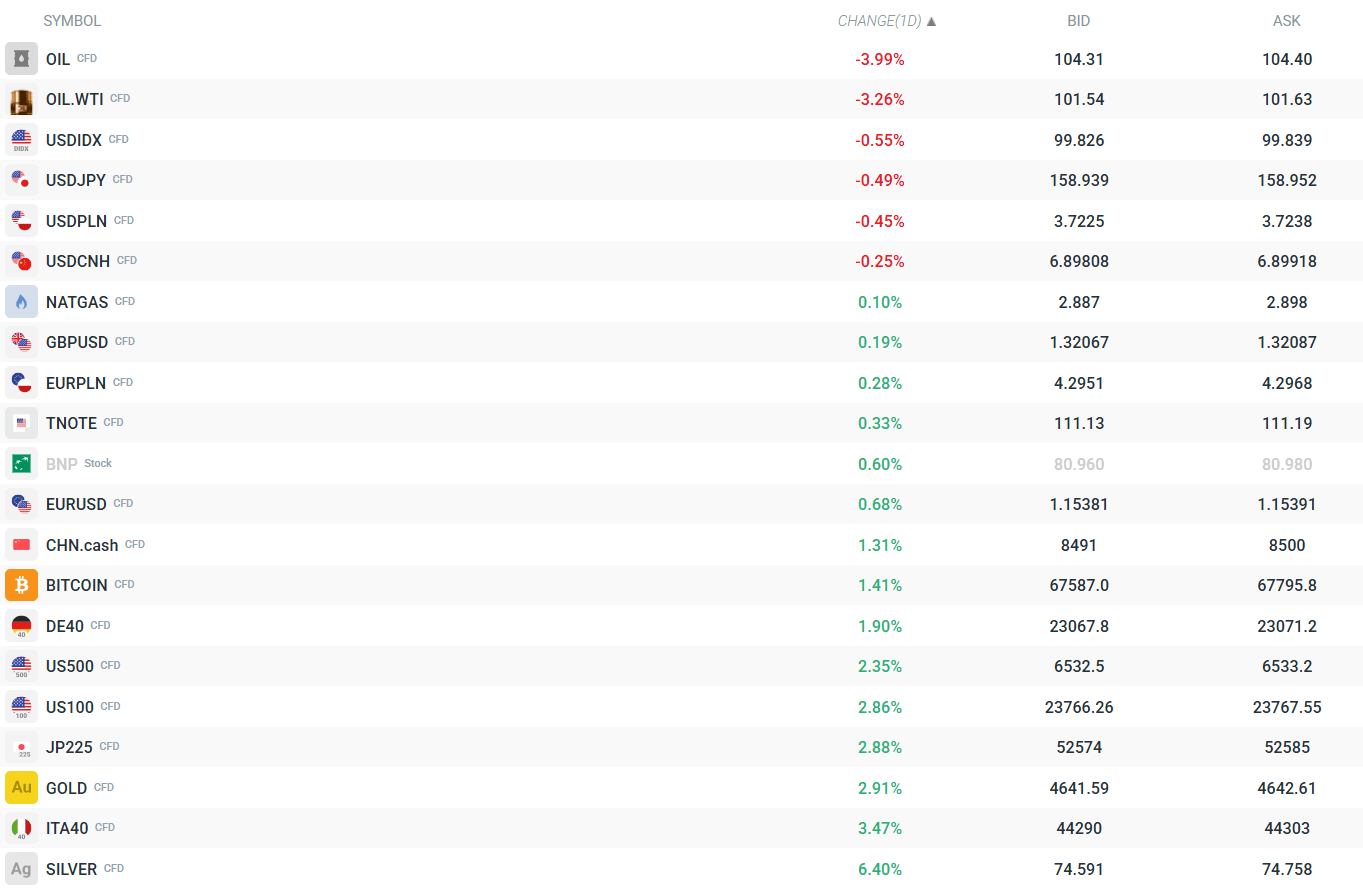
Investors interpreted this statement as the first tangible diplomatic signal from Tehran and immediately began to unwind the geopolitical risk premium:
-
The S&P 500 gained 162 points, rising by 2.55%
-
The Nasdaq rose by 675 points, or 3.27%
-
The Dow Jones rose by more than 1,000 points, representing an increase of 2.27%
-
The yield on 10-year U.S. Treasury bonds fell by 5 basis points to 4.292%, while the yield on 2-year bonds fell by 6.2 basis points to 3.768%
-
The price of WTI crude oil slipped below its intraday highs and turned negative, trading around $101— still above the key $100 level
Context and caveats
The market’s euphoric reaction stems from a simple fact: over the past few weeks, the market has been pricing in the scenario of a full-scale escalation and the closure of the Strait of Hormuz, through which approximately 20% of global oil supplies pass. Any sign of de-escalation signals a reversal of this risk premium. At the same time, caution is warranted—on the same day, the Iranian Fars News Agency reported that Iran is threatening to strike the port of Fujairah in the United Arab Emirates and a key pipeline bypassing the Strait of Hormuz if the UAE does not cease supporting the U.S. and Israel. Tehran is thus playing on two fronts simultaneously: diplomatic and military, and the sustainability of the market euphoria depends largely on how Washington responds to Pezeshkian’s offer.


Daily summary: Wall Street recovers losses despite a surge in yields 🗽 Gold and silver retreat

BREAKING: EURUSD with limited reaction to Fed Minutes from September meeting



Large decline in crude inventories 🛢️📉


📉 Gold loses 1.7%