



- Crude oil: +2.3 million barrels (forecast: -2.7 million barrels; previous: -6.23 million barrels)
- Gasoline: -2.5 million barrels (forecast: -1.7 million barrels; previous: -6.08 million barrels)
- Distillates: -1.20 million barrels (forecast: -2.0 million barrels; previous: -4.49 million barrels)
Futures on WTI oil fall slightly after the data - reaction to lower gasoline inventories has been limited due to the smaller than anticipated fall in stockpiles of distilates and surging oil inventories which came in at +2.3 million barrels vs -2.7 million expected.
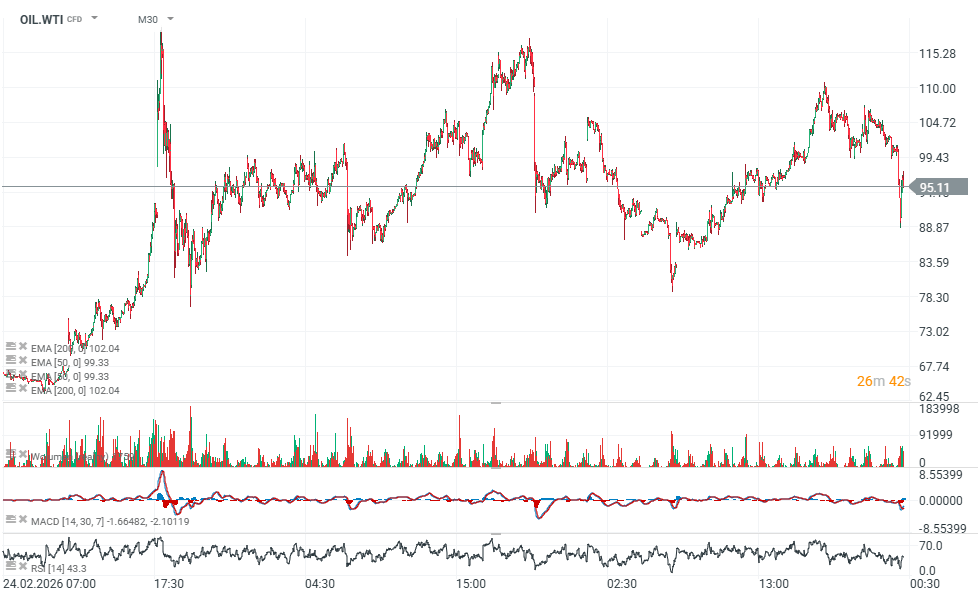
Source: xStation5
Why these data matter:
These figures are important because weekly changes in US crude oil and petroleum product inventories provide insight into the current balance between energy supply and demand, directly influencing oil prices and investor sentiment.
An increase in crude inventories may signal weaker demand or stronger supply, which can weigh on oil prices, while declining gasoline and distillate stocks suggest that demand from consumers and industry remains relatively resilient. Because the data are released weekly, markets tend to react quickly, making the report an important driver of short-term trading in energy markets.
Inventory data also influence inflation expectations, since oil and refined products are key components of transportation and production costs. More broadly, fuel demand trends can serve as an indicator of the overall health of the US economy, as stronger fuel consumption is often associated with higher levels of economic activity.



Economic Calendar: Where will stock exchanges remain closed today? (12.10.2026)


Morning Wrap: Oil cheaper despite attacks on Saudi Arabia, markets await CPI (12.10.2026)



Three Markets to Watch Next Week (09.10.2026)



Daily Summary: A Shallow Rebound Ahead of Earnings Season