

- The Brazilian real remains the world’s best-performing currency in 2026*.
- However, last week saw a political scandal and a significant weakening of the currency.
- The Central Bank of Brazil’s interest rates remain very high, also in real terms.
- The country is benefiting from higher oil prices as well.

- The Brazilian real remains the world’s best-performing currency in 2026*.
- However, last week saw a political scandal and a significant weakening of the currency.
- The Central Bank of Brazil’s interest rates remain very high, also in real terms.
- The country is benefiting from higher oil prices as well.
The best-performing currency of 2026*, the Brazilian real, came under fire last week, suffering its largest weakening against the US dollar since October 2025.
Chart 1: USDBRL (29/10/2024 - 19/05/2026)
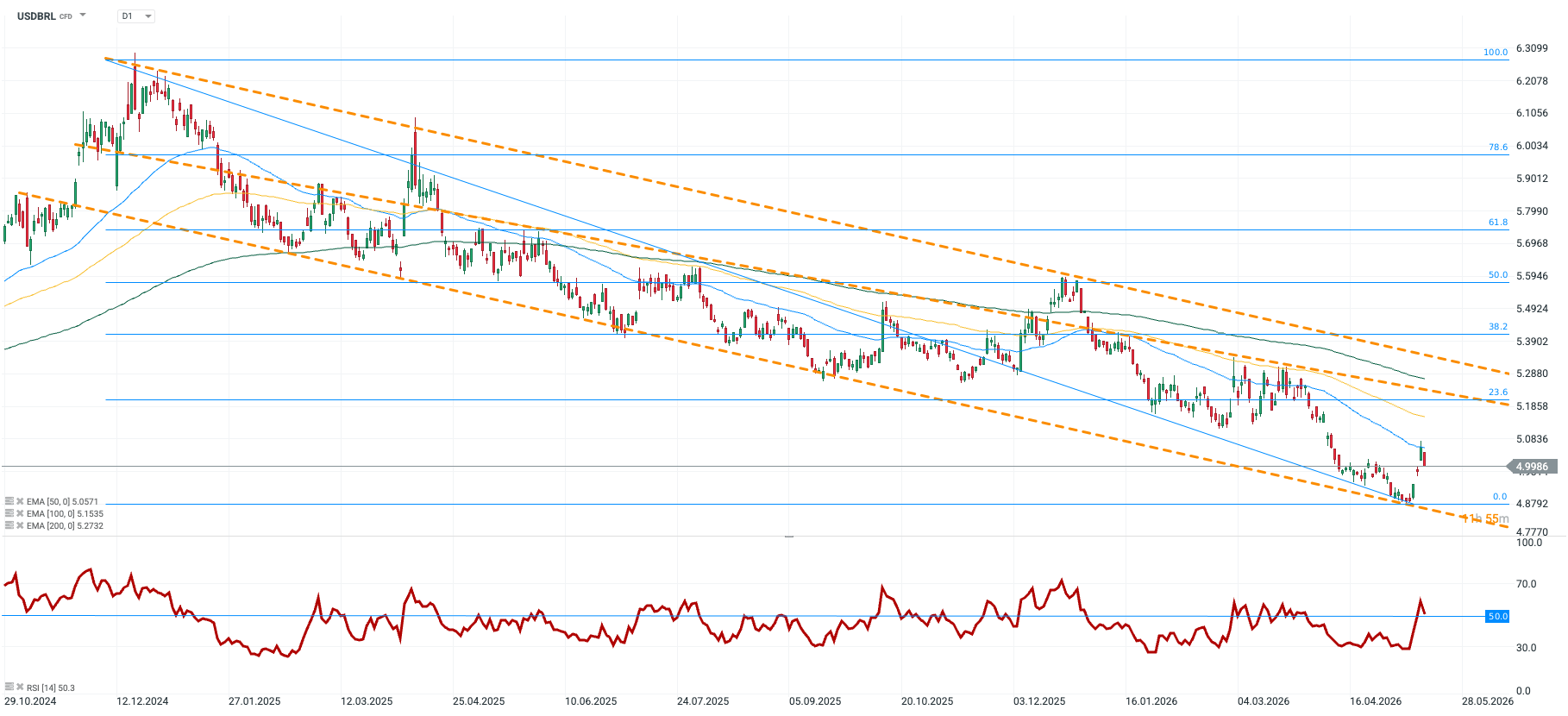 Source: xStation, 19/05/2026
* Zambian kwacha, Russian ruble and Costa Rican colón place higher on the dashboard, but are not among currencies we analyse on a regular basis.
What stands behind such a significant move?
The reason behind the depreciation of the real can be found primarily in the recordings and news published by The Intercept Brazil incriminating Flavio Bolsonaro, senator and right-wing candidate for the presidential position in the October elections. According to the materials, Flavio demanded millions of dollars from Daniel Vorcaro, former CEO of Banco Master. The total amount of the transactions under investigation is estimated to be over $25 million.
According to Bolsonaro, the money was intended to finance a biopic about his jailed father, Jair Bolsonaro, the country's former president. Flavio claims it was 100% private sponsorship of a private project, with Vorcaro and Banco Master not set to receive any political favours in return.
The federal police and the Supreme Court immediately took up the matter, which – despite Bolsonaro's explanations – led to a decline in his ratings. Flavio had been on an upward trend for some time. Since the beginning of May, he had been the favorite to win the election according to the odds on the Polymarket platform, surpassing Lula in most polls too.
The market sees a certain risk in the increased likelihood of a victory for Lula, the leader of the left. The lack of even gradual fiscal consolidation, given the budget deficit, which has exceeded 8% of GDP for 3 years now, seems problematic. The market seems to have partially priced in these concerns, which allowed the real to rebound at the beginning of the week.
What supports the real?
High interest rates
Banco Central do Brasil has already made two cuts in the current cycle, but the reference rate remains at a very high level (14.5%), allowing the currency to benefit from the carry trade. While further cuts cannot be ruled out in the coming months, their scale should be limited due to the unanchored inflation expectations and loose fiscal policy. This could allow the real to continue to benefit from the carry trade.
Net oil exporter position
Brazil is one of the world's largest oil producers (approximately 4.2 million barrels per day). While some of this is consumed domestically, the surplus is significant enough to make the country a major player on the global stage, generating over $55 billion in revenue annually from oil exports. The main recipient of Brazilian oil (43% of total exports) is China, which currently has little room for negotiation. Its import structure is dependent on the Middle East (55%), Russia (21%), aforementioned Brazil (7%) and Angola (5%).
Chart 2: China's Crude Oil Import Structure (2024)
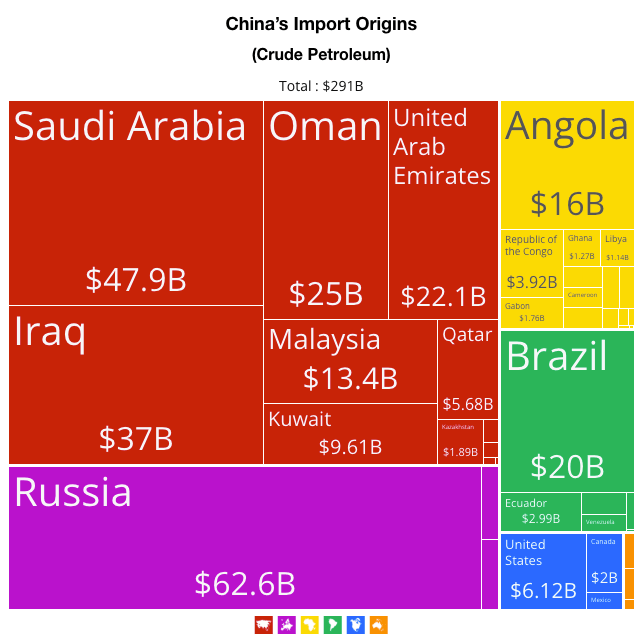 Source: OEC (19/05/2026)
The currency is also supported by the increase in soybean prices, which account for over 12% of domestic exports.
Improved sentiment towards emerging markets
April brought a significant improvement in risk sentiment on both currency and equity markets. Recent days have cast doubt on the continuation of this trend. However, if President Trump's announcements regarding the ongoing US-Iran negotiations would indeed come into life, the real, due to its high beta (specific risk, sensitivity to market changes), could continue its gains (although assuming such a scenario, we can expect declines in oil prices, which would put some pressure on the currency).
—
Michał Jóźwiak, Financial Markets Analyst at XTB


Morning Briefing: Warsh's silence on interest rates. AI debt fears cooled sentiment, but a rebound is visible

Daily Summary: Rising inflation weighs on markets, semiconductors suffer most (14.10.2026)


US Open: CPI reading weighs on American indices (14.10.2026)
US inflation concerns rise