



The Mexican peso is one of the weakest currencies today, with its decline directly linked to the risk of tariffs on imported goods from Mexico and Canada. The USDMXN pair is up 1.20% today, trading at 20.7400.
Trump has not signed any executive orders regarding tariffs. However, during his speeches, he mentioned potential tariffs of up to 25% on imports from Mexico and Canada, which could be implemented by February 1st. These measures aim to protect American workers and interests. Additionally, relations with Mexico could further deteriorate due to the declaration of a state of emergency at the southern border with Mexico.
Mexico is one of the United States' main trading partners, so the risk of introducing tariffs could also be painful for American consumers. In 2022, trade between the U.S. and Mexico amounted to $855.1 billion. U.S. exports totaled $362.0 billion, while imports reached $493.1 billion, resulting in a trade deficit of $131.1 billion. Mexico's main exports to the U.S. included computers ($36.8 billion), cars ($34.1 billion), and motor vehicles, parts, and accessories ($31.8 billion).
Introducing tariffs on imports from Mexico could lead to significant changes in trade between the two countries. So far, the USDMXN currency pair has shown heightened volatility. Today's exchange rate increase is the result of the dollar's recovery and the weakening of the Mexican peso.
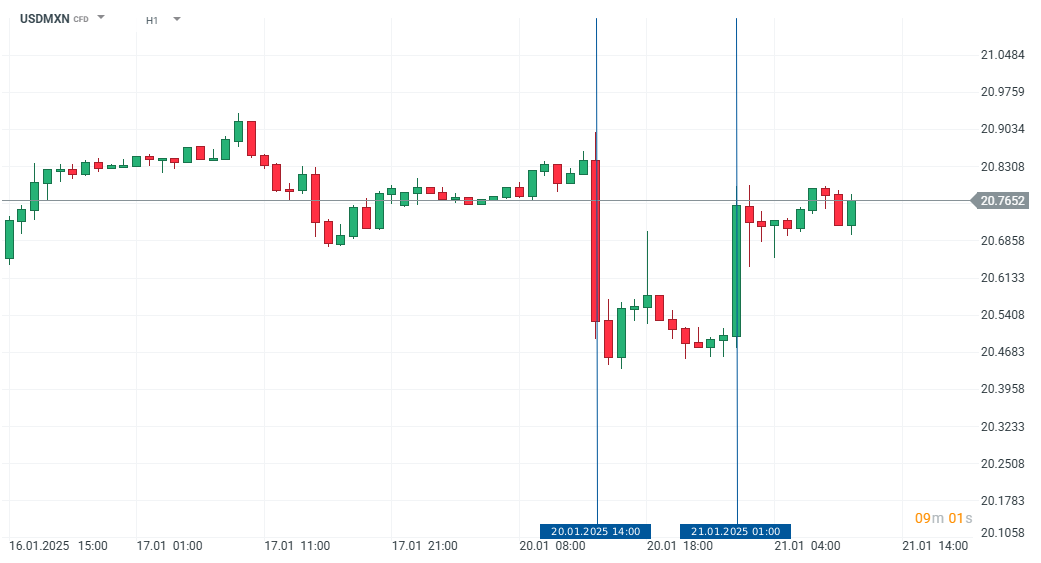
Source: xStation 5



Three Markets to Watch Next Week (09.10.2026)


Chart of the Day: EURUSD Stages a Rebound, but France and the Fed Could Cap the Upside



Economic Calendar: Canada’s Jobs Report in Focus


U.S. attacks on Iran suspended 💥