


- The main driver behind the decline is better-than-expected harvests in West Africa, the key cocoa-producing region. Improved supply conditions have forced analysts to revise earlier deficit forecasts for the 2025/26 season, putting additional pressure on prices, particularly futures.
- Prices are also being weighed down by weaker demand from food manufacturers. During the period of record-high prices, many companies reduced cocoa content in their products and adjusted formulations to cut costs. The effects of these changes are still visible today.
- Despite the drop in raw material prices, chocolate prices in stores have not yet declined. This is largely due to long-term contracts signed at much higher price levels, as well as manufacturers’ reluctance to quickly revert to previous formulations, which would involve additional costs.
- As a result, the market remains in a typical lagged price transmission phase, where falling raw material prices do not immediately translate into lower prices for end products. In the short term, a noticeable decline in chocolate prices for consumers is therefore unlikely.
- Weather conditions in Ivory Coast remain less favorable for the mid-crop cocoa season. In most growing regions, no rainfall was recorded last week, and farmers are signaling an increasing need for moisture to support the development of the mid-crop, which runs from March to August.
- Although the country has officially entered its rainy season, precipitation remains below market expectations. In practice, this creates a risk of slower pod development during the key months from May to August, despite the presence of many pods of varying sizes on trees.
- The largest rainfall deficits have been reported in several key production regions, including Soubre, Agboville, Divo, Abengourou, Daloa, Bongouanou, and Yamoussoukro. In some of these areas, rainfall totals were significantly below the five-year average, increasing pressure on plantation conditions.
- Farmers are also highlighting deteriorating soil moisture, particularly in central and west-central parts of the country. This is a relevant signal for the market, as Ivory Coast remains the world’s largest cocoa producer, and local weather issues can quickly translate into global supply expectations.
- Harvests remain modest for now, but farmers expect improvement from May. The base scenario assumes higher supply in the coming weeks, although this will largely depend on the return of more regular rainfall.
Alongside demand, weather may once again become a key driver for cocoa prices. If the rainfall deficit persists, it could limit the recovery potential of mid-crop production and increase price sensitivity to supply-side risks. On the other hand, cocoa demand remains weak, while inflationary pressures in the global economy may further increase household sensitivity to prices making a demand destruction a major risk force to future price trend, even despite the weather risk.
COCOA (H1 chart)
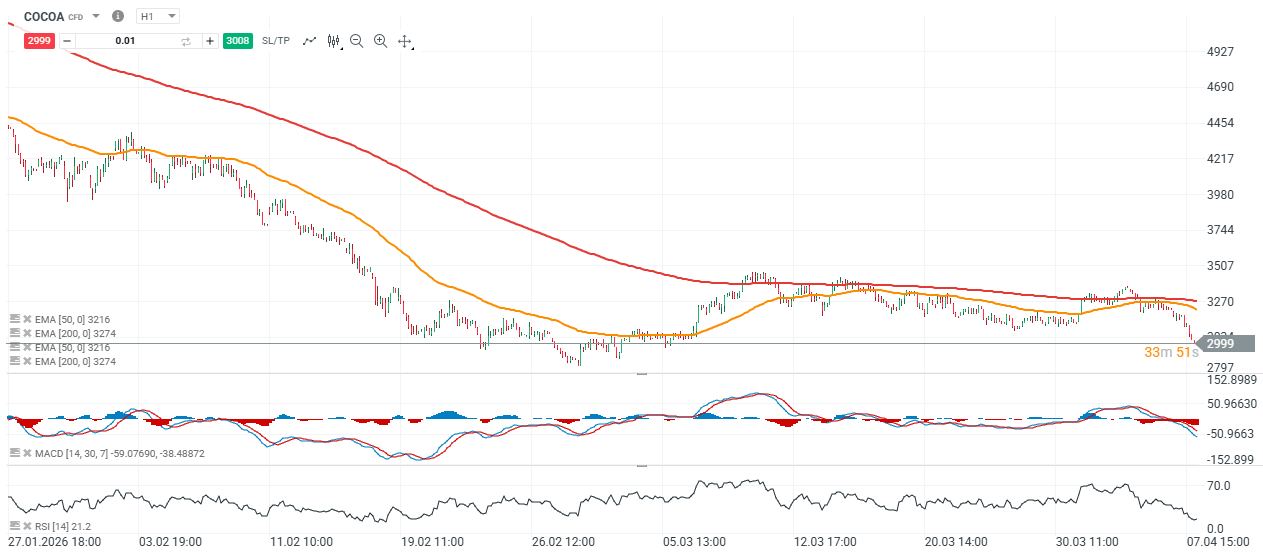
Source: xStation5



US Open: Further declines on Wall Street, Brent above 111 USD, AI correction continues (14.10.2026)


Chart of the Day: Is USDJPY running out of road? Inflation forces the BoJ to act, but the Fed could spoil the Yen’s rally



Macro Calendar: Preliminary PMI Readings and Earnings Ahead



Morning Wrap: AI profitability concerns spark market Sell-Off