



- Futures contracts point to a higher opening for today's cash session in Europe
- Investors' attention turns to the preliminary trade agreement between the US and the European Union
- The macroeconomic calendar is almost empty today
We are starting a new week on the financial markets. The main topic of today's session is the conclusion of a preliminary trade agreement between the US and the European Union on trade tariffs. Although the agreement is still a framework agreement and requires many details to be worked out, it contains several key elements: A 15% tariff cap on EU goods imported into the US, which will be introduced permanently. A commitment by the EU to purchase $750 billion worth of US energy, which will reduce its dependence on supplies from Russia. An additional $600 billion in EU investment in the US economy.
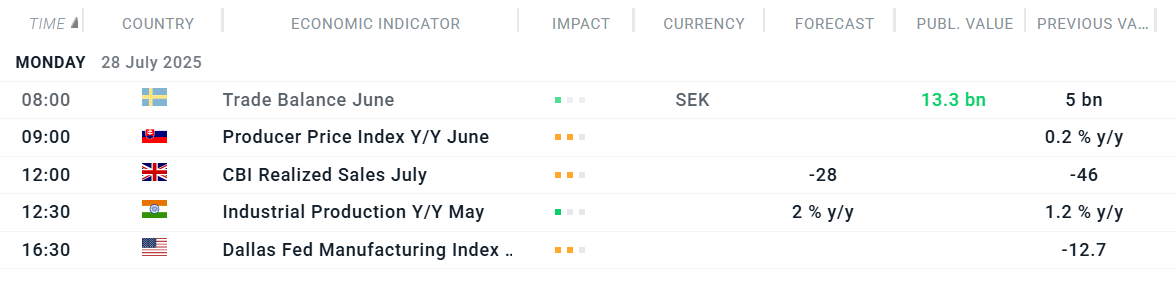
However, today's economic calendar for macro publications is almost empty. For this reason, attention will focus on any announcements on tariffs (especially regarding China) and quarterly company results
Macro calendar for today's session:


Daily Summary: SpaceX and the tech sector drive Wall Street, oil retreats sharply below $97


Russia is selling off gold reserves. Why, to whom, and does it matter for the market?

BREAKING: US oil inventories fall more than expected, but distillate build cools enthusiasm

RBA turns increasingly hawkish as markets reprice November rate hike expectations ⚔️