



-
Global markets are showing tentative signs of stabilisation, with improving sentiment driven by hopes of de-escalation in the Middle East.
-
US equity futures are pointing slightly lower, while European futures indicate a mixed open, suggesting that the recovery in risk appetite remains fragile rather than decisive.
-
The key driver remains developments around Iran and the Strait of Hormuz. Tehran signaled that non-hostile vessels may be allowed to transit under coordination, raising expectations that energy flows could partially normalise.
-
This triggered an initial risk-on reaction — crude declined, equities moved higher, and bond markets found support. Brent fell toward $96 per barrel (from near $100), while WTI dropped to around $89, easing immediate concerns about a prolonged supply shock and reducing near-term inflation pressure.
-
This improvement was reinforced by reports of a potential one-month ceasefire and a broader US diplomatic push, including a proposed multi-point plan to end the conflict. However, optimism remains cautious. The Strait of Hormuz is still viewed as effectively constrained, and the gap between negotiating positions is wide. Iran’s demands — including closure of US bases, full sanctions relief, and control over transit fees — are seen by US officials as unrealistic, significantly lowering the probability of a near-term agreement.
-
At the same time, military dynamics continue to point toward escalation risk. The US is expanding its presence in the region, with plans to deploy up to 10,000 additional troops, including elite units such as the 82nd Airborne Division, bringing total forces toward ~60,000.
-
Iran continues missile and drone activity across the region, while expressing deep skepticism toward US diplomacy and signaling reluctance to engage without guarantees. The dual-track strategy — diplomacy alongside military buildup — is reinforcing market uncertainty rather than resolving it.
-
Cross-asset price action reflects this balance between relief and caution. Asian equities gained around 1.8%, supported by lower oil and improved sentiment, while US Treasuries rallied modestly, with the 2-year yield falling to 3.87%, indicating reduced expectations of near-term tightening.
-
The US dollar weakened slightly as defensive positioning unwound. Meanwhile, gold extended gains above $4,550 per ounce, highlighting persistent demand for hedges, and Bitcoin moved toward $71,000.
-
From a macro policy perspective, central banks remain constrained by geopolitical uncertainty. Fed officials continue to signal that rates may stay higher for longer due to persistent inflation risks, particularly from energy.
-
Similarly, the BOJ maintains a gradual tightening bias as inflation approaches target, while Australia’s CPI at 3.7% y/y remains above target and does not yet reflect the latest energy shock, suggesting upside risks ahead.
-
Overall, markets are shifting from acute panic toward cautious stabilisation, but the underlying environment remains highly fragile. Any further developments around Hormuz, military escalation, or breakdown in diplomatic efforts are likely to quickly reverse the current improvement in sentiment,
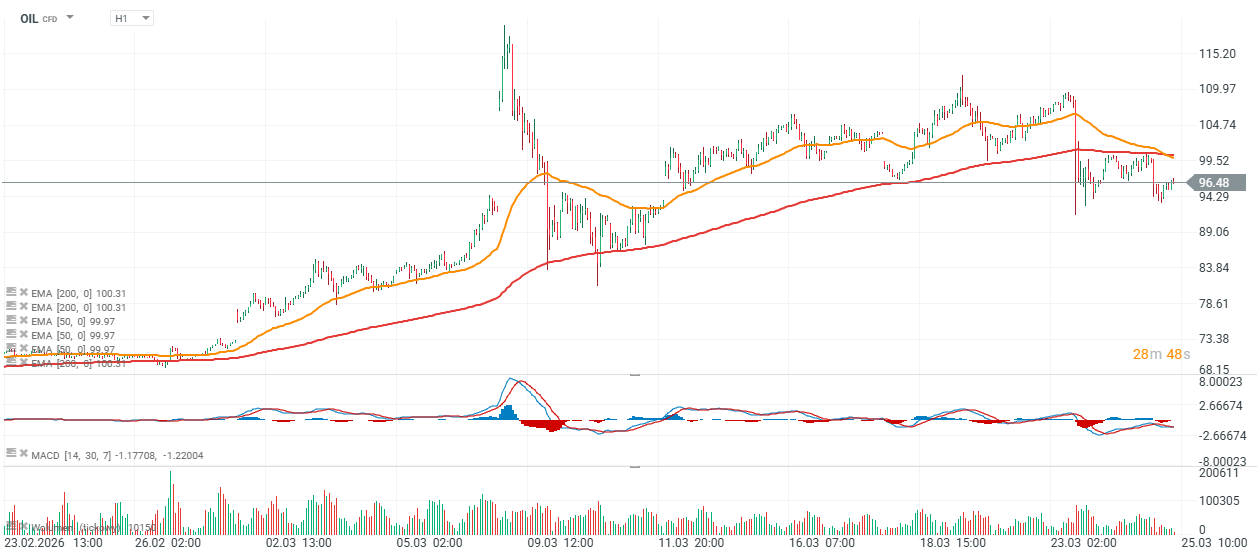
Source: xStation5



Three markets to watch next week (23.10.2026)



Daily Summary: Oil at five-month highs, indices under pressure (23.10.2026)

US Open: Further declines on Wall Street, Brent above 111 USD, AI correction continues (14.10.2026)

BREAKING: France slows down, Germany holds on. Euro falls below 1.12