



- In the US, indices extended yesterday's declines. The sell-off spread across the entire US stock market, ending the day with solid losses. The S&P 500 fell 1.2%, as did the Dow Jones, while the Nasdaq retreated nearly 1.6%.
- The sell-off was the result of a combination of unfavorable data related to the US labor market and, above all, the results of technology companies.
- Amazon showed very strong revenues and further growth in the AWS segment in yesterday's results, but its share price fell by as much as about 10% in after-hours trading. Investors were concerned by announcements of huge investments in artificial intelligence, which could reach around $200 billion in 2026 and weigh on cash flows.
- Asian stock markets came under pressure from deteriorating global sentiment related to the sell-off of technology companies, with Hong Kong's Hang Seng falling 1.13% and Australia's ASX 200 losing 2.26% in response to hawkish signals from the RBA, while Japan's Nikkei 225 rose 0.29% ahead of Sunday's elections and China's Shanghai Composite gained 0.11%.
- Polls point to a possible clear victory for Prime Minister Takaichi's camp, increasing the likelihood of fiscal expansion and tax cuts.
- Japan: BoJ board member Masu adopted a cautiously hawkish tone, keeping further policy tightening on the table and warning of inflation fueled by a weak yen.
- In December, Japanese household spending fell 2.6% year-on-year, well below forecasts of 0.1% and significantly worse than in November, when it rose 2.9%, reflecting inflationary pressure on consumers.
- Australia: RBA Governor Bullock emphasized that the rate hike was necessary due to capacity constraints, a strong labor market, and persistent inflation.
- The People's Bank of China (PBOC) set today's USD/CNY reference rate at 6.99590, while forecasts assumed a value of 6.9517.
- The Reserve Bank of India kept rates at 5.25%, in line with widespread expectations.
- After signing a trade agreement with the US, India is considering purchasing Boeings worth up to $80 billion, according to CNBC.
- CME raised margin requirements for gold and silver contracts after extreme volatility.
- The precious metals market is seeing a partial calming of the situation and a rebound after earlier declines: gold is gaining about 1.5%, testing the $4,850 per ounce level, while silver is up about 3.5% and hovering around $73 per ounce.
- A partial rebound is also visible in the cryptocurrency market, where Bitcoin is gaining over 2%, reaching $65,100, and Ethereum is up over 3%, reaching $1,920.
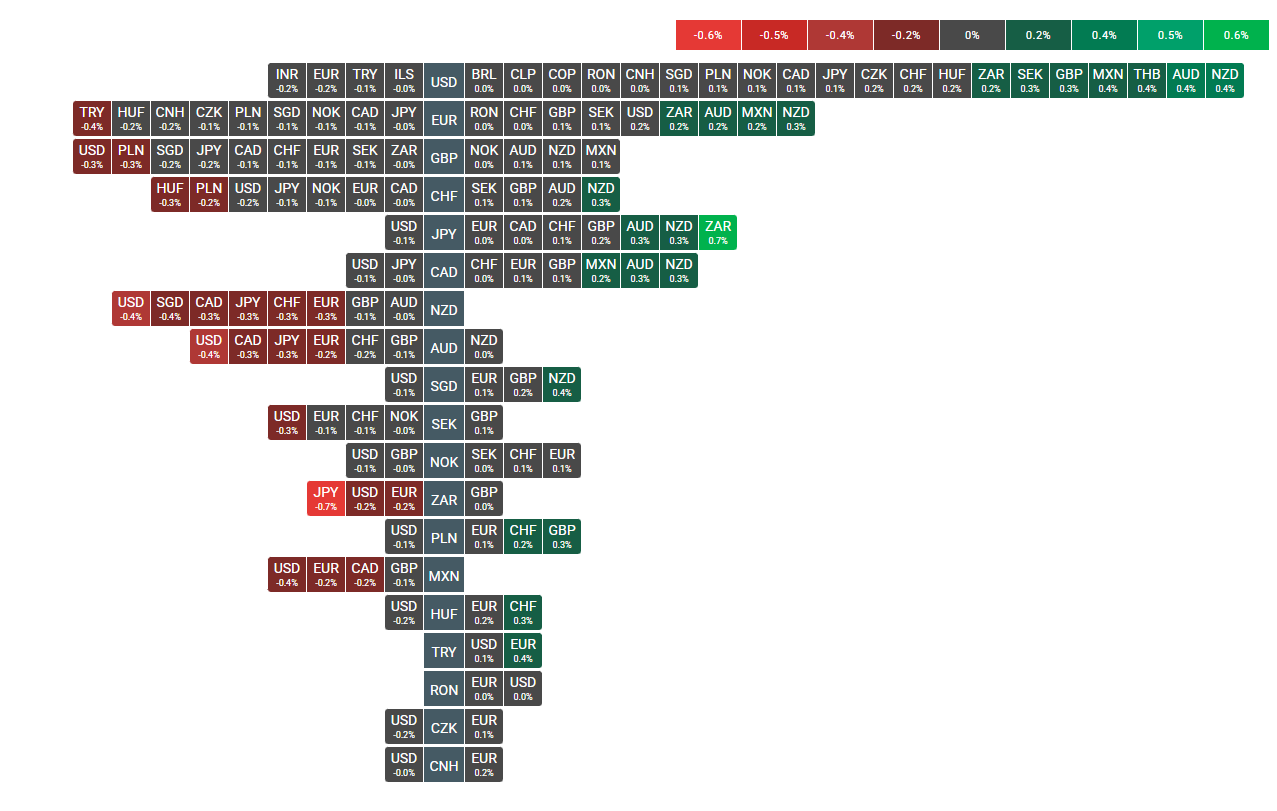
Source: xStation5


Daily Summary: Rising inflation weighs on markets, semiconductors suffer most (14.10.2026)


US Open: CPI reading weighs on American indices (14.10.2026)
US inflation concerns rise


POET: A “meme stock” in photonics, is there still hope?