

- Wall Street futures are slightly lower ahead of the open, with Nasdaq 100 futures down around 0.3% as U.S. Treasury yields rise again and the dollar rebounds toward 98.65.
- The Fed minutes had a more hawkish tone, as some policymakers were prepared to consider further rate hikes if inflation moved further away from the 2% target.
- High bond yields and elevated oil prices are putting additional pressure on growth and AI stocks, while markets await Walmart’s earnings as an important test of the health of the U.S. consumer.

- Wall Street futures are slightly lower ahead of the open, with Nasdaq 100 futures down around 0.3% as U.S. Treasury yields rise again and the dollar rebounds toward 98.65.
- The Fed minutes had a more hawkish tone, as some policymakers were prepared to consider further rate hikes if inflation moved further away from the 2% target.
- High bond yields and elevated oil prices are putting additional pressure on growth and AI stocks, while markets await Walmart’s earnings as an important test of the health of the U.S. consumer.
U.S. equity index futures are pulling back around two hours before the Wall Street open. U.S. Treasury yields are rising again, oil remains expensive, and investors received a somewhat more hawkish signal from the Fed minutes. The U.S. Dollar Index futures contract (USDIDX) is attempting to rebound toward 98.65.
- Dow Jones futures are down around 0.2%, while S&P 500 futures are slipping by 0.1%. Nasdaq 100 futures are lower by almost 0.3%.
- The Fed minutes showed that some policymakers were prepared to consider further rate hikes if inflation moved further away from the 2% target. This limits the scope for a rapid return of the monetary easing narrative.
- The yield on the 30-year U.S. Treasury is rising to around 5.22%, while the 10-year yield is at 4.67%, following yesterday’s relief after measures announced by the U.S. Treasury in the bond market.
- The market is awaiting Walmart’s earnings, which, following yesterday’s Target report, will be one of the more important tests of the health of the U.S. consumer and the resilience of retail spending in an environment of high interest rates and more expensive energy.
- Oil is extending gains for a fifth consecutive session, while the conflict involving Iran and supply disruptions are once again fuelling inflation concerns. This is particularly problematic for growth and AI-related stocks, which are more sensitive to changes in bond yields.
The equity market is entering a more demanding phase
Long-term bond yields remain at levels that are once again starting to affect equity valuations, particularly in the technology and growth segments. With the 30-year Treasury yield above 5%, investors may demand a higher risk premium from equities as well. If these levels are sustained, especially in the context of yesterday’s intervention by the U.S. Treasury, this would mechanically make further valuation multiple expansion more difficult, particularly if earnings growth were to slow from its current record levels.
This does not mean, however, that the market is in weak fundamental shape. The latest earnings season showed that U.S. companies across many sectors are still able to generate revenue and margin growth, while some of the largest technology companies continue to maintain a very strong pace of investment. The problem is more subtle. Wall Street is no longer benefiting from the combination of strong earnings and falling yields at the same time, which had previously supported valuations from both directions.
In the short term, Walmart will be particularly important. The report from the largest U.S. retailer will provide a test of consumer strength in an environment of high financing costs and more expensive fuel. If the company shows resilient demand, the market may treat this as an argument for continued earnings stability in the consumer sector, potentially encouraging capital rotation out of AI and into other parts of the equity market. If margins or sales growth disappoint, however, investors may start pricing in a slowdown in consumption more aggressively.
At the sector level, the picture is already clearly diverging. Energy companies are benefiting from higher oil prices, while some megacaps remain under pressure from rising yields. At the same time, cryptocurrency-related stocks are rallying strongly following fresh political signals regarding regulation of digital assets. Wall Street is therefore not entering a classic risk-off mode today. It looks more like a market that is becoming increasingly selective about how much it is still willing to pay for growth.
US100 chart (D1 interval), USDIDX chart (M15 interval)
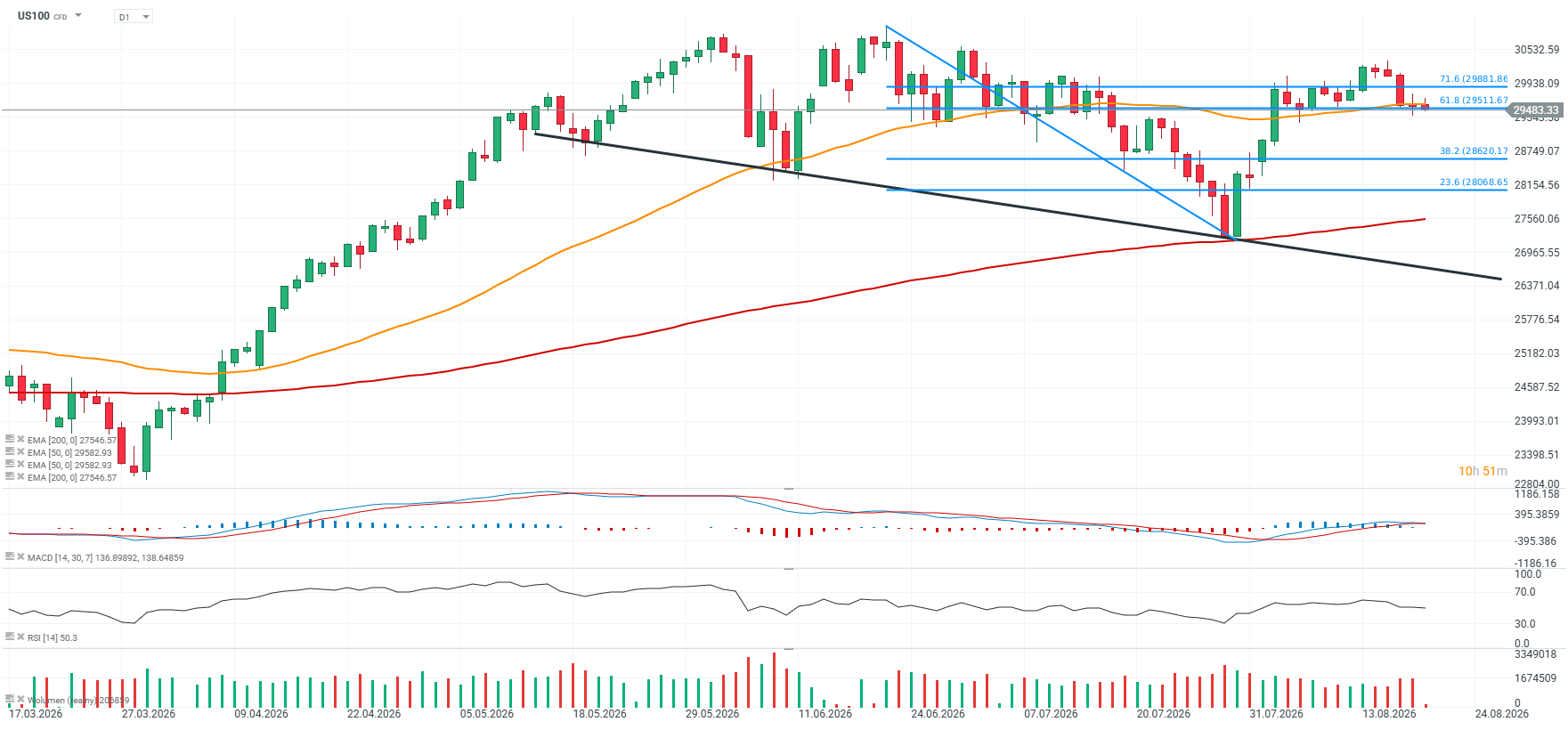 Source: xStation5
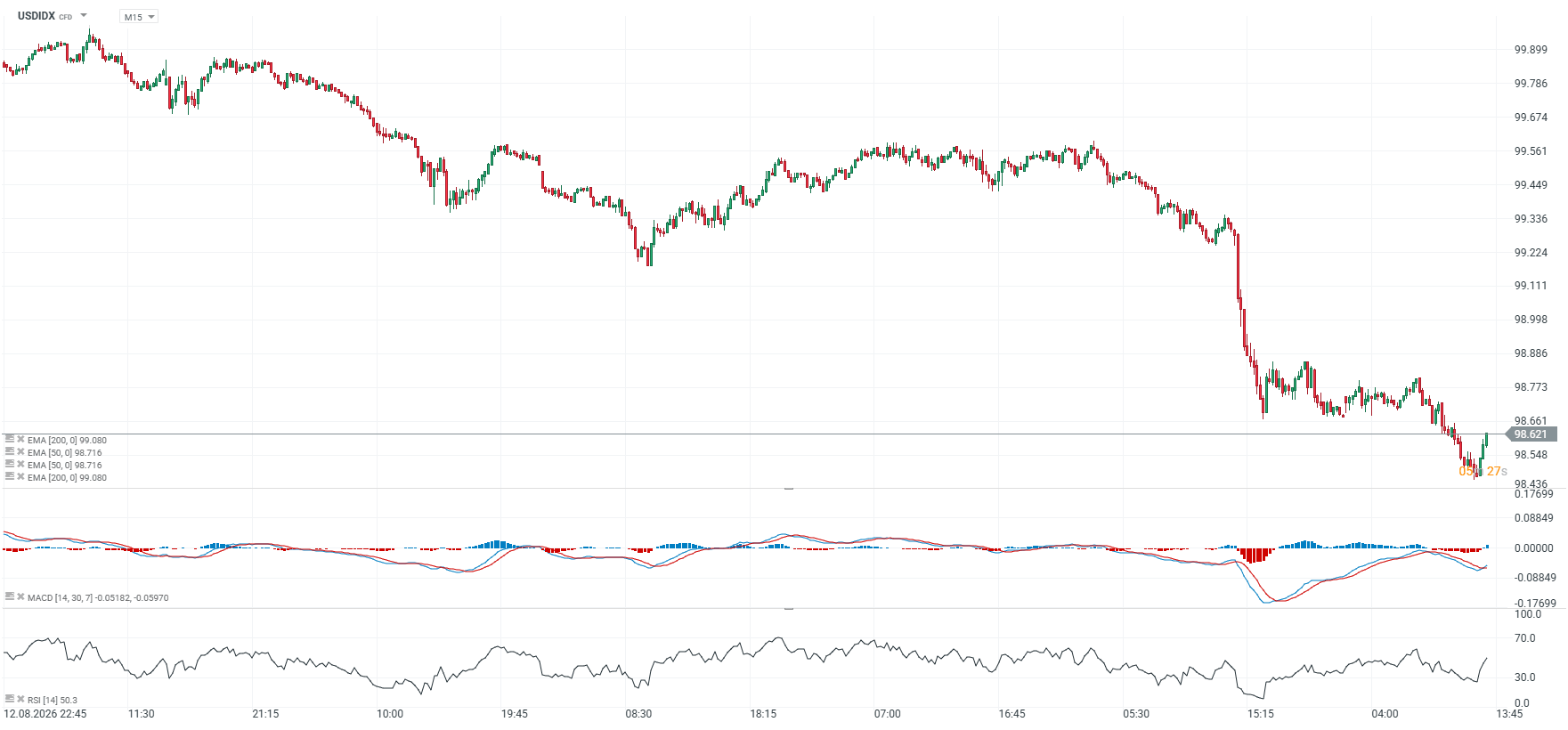 Source: xStation5


Daily Summary: SpaceX and the tech sector drive Wall Street, oil retreats sharply below $97


US OPEN: Preparations for Tesla's mega-merger with SpaceX. Diplomatic stalemate with Iran cools Wall Street's enthusiasm


RBA turns increasingly hawkish as markets reprice November rate hike expectations ⚔️


Daily Summary: Buyers Refuse to Give In