



Natural gas(NATGAS) prices are rising today, and this move is primarily driven by an improvement in short-term market conditions. It is not the result of a single specific event, but rather a combination of several factors that have recently improved sentiment among buyers. The most important of these are forecasts for higher temperatures in the United States. This implies increased electricity consumption, mainly due to air conditioning, which in turn raises demand for natural gas used in power generation.
In the short term, the gas market reacts very strongly to weather changes, as even small adjustments in forecasts can significantly alter consumption expectations. If warmer conditions persist for longer, electricity demand for cooling increases, which typically leads to higher gas burn in power plants. For this reason, the market is not pricing in the absolute temperature level itself, but rather its potential impact on the supply and demand balance in the coming days and weeks.
Another key factor is expectations of slower-than-previously-anticipated growth in gas inventories. For the market, this signals that supply is not exceeding expectations, while demand remains stable or slightly stronger than earlier forecasts. In such an environment, the room for downside correction narrows, while confidence increases that the market may be tighter than previously assumed.
Additional support comes from LNG exports. Sustained strong and stable demand for liquefied natural gas reduces surplus supply in the US market and makes prices more sensitive to local changes in weather forecasts and storage data. In practice, this means that even without a single strong catalyst, the market can trend higher if the global balance remains relatively tight.
It is also worth emphasizing that the current move is primarily fundamental rather than purely speculative. Natural gas is one of the most volatile energy commodities, as it combines strong seasonality, high sensitivity to weather conditions, and significant responsiveness to inventory data and trade flows. In such an environment, even small shifts in expectations can lead to noticeable price movements without the need for a single dominant trigger.
In a wider perspective, the market remains in a phase where upcoming weather readings, storage data, and LNG export dynamics will be crucial. If forecasts for higher temperatures are confirmed and inventory builds come in weaker than expected, the current upward move may continue. However, if the market begins to price in weaker demand or faster inventory replenishment, further upside potential could gradually become limited.
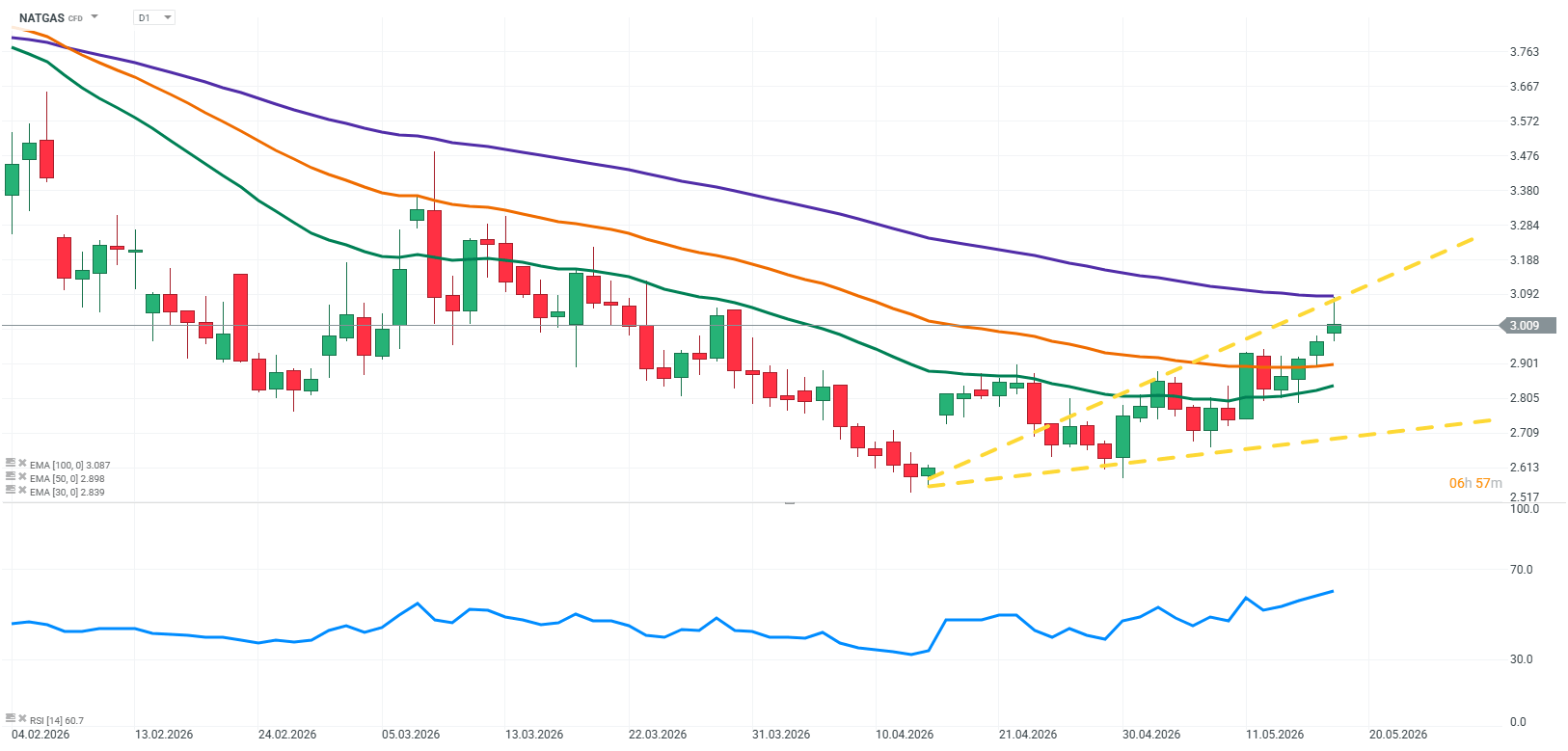
Source: xStation5



Daily Summary: Oil at five-month highs, indices under pressure (23.10.2026)


US Open: Further declines on Wall Street, Brent above 111 USD, AI correction continues (14.10.2026)


Chart of the Day: Is USDJPY running out of road? Inflation forces the BoJ to act, but the Fed could spoil the Yen’s rally



Macro Calendar: Preliminary PMI Readings and Earnings Ahead