



A series of exchanges of fire between the US and Iran in the Persian Gulf is pushing market expectations away from the prospect of an open Strait of Hormuz and a normalization of crude oil, gasoline, and gas supplies from the region.
OIL (D1) chart
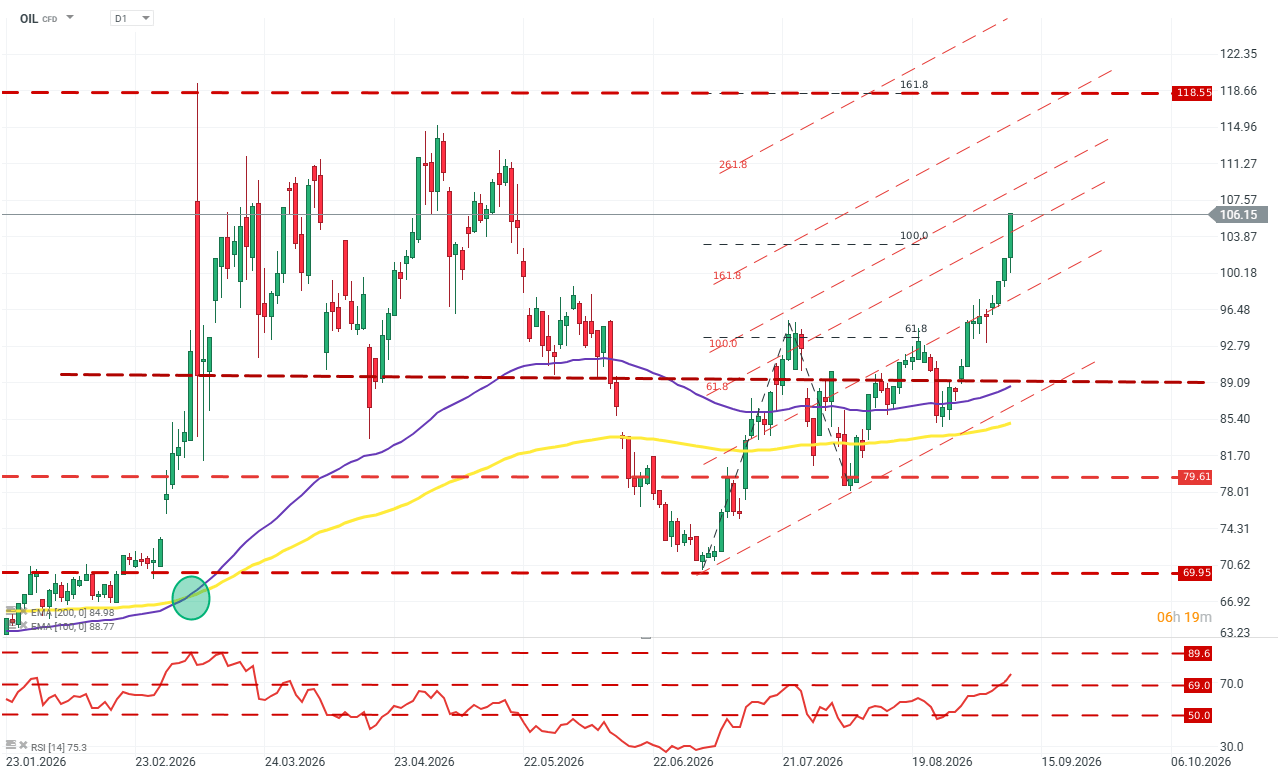
The 100 and 200 EMAs indicate that bullish momentum is being maintained, although the RSI [14] is starting to move into levels interpreted as “overbought.” Fibonacci levels drawn based on the most recent upswing point to the latest highs as a likely upper boundary for a very broad consolidation channel. Source: xStation5
The situation is further worsened by news from Yemen, where the Houthi rebels, closely linked to Iran, have captured the port city of Mocha. Many observers and analysts suspect that the group’s increased control over the Red Sea coastline could once again threaten shipping in that region as well.
This matters because cargo traffic through the Red Sea fell sharply during a series of attacks by the group on vessels in 2023. Traffic increased again, however, after the outbreak of the war in Iran, which forced some oil shipments to be rerouted via the Red Sea. A threat to another sea route could constrain supply, which so far has helped stabilize prices.



Daily Summary: Buyers Refuse to Give In



📈Morning Brefieng: AI sector rebound collides with still-expensive oil (20.10.2026)


Chart of the Day: What’s next for tech stocks after the deepest sell-off since April 2025? (19.10.2026)

Morning Wrap: Nasdaq rebounds ahead of Mag7 earnings, bonds regain favour, oil falls from peak (19.10.2026)