


Thursday’s session is bringing further gains in oil prices on the back of concerns not only about the prospects for peace between the US and Iran, but also about the durability of the ceasefire. The latest wave of reports raises more reasons for concern than it provides answers.
Iran reportedly categorically rejected demands to hand over fissile materials and is maintaining its position calling for recognition of its control over the strait (as well as the right to collect fees).
IEA head Fatih Birol warned that in July or August the market could enter a “red zone” if the situation in the Middle East does not improve. The problem is the collision of a seasonal peak in fuel demand with constrained exports from the region and falling inventories.
OPEC+ is trying to ease tensions. The group is set to raise its July production target by about 188 thousand barrels per day. Under normal circumstances this would be a stabilizing signal; however, given the current situation, it is a symbolic gesture rather than real downward pressure on prices.
The situation is not helped by reports from Russia, where - aside from further questions about the regime’s intentions in light of setbacks at the front - another wave of attacks on infrastructure can be observed. This time, Ukrainian drones hit facilities along the Volga, including the refinery in Syzran.
Expectations of rising oil prices are no longer confined to the general public. UBS raised its September Brent price forecast to $105 and WTI to $97. The bank notes that short-term risks are skewed to the upside. In an extreme scenario, Brent could, according to UBS, exceed $150 per barrel.
Importantly, US oil companies are not currently signaling an aggressive increase in production, even despite rising supply tightness and an elevated geopolitical premium in oil prices. Companies’ priorities are cash flow, dividends, share buybacks, and maintaining profitability - not maximizing output volumes. If logistical or geopolitical disruptions command a premium in crude prices, the coming quarters could bring a meaningful increase in profitability for the oil sector.
OIL
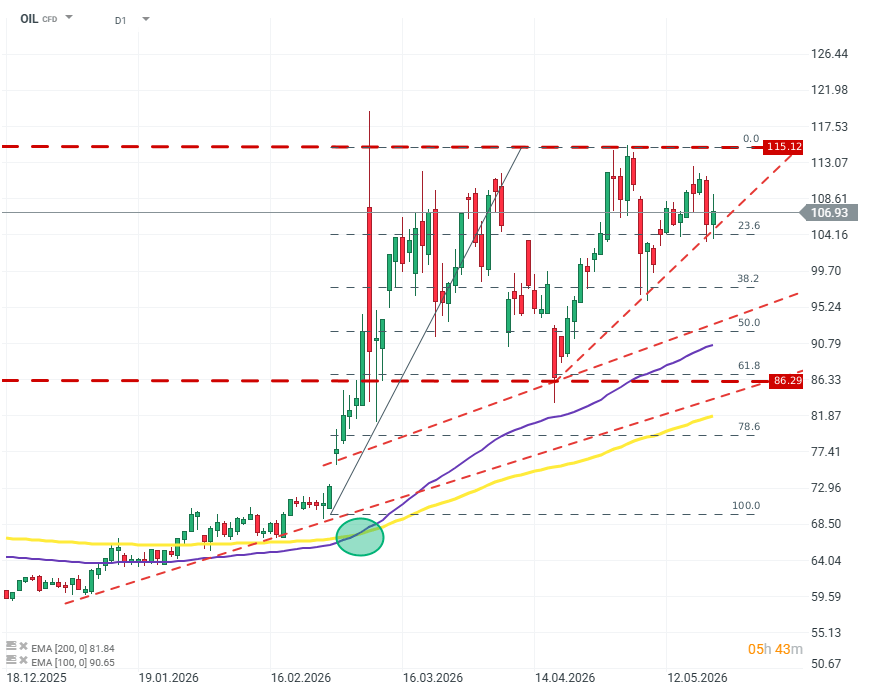
On the oil price chart, one can observe a shift toward increasingly steep uptrends despite local pullbacks. Source: xStation5.


Daily Summary: Oil at five-month highs, indices under pressure (23.10.2026)


BREAKING: France slows down, Germany holds on. Euro falls below 1.12



Daily Summary: Valuations Under Pressure, Capital Moves Away From Technology

Market Wrap: "Decent" results are not enough – tech stocks fall further; oil highest since May (22.10.2026)