


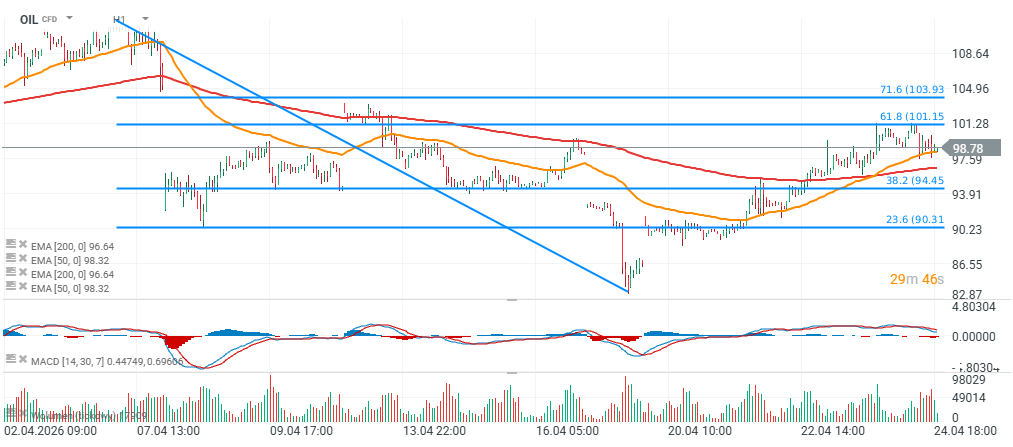
Brent crude oil (OIL) futures are slightly lower on Friday after a strong rebound earlier in the week that began on April 20, when prices rose from around $83 to nearly $101 per barrel. The move followed the unsuccessful first phase of US–Iran negotiations in Islamabad. However, the market has now received signals suggesting that talks may continue. US officials are expected to negotiate with Iranian counterparts over the weekend, and there are indications that discussions could lead to at least a partial outcome. It appears unlikely that Steve Witkoff and Jared Kushner would travel to Pakistan otherwise.
- White House spokesperson Leavitt stated that the Iran-related mission has entered a diplomatic phase. Iran is reported to have initiated contact and requested a face-to-face meeting. Witkoff and Kushner are scheduled to travel to Pakistan on Saturday morning to continue discussions on Iran.
- According to Al Arabiya sources, talks are ongoing regarding the status of the Strait of Hormuz and enriched uranium, with both sides exchanging messages on these issues. The New York Times reports that Pakistani Prime Minister Sharif is expected to meet with Witkoff and Kushner to continue negotiations.
OIL chart (H1 timeframe)
Brent prices recently declined from around $108 to approximately $83 during the last downward move, while the current rebound has stalled near $101, which coincides with the 61.8% Fibonacci retracement level. In a bullish scenario, the next key level is around $104, aligning with both price action resistance and the 71.6% Fibonacci retracement. In a bearish scenario, important support levels are located at $94.5 and $90 per barrel. If statements over the weekend point to early success in negotiations, a downward reaction in oil prices could be expected. On the other hand, a deadlock would increase the likelihood of a more sustained move back above $100.
Source: xStation5
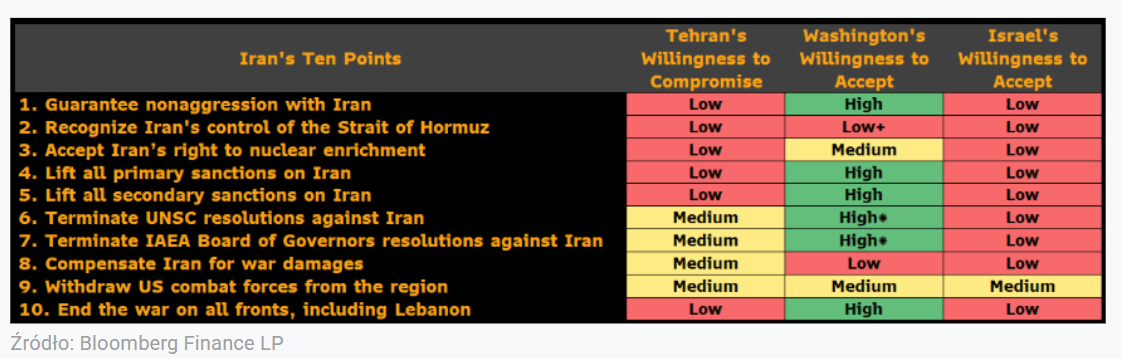
According to Bloomberg analysis, the US appears more willing to make concessions, while Tehran remains relatively firm—at least at this stage of the negotiations. However, it cannot be ruled out that Iran’s hard stance is still part of its negotiating strategy rather than a signal of a willingness to escalate militarily. The talks in Pakistan should provide more clarity on how far Iran is prepared to compromise.
Source: Bloomberg Finance LP
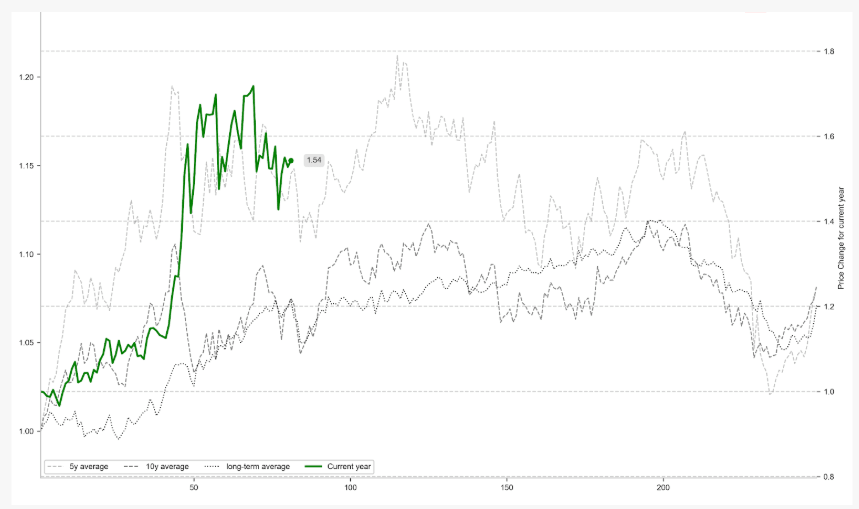
Seasonal patterns in oil prices suggest that summer months tend to support upward price movements. If this pattern holds this year, higher prices could be expected during the summer period—particularly if negotiations in Islamabad fail.
Source: XTB Research, Bloomberg Finance LP



Daily Summary: Friday offers no relief; the US100 drops 2%🚨


Three Markets to Watch Next Week (October 16, 2026)

Market wrap: European indices rebound 🔼 Defence stocks on the rise
🔼 EURUSD continues to rebound