


Precious metals are trading higher today, with silver (SILVER) gaining around 2% and gold (GOLD) rising nearly 1%, despite a relatively stable U.S. dollar and Treasury yields. Sentiment is being supported by weaker oil prices, with Brent crude (OIL) futures down almost 1.5% on the day despite ongoing tensions between the United States and Iran. Tehran reportedly announced that it was suspending talks with Washington, citing Israel's actions in Lebanon. Donald Trump commented that he was not placing much importance on Tehran's statements but would discuss the situation in Lebanon with Israeli Prime Minister Benjamin Netanyahu.
The rebound in silver appears to be largely technical in nature, as the fundamental backdrop remains uncertain amid rising inflation in both the United States and Europe and an unclear path for central-bank policy from the Federal Reserve to the ECB. The outlook for the solar industry — one of silver's key sources of industrial demand — also appears less supportive.
Solar Demand Raises New Questions for Silver
BMO recently highlighted that demand from the solar sector may provide less support for silver prices than many investors expect. While silver remains an important metal for the energy transition due to its extensive use in solar panels, the pace of new solar installations in China has become a growing concern.
- According to BMO, China's solar capacity additions so far this year are running below 2024 levels.
- China remains one of the most important markets for the global solar industry, meaning weaker activity could reduce industrial demand for silver.
- At the same time, the conflict involving Iran and broader energy-security concerns continue to support interest in alternative energy sources, including solar power.
- For silver, this creates a mixed picture: geopolitical developments support the long-term clean-energy narrative, while softer Chinese data could limit the positive impact of solar demand on prices.
- In practice, silver remains influenced by two forces simultaneously: investment demand driven by uncertainty and industrial demand linked to real activity in the photovoltaic sector.
What Does Physical Demand Look Like? Scottsdale Mint's View
According to Scottsdale Mint, a significant structural shift is currently taking place in the physical silver market. Silver is leaving the United States and moving toward tighter overseas markets, particularly in Asia. Despite recent weakness in silver prices, physical flows continue to suggest healthy demand, even as the physical market and futures market are sending different signals.
China has sharply increased silver imports. In March, imports rose 78% month-over-month to a record 836 tonnes, reaching a level 173% above the ten-year seasonal average for March.
Growing Chinese demand may reflect efforts to secure the country's manufacturing base, as silver remains a critical input for solar panels, semiconductors, batteries, electronics, and military applications. Scottsdale Mint argues that the issue is not a shortage of silver in the United States, but rather the location and availability of properly certified metal that can be delivered into international markets.
Another sign of tightening conditions is the rising premium for LBMA Good Delivery silver. Buyers are increasingly willing to pay more for metal that can be quickly delivered to global trading hubs.
India is also influencing the market. In May, authorities restricted imports of certain silver bars, a move that could alter global trade flows and redirect physical metal through alternative channels.
Interest in silver is expanding beyond retail investors. Some corporations are beginning to view physical precious metals as part of treasury management and as a hedge against systemic risks. Representatives from Scottsdale Mint argue that growing distrust in banking systems, fiat currencies, and global supply chains is increasing interest in physical gold and silver as strategic reserve assets.
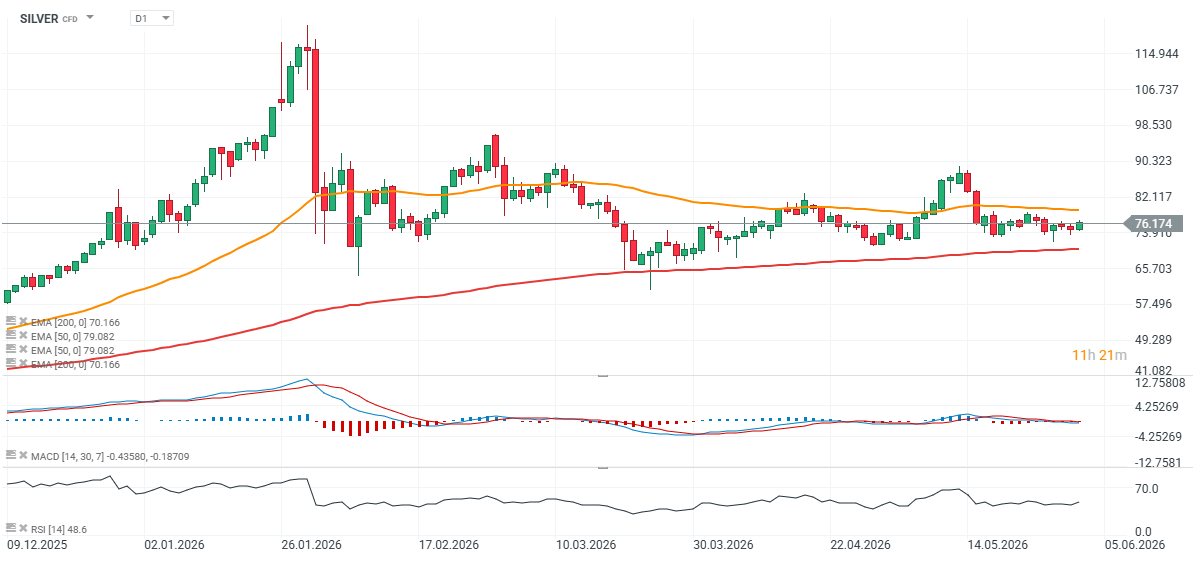
SILVER (D1 timeframe)
Source: xStation5


Three Markets to Watch Next Week (09.10.2026)



Daily Summary: A Shallow Rebound Ahead of Earnings Season


Strong rise in natural gas prices 📈🚨


US OPEN: Trump de-escalates, OpenAI supports Wall Street sentiment