CME.US

CME.US - CME Group – Investing Guide, Business Model & Segments

CME Group Inc
Create account
Past performance is not necessarily indicative of future results, and any person acting on this information does so entirely at their own risk.
Download free app
ABOUT INSTRUMENT

Invest in CME Group Inc with ZERO commission

CME Group stands at the very core of global financial markets. It's not a typical company that produces goods or sells services in the traditional sense. Instead, CME is a vast digital marketplace where traders, institutions, and investors come to manage risk — from interest rates to energy prices. It's where tomorrow’s financial decisions begin today.

Key Takeaways

  • CME Group is the largest derivatives exchange globally.
     
  • It facilitates trading in futures and options across commodities, rates, and equity indexes.
     
  • The firm plays a central role in financial stability and price discovery.
     
  • It earns revenue from transaction fees, market data, and clearing services.
     
  • CME operates electronic markets open nearly 24 hours a day.
     
  • It is not a cyclical business, but its volumes respond to market volatility.

Business Model

CME Group earns its money by offering a place where participants can buy and sell financial contracts like futures and options. These contracts allow people to hedge risks — like an airline locking in fuel prices or a bank managing interest rate exposure. Most trades are executed electronically through CME's platform and are processed by its in-house clearinghouse, which acts like a financial safety net.

Revenue streams mainly include:

  • Transaction Fees: Paid when a contract is traded.
     
  • Clearing Fees: For guaranteeing the transaction’s safety.
     
  • Market Data Sales: Selling real-time pricing and analytics to institutions.
     
  • Licensing and Technology: Income from data tools and indexes.

Business Segments

  • Interest Rates: The largest segment, featuring U.S. Treasury and Eurodollar futures.
     
  • Equity Indexes: Includes S&P 500 futures — a benchmark for global equity exposure.
     
  • Foreign Exchange (FX): Futures and options on major global currencies.
     
  • Energy: Futures on oil, gas, and renewables — vital for energy risk hedging.
     
  • Agricultural Commodities: Corn, wheat, soybeans — helping farmers and food companies plan ahead.
     
  • Metals: Gold, silver, copper — serving global commodities demand.
     
  • Data Services and Technology: Licensing market data, analytics, and tech solutions to clients.

Investing Characteristics

CME Group is the largest derivatives marketplace in the world, a foundational pillar in the financial system. It offers futures and options contracts tied to interest rates, stock indexes, foreign exchange, energy, agricultural commodities, and metals. This makes CME an essential piece of global risk management infrastructure, rather than a traditional financial stock.

From an investment perspective, CME Group is non-cyclical in its structure but reactive in performance. Its revenues are transaction-based, meaning that when volatility in the market increases—whether due to interest rate uncertainty, geopolitical events, or inflation—trading volumes rise, and so does CME's income. This makes CME a rare case of a company that may perform well even when markets are turbulent.

It also benefits from high operating margins, strong recurring cash flow, and a deep economic moat through its proprietary contracts (such as Eurodollar or SOFR futures), clearinghouse operations, and exclusive data licensing. CME is viewed as asset-light and scalable, with a robust history of dividend payments and strategic acquisitions.

CME isn’t as directly exposed to consumer sentiment or economic downturns as other financial stocks, but its business thrives on movement, not direction. Calm, low-volatility markets can reduce volumes and pressure revenues.

Key Points for Investors:

  • Non-cyclical, but earnings fluctuate with market activity and volatility

  • Strong competitive moat due to proprietary contracts and clearing services
     
  • High-margin business model with consistent dividend history
     
  • Asset-light, digital infrastructure with global reach
     
  • Revenue depends more on volume than direction of markets
     
  • Lower volumes in ultra-stable markets can suppress short-term growth

Major Catalysts & Risks

Catalysts

Increased Market Volatility
When investors fear inflation, rate hikes, or global conflict, they turn to futures and options—leading to higher trading volumes and revenues for CME.
 

Rising Interest Rate Uncertainty
Changes or speculation around U.S. Federal Reserve policy drive demand for rate-based derivatives, such as Treasury and SOFR futures.
 

Expansion into Cryptocurrency Derivatives
CME's bitcoin and ether futures are attracting institutional flows, offering long-term upside in a regulated digital asset space.
 

Data and Analytics Revenue Growth
CME’s proprietary pricing data and indexes are increasingly licensed by financial firms and platforms, providing a stable income stream. Also, CME benefits from growing institutional interest worldwide

Risks

Periods of Low Volatility
When markets are calm and predictable, trading volumes often drop, directly impacting CME’s transaction-driven revenues.
 

Competition in Niche Markets
While dominant in many categories, newer fintech platforms or overseas exchanges could challenge CME in select areas like FX or crypto.
 

Regulatory Environment
Changes in derivatives regulation—especially in the U.S. or EU—could impact fees, volumes, or access to certain client bases.
 

Tech Infrastructure Risk
As a digital platform, CME is exposed to cybersecurity and system stability risks. A tech outage could disrupt operations or damage reputation.


Short Company History & Major Milestones

  • 1898: Chicago Butter and Egg Board established, CME’s early predecessor.

  • 2007-2008: Merged with CBOT and NYMEX, forming the modern CME Group.
     
  • 2010s: Expanded its global footprint and electronic market dominance.
     
  • 2018: Launched Bitcoin futures, signaling entry into digital assets.
     
  • 2021: Acquired a stake in SPAN risk margining system.
     
  • Today: CME Group remains the backbone of the global derivatives market, central to risk and liquidity.
ISIN
-
0 USD
Trading days
-
10 USD
15:30 - 22:00

Interesting facts

The Central Bank of Risk Management: CME Group acts like the backbone of global derivatives markets. While it does not create money like a central bank, it helps the world economy operate smoothly by providing trusted exchanges and clearing systems that manage risk and safely process trillions of dollars in contracts every day.

Merger of Giants: CME Group was built through the combination of the Chicago Mercantile Exchange, Chicago Board of Trade, NYMEX, and COMEX — bringing together four legendary names in U.S. trading history to create one of the world’s largest and most influential derivatives marketplaces.

24/5 Global Access: Through its advanced Globex electronic trading platform, CME Group provides near 24-hour, five-day-a-week market access, connecting traders across Asia, Europe, and the U.S. in a unified global marketplace with continuous liquidity and real-time risk management.

Volatility Boosts Revenue: When markets become uncertain, trading activity often rises as investors and institutions turn to derivatives for hedging and risk management. These periods of heightened volatility can drive higher contract volumes and increase CME Group’s transaction-based revenue.

A Quiet Market Powerhouse: Though less visible than consumer giants like Apple or Amazon, CME Group plays a critical role in global finance, facilitating enormous volumes of trading activity and managing risk across markets with daily transaction values that rival the scale of major financial institutions.

Weather Contracts Exist: CME Group goes beyond traditional financial products by offering weather futures that allow businesses to hedge against unpredictable conditions such as extreme heat, rainfall, snowfall, and temperature changes — providing valuable risk management tools for industries like agriculture, energy, and transportation.

TOP INSTRUMENTS

Check out more instruments

All stocks
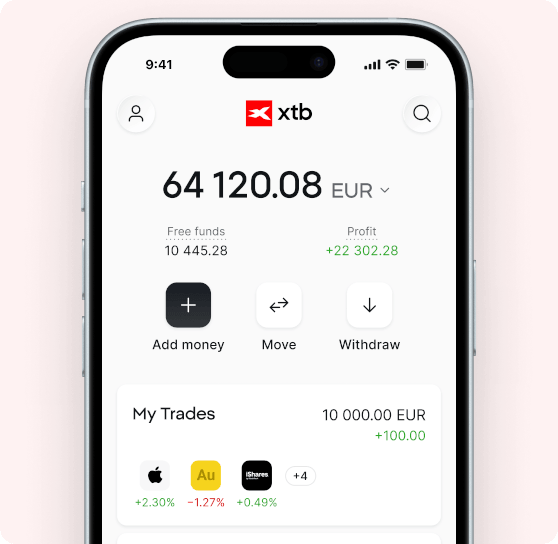
Have all your trades always at hand

With award-winning and easy to use XTB trading app

Latest news

Keep your finger on the pulse with our latest news

CME Group shares fall amid selling pr...
2 June 2026
Chart of the Day: EURUSD Awaits US CP...
12 August 2026
Economic Calendar: US Inflation Key f...
12 August 2026
See more news
GET ACCESS

How to invest in CME Group Inc at XTB?

1. Open an account

Complete the form and send relevant documents - all without unnecessary formalities.

2. Make a deposit

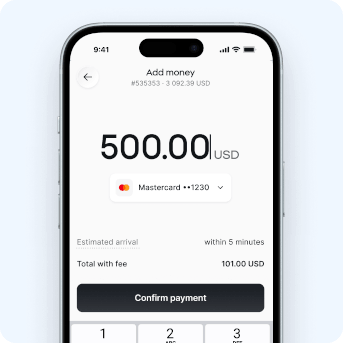
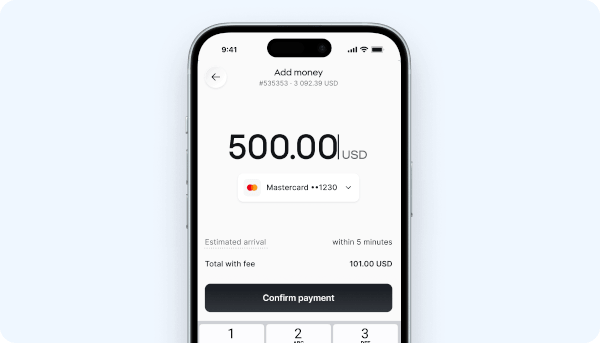
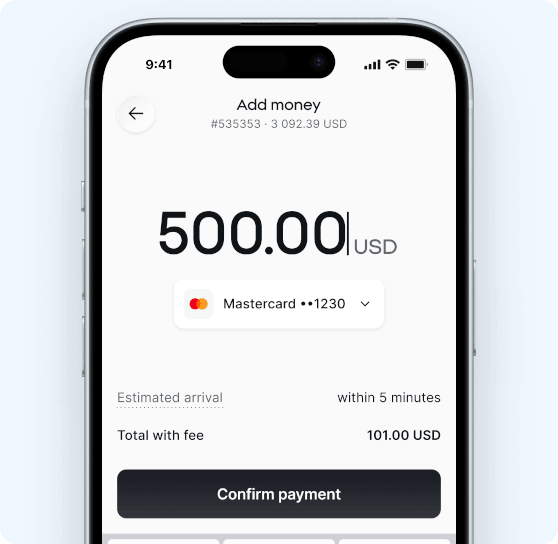
Choose a deposit method convenient for you from a range of available ones, including instant and free payments.

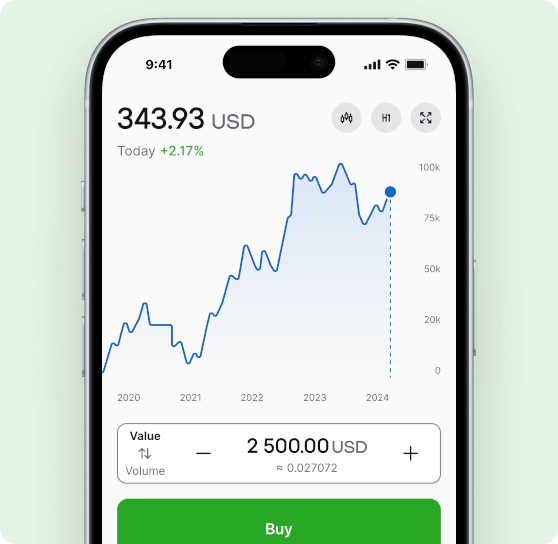
3. Start trading

Choose from 11800+ instruments.

1. Download the app

Visit your mobile store and download our app completely for free

2. Open an account

Complete the form and send relevant documents - all without unnecessary formalities.

3. Make a deposit and start trading

Choose a deposit method convenient for you from a range of available ones, including instant and free payments.

WHY XTB

Why trade at XTB?

Innovative Platform

We are constantly working on the development of our proprietary and award-winning trading platform to make sure it suits all your needs. Available in both desktop and mobile versions.

Regulation

We are part of the group that is one of the largest stock echange-listed brokers in the world, regulated by several reputable supervisory authorities. It is also worth noting that XTB clients’ funds are being kept in segregated accounts, which means that they are separated from the company’s funds.

Multilingual and highly qualified Customer Support

Our support team is ready to help you 24 hours a day, from Monday to Friday.

TOP INSTRUMENTS

Check out more instruments

All stocks
Education

Explore extensive Knowledge base

REIT ETF & Stock - How to Invest in Property
Betting Against the Market - How to Make Money in Falling Markets?
Best Companies to Invest In & Stocks to Buy – How to Choose?
FAQ

Do you have any questions?

CME Group operates a global marketplace where people buy and sell contracts to manage financial risk — like locking in prices or protecting against interest rate changes.

Primarily through transaction and clearing fees when someone trades futures or options. It also earns revenue from selling market data and licensing technology.


Not exactly. It's a financial exchange operator, like the New York Stock Exchange — but focused on futures and options instead of stocks.


Banks, hedge funds, corporations, asset managers, farmers, oil companies — anyone needing to hedge price risk or speculate in large, liquid markets.


CME doesn’t focus on company shares. Instead, it deals in contracts tied to interest rates, commodities, currencies, and indexes — things that influence the entire economy.


It’s not directly tied to recessions or booms. However, volatility often boosts trading activity, so uncertain environments can lead to higher earnings.


A stock is a type of security that represents ownership in a company. It represents a claim on part of the company's assets and earnings.

By owning stocks, you can potentially benefit from the growth and success of the company. There are several ways that stocks can make you money: dividend payments (some stocks pay dividends, which are payments made to shareholders out of the company's profits) or capital appreciation (when the price of a stock you own increases, you can sell the stock for a profit).

There are three main types of stocks: common stock (gives its owner voting rights at shareholder meetings and entitles to a portion of the company's profits through dividends), preferred stock (pays dividends at a fixed rate and has a higher claim on assets and earnings than common stock; does not typically come with voting rights), and warrants (type of security that gives the holder the right, but not the obligation, to buy or sell a specific number of shares of stock at a predetermined price within a certain time frame).

It is not possible to determine a "good" first stock to buy, as what constitutes a good stock can vary depending on an individual's financial goals and risk tolerance. It is important for individuals to thoroughly research any potential investment and consider their own financial situation before making a purchase.
The financial instruments we offer, especially CFDs, can be highly risky. Fractional Shares (FS) is an acquired from XTB fiduciary right to fractional parts of stocks and ETFs. FS are not a separate financial instrument. The limited corporate rights are associated with FS.
This page was not created for investors residing in Brazil. This brokerage is not authorized by the Comissão de Valores Mobiliários (CVM) or the Brazilian Central Bank (BCB). The content of this page should not be characterized as an investment offer in Brazil or for investors residing in that country.
Losses can exceed deposits