Morgan Stanley Morgan Stanley

Morgan Stanley • Morgan Stanley

Invest in MS.US stock

Past performance is not necessarily indicative of future results, and any person acting on this information does so entirely at their own risk.

Fees

Less costs, more investments

0% commission*

Enjoy no commission on stocks and ETFs up to EUR 100 000 of monthly turnover, above this amount the commission is only 0.2% (min. EUR 10). Remember that 0.5% currency conversion cost may apply.

Free deposits and withdrawals

Manage funds without costs using selected payment methods.

Free account opening

Complete the process in 15 minutes without unnecessary formalities.

Create an account

Open your XTB account in just a few simple steps. Get access to global markets and a wide range of investment opportunities.

Make a deposit

Add funds to your account using one of the available payment methods. Once your funds are available, you’re ready to start investing.

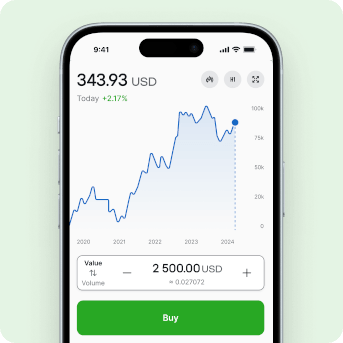
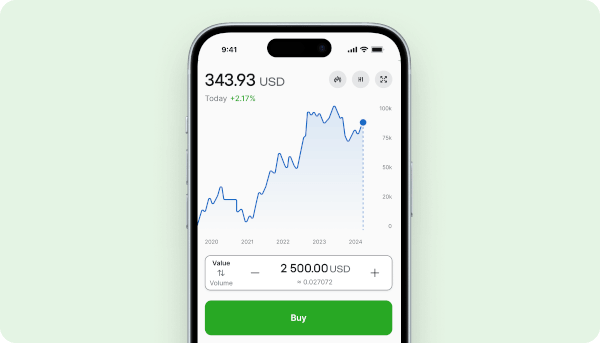
Buy MS.US

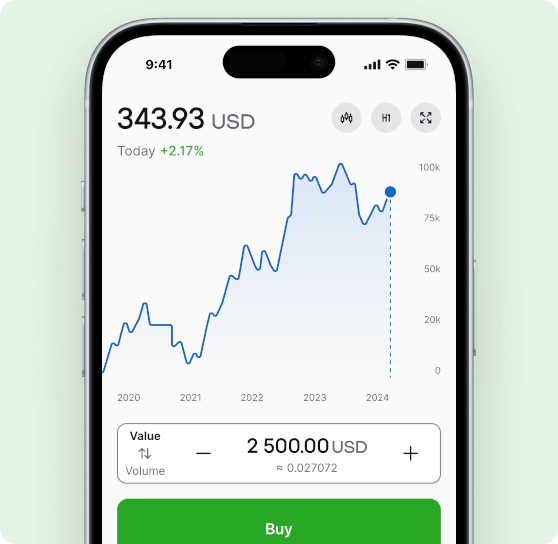
Find MS.US in XTB App, choose how much you want to invest and place your order. Start building your portfolio on your terms.

And make your money work in many ways

Explore more ways to put your money to work - from ETFs to CFDs on commodities, indices, crypto and more. Discover Investment Plans while you wait for your next investment opportunity.

Popular in the markets

Most traded stocks

See what the world is trading. Explore some of the most actively traded stocks and discover popular companies from global markets.

News

Keep your finger on the pulse with our latest market news

We are regulated by leading financial regulatory authorities across multiple markets worldwide.

About instrument

Invest in MS.US with ZERO commission

Morgan Stanley stands at the crossroads of Wall Street intensity and Main Street service. On one hand, it advises billion-dollar mergers and manages institutional trading. On the other, it builds retirement plans and investment strategies for individuals and families. Few firms wear both hats with such polish — making it a modern, diversified powerhouse in global finance.

Key Takeaways

  • 📊 Leading U.S. investment bank and wealth management firm

  • 🏛️ Blends high finance with personal financial planning
     
  • 🌍 Operates globally with deep presence in U.S., Europe, and Asia
     
  • 💼 Strong client base across retail and institutional markets
     
  • 🔄 Shifted toward recurring revenue via wealth and investment management
     
  • 🔐 Known for research depth, deal-making, and client trust
     

Business Model

Morgan Stanley’s model is a diversified blend of capital markets and recurring fee income. While it offers traditional investment banking and trading, the majority of revenue now comes from wealth and investment management. With trillions under management, its client-centric strategy provides stable, long-term cash flow, combined with growth from financial advisory, lending, and asset strategies.

Business Segments

  • Wealth Management – Financial planning and investment services for individuals and small businesses.

  • Institutional Securities – Investment banking, capital markets, and trading for large institutions.
     
  • Investment Management – Managing assets for institutional clients via funds and bespoke strategies.
     
  • Research & Insights – Widely respected equity, macroeconomic, and financial market research.
     
  • Lending & Banking Solutions – Includes securities-based loans and digital cash management.
     
  • Digital Platforms – Technology-enabled investment tools for financial advisors and clients.

📈 Investing Characteristics

A modern financial hybrid with recurring revenue at its core.

Morgan Stanley is a firm that evolved — and thrived — by learning from history. Post-2008, it transformed from a trading-heavy investment bank into a diversified, wealth-driven institution. For investors, Morgan Stanley offers a blend of resilient income and capital markets upside, all wrapped in a more stable and forward-thinking structure.

📈 Fee-Based Fortress
Wealth and investment management now make up over half of Morgan Stanley’s revenue — built on assets that generate stable, long-term fees from financial planning, lending, and retirement investing. This gives the firm greater predictability than trading-focused peers.

👥 Massive Client Base
With millions of clients across E*TRADE and Morgan Stanley Wealth, the firm has scale and touchpoints that few rivals can match. It acts as both a high-end advisor and a mass-market platform — combining institutional service with retail reach.

📦 Product Breadth and Advisory Power
Morgan Stanley offers clients everything from ETFs and retirement accounts to private equity exposure — allowing it to cross-sell investment strategies and lending solutions under one roof.

🌐 Digital Evolution
The acquisition of E*TRADE and rollout of client-facing platforms underscores Morgan Stanley’s commitment to a digitally driven, hybrid wealth model — a differentiator in a rapidly modernizing industry.

💡 Research and Thought Leadership
The firm’s widely respected research division provides both internal strength and public visibility — reinforcing trust among investors, policymakers, and institutional clients.

⚠️ Major Catalysts & Risks

🚀 Major Catalysts

  • Wealth Management Scale: Rising global wealth and retirement planning drive steady growth in assets and long-term fees.
     
  • Digital Platform Expansion: Integration of E*TRADE allows for cross-channel engagement and access to younger, digitally-native investors.
     
  • Sticky Client Assets: Financial planning relationships often last decades, reducing client churn and enhancing lifetime value.
     
  • Institutional Deal Flow: M&A advisory, equity underwriting, and fixed income trading remain strong revenue contributors in active markets.
     
  • Global Macro Trends: Participation in infrastructure, ESG investing, and international capital flows provide strategic growth lanes.

⚠️ Major Risks

  • Market Sensitivity: While more stable than before, Morgan Stanley still feels pressure from equity markets and asset price movements.
     
  • Integration Risk: Mergers like E*TRADE and Eaton Vance bring platform, culture, and execution risks.
     
  • Regulatory Burden: Wealth platforms face growing scrutiny around suitability, data privacy, and ESG claims.
     
  • Interest Rate Impact: Higher interest rates may impact client borrowing, trading activity, and fee-based product flows.
     
  • Competitive Pressure: Rising competition from fintechs and low-cost brokers could compress margins and client acquisition costs.


Short Company History & Major Milestones

  • 1935: Founded as a spin-off from J.P. Morgan after the Glass-Steagall Act
     
  • 1986: Listed on the NYSE
     
  • 2009: Merged with Smith Barney to become a top U.S. wealth manager
     
  • 2020: Acquired E*TRADE and Eaton Vance
     
  • 2022+: Focused on scaling digital wealth platforms and institutional trading tech
     
  • Today: Serves millions of clients across retail, institutional, and corporate finance

ISIN

-

Trading days

-

Market hours

15:30 - 22:00

Commission

0 USD

Minimum order value

10 USD

Interesting Facts

What to know before investing in MS.US

💳 From Wall Street to Wallets: Morgan Stanley owns E*TRADE, giving it massive access to retail investors, self-directed traders, and one of the largest online trading platforms, strengthening its reach across both institutional and everyday investing.

🧠 Research Powerhouse: Its financial research is considered among the best on Wall Street, with in-depth analysis and market insights that are widely trusted and used by institutional investors, financial advisors, and major media outlets alike.

💼 Smith Barney Legacy: Its wealth management arm was significantly strengthened through the acquisition of Smith Barney from Citigroup, greatly expanding its network of financial advisors and reinforcing its position as a global leader in wealth management.

📈 Fee-Based Transformation: Morgan Stanley shifted from relying heavily on trading revenue to generating steady, recurring income through client assets and advisory fees, helping reduce earnings volatility and create a more stable business model.

🏢 Big Institutional Deals: Morgan Stanley has advised on some of the world's biggest corporate transactions, including Facebook's IPO, major AT&T mergers, and complex global restructurings, reinforcing its reputation as a top investment banking advisor.

🔄 Crisis Resilience: After the 2008 financial crisis, Morgan Stanley reshaped its business by placing greater emphasis on wealth management and stable, fee-based revenue, making the firm more resilient and less dependent on volatile trading profits.

FAQ

Do you have more questions?

Find answers to our most commonly asked questions. Still have a question? Please contact our customer support team.

 It provides investment banking, asset management, and wealth planning for individuals, businesses, and institutions. It blends Wall Street advisory with financial planning services.


 Its wealth management platform is one of the largest globally, offering personalized investment solutions and financial planning.


 Everyone from Fortune 500 companies and hedge funds to everyday investors using E*TRADE or working with a Morgan Stanley advisor.


Primarily through asset management fees, financial planning services, trading commissions, and corporate advisory fees.


 E*TRADE gave Morgan Stanley direct access to digital trading clients, expanding its retail reach and enhancing its tech capabilities.


 Yes. It remains a leading player in IPO underwriting, M&A advisory, and capital markets trading.


 Morgan Stanley places more emphasis on wealth management, while Goldman is more focused on trading and institutional banking.


 Yes. Its diversified model — especially its shift toward recurring client-fee income — gives it a stable financial base.


 It manages institutional assets like pensions, endowments, and mutual funds, including via Eaton Vance, which it acquired in 2021.


 Absolutely. With offices in over 40 countries, it serves clients worldwide across markets, asset classes, and wealth tiers.


A stock is a type of security that represents ownership in a company. It represents a claim on part of the company's assets and earnings.

By owning stocks, you can potentially benefit from the growth and success of the company. There are several ways that stocks can make you money: dividend payments (some stocks pay dividends, which are payments made to shareholders out of the company's profits) or capital appreciation (when the price of a stock you own increases, you can sell the stock for a profit).

There are three main types of stocks: common stock (gives its owner voting rights at shareholder meetings and entitles to a portion of the company's profits through dividends), preferred stock (pays dividends at a fixed rate and has a higher claim on assets and earnings than common stock; does not typically come with voting rights), and warrants (type of security that gives the holder the right, but not the obligation, to buy or sell a specific number of shares of stock at a predetermined price within a certain time frame).

It is not possible to determine a "good" first stock to buy, as what constitutes a good stock can vary depending on an individual's financial goals and risk tolerance. It is important for individuals to thoroughly research any potential investment and consider their own financial situation before making a purchase.

The financial instruments we offer, especially CFDs, can be highly risky. Fractional Shares (FS) is an acquired from XTB fiduciary right to fractional parts of stocks and ETFs. FS are not a separate financial instrument. The limited corporate rights are associated with FS.
This page was not created for investors residing in Brazil. This brokerage is not authorized by the Comissão de Valores Mobiliários (CVM) or the Brazilian Central Bank (BCB). The content of this page should not be characterized as an investment offer in Brazil or for investors residing in that country.
Losses can exceed deposits