Oracle Oracle

Oracle • Oracle Corp

Invest in ORCL.US stock

Past performance is not necessarily indicative of future results, and any person acting on this information does so entirely at their own risk.

Fees

Less costs, more investments

0% commission*

Enjoy no commission on stocks and ETFs up to EUR 100 000 of monthly turnover, above this amount the commission is only 0.2% (min. EUR 10). Remember that 0.5% currency conversion cost may apply.

Free deposits and withdrawals

Manage funds without costs using selected payment methods.

Free account opening

Complete the process in 15 minutes without unnecessary formalities.

Create an account

Open your XTB account in just a few simple steps. Get access to global markets and a wide range of investment opportunities.

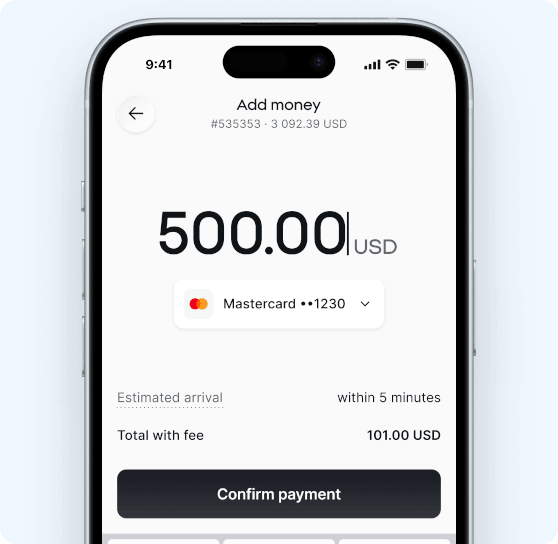
Make a deposit

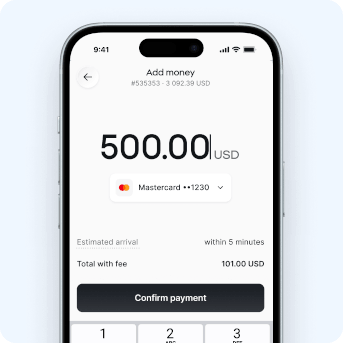
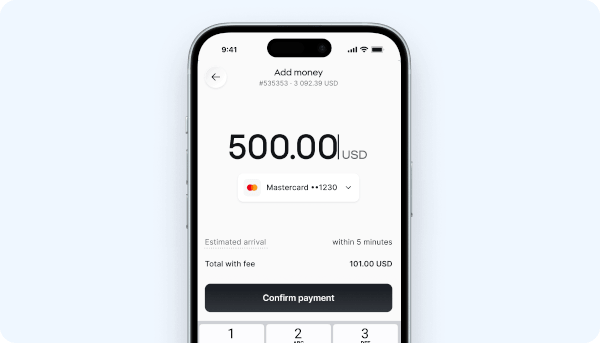
Add funds to your account using one of the available payment methods. Once your funds are available, you’re ready to start investing.

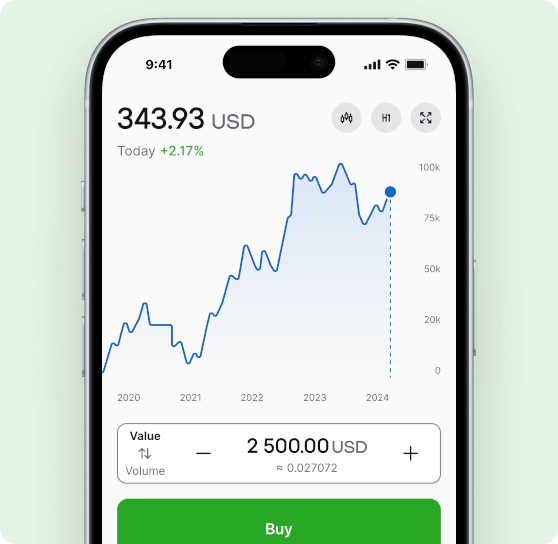
Buy ORCL.US

Find ORCL.US in XTB App, choose how much you want to invest and place your order. Start building your portfolio on your terms.

And make your money work in many ways

Explore more ways to put your money to work - from ETFs to CFDs on commodities, indices, crypto and more. Discover Investment Plans while you wait for your next investment opportunity.

Popular in the markets

Most traded stocks

See what the world is trading. Explore some of the most actively traded stocks and discover popular companies from global markets.

News

Keep your finger on the pulse with our latest market news

We are regulated by leading financial regulatory authorities across multiple markets worldwide.

About instrument

Invest in ORCL.US with ZERO commission

Oracle is the quiet engine behind many businesses’ digital lives. Specializing in database technology, software, and cloud solutions, Oracle has become essential for companies needing to store, manage, and analyze vast amounts of information.

Key Takeaways

  • Leading provider of enterprise software and cloud services.
     
  • Famous for its flagship Oracle Database.
     
  • Significant focus on Cloud Infrastructure and AI-driven services.
     
  • Expanding into healthcare tech through acquisitions.

Business Model

Oracle’s business model pivots on selling software licenses, providing cloud infrastructure, and offering database management services.
It transitioned from a license-and-maintenance model toward a subscription-based cloud model, giving it recurring revenue and better customer retention.

Business Segments

  • Cloud and License (databases, middleware, SaaS)
     
  • Hardware (servers, storage solutions)
     
  • Services (consulting, technical support)

Investing Characteristics

Oracle is often viewed as a "tech blue chip" — mature, profitable, and focused on steady innovation rather than explosive growth. Its sticky database products make Oracle deeply embedded in business operations, ensuring recurring revenues. With its shift toward cloud computing and AI, Oracle is becoming more future-ready, but competition in this sector is fierce. Its resilience comes from a vast installed base of corporate customers who are reluctant to switch platforms.

Key Traits:

  • Steady enterprise software cash flow
     
  • Long customer relationships (high switching costs)
     
  • Strategic pivot toward cloud computing
     
  • Moderate dividend growth

Major Catalysts & Risks

Catalysts

  • Rising demand for cloud computing and hybrid cloud solutions.
     
  • Expansion into healthcare IT through the Cerner acquisition.
     
  • Growth in AI-driven data automation and security services.

Risks

  • Competition from tech giants like Amazon, Microsoft, and Google.
     
  • Legacy on-premises software becoming less attractive compared to cloud-native rivals.
     
  • Potential slowdown in enterprise tech spending during economic downturns.
     
  • Dependence on large customer contracts which, if lost, could impact revenue meaningfully.

Short Company History & Major Milestones

  • 1977: Oracle founded by Larry Ellison, Bob Miner, and Ed Oates.
     
  • 1986: Oracle went public on the NASDAQ.
     
  • 2010: Acquisition of Sun Microsystems, securing Java and MySQL technologies.
     
  • 2021: Acquired Cerner Corporation to expand into healthcare technology.

 

ISIN

-

Trading days

-

Market hours

15:30 - 22:00

Commission

0 USD

Minimum order value

10 USD

Interesting Facts

What to know before investing in ORCL.US

The Database King: Oracle has long been recognized as a leader in database management, with its technology powering critical operations for many of the world’s largest companies, governments, and organizations.

Aggressive Acquisitions: Oracle has built its technology empire through an aggressive acquisition strategy, acquiring more than 130 companies to expand its products, capabilities, and market reach.

Cloud Competition: Oracle competes directly with some of the world’s largest cloud providers, including Amazon Web Services, Microsoft Azure, and Google Cloud. While these rivals have built massive cloud ecosystems, Oracle has leveraged its decades of enterprise software expertise and database leadership to strengthen its own cloud offering.

Founder Billionaire: Oracle co-founder Larry Ellison is one of the world’s wealthiest individuals and one of the most recognizable figures in the technology industry. Known for his ambitious personality, luxury lifestyle, and passion for competitive sailing, Ellison has also gained attention through his ownership of the Oracle Team USA.

Oracle vs. Google: Oracle’s legal battle with Google over Java copyright issues became one of the most significant technology lawsuits of the modern era. The dispute began after Oracle claimed that Google’s use of certain Java APIs in the Android operating system violated its intellectual property rights.

Focus on AI: Oracle has increasingly integrated artificial intelligence and machine learning capabilities into its cloud platform, using AI to enhance areas such as data security, automation, analytics, and business decision-making.

FAQ

Do you have more questions?

Find answers to our most commonly asked questions. Still have a question? Please contact our customer support team.

 The Oracle Database, a cornerstone product for enterprise data management.


 Oracle’s suite of cloud services including computing, storage, and application hosting.


 Amazon AWS, Microsoft Azure, IBM, and SAP.


Yes, AI and machine learning are key parts of Oracle’s Cloud Infrastructure services.


 To deepen its footprint in healthcare data management.


 Finance, healthcare, government, retail, and many more.


 Partially — it sells servers and storage solutions but is mainly software-focused.


 Primarily SQL (Structured Query Language) for databases.


 Its decade-long copyright lawsuit against Google over Android's use of Java.


 Yes, Oracle pays a regular quarterly dividend to shareholders.


A stock is a type of security that represents ownership in a company. It represents a claim on part of the company's assets and earnings.

By owning stocks, you can potentially benefit from the growth and success of the company. There are several ways that stocks can make you money: dividend payments (some stocks pay dividends, which are payments made to shareholders out of the company's profits) or capital appreciation (when the price of a stock you own increases, you can sell the stock for a profit).

There are three main types of stocks: common stock (gives its owner voting rights at shareholder meetings and entitles to a portion of the company's profits through dividends), preferred stock (pays dividends at a fixed rate and has a higher claim on assets and earnings than common stock; does not typically come with voting rights), and warrants (type of security that gives the holder the right, but not the obligation, to buy or sell a specific number of shares of stock at a predetermined price within a certain time frame).

It is not possible to determine a "good" first stock to buy, as what constitutes a good stock can vary depending on an individual's financial goals and risk tolerance. It is important for individuals to thoroughly research any potential investment and consider their own financial situation before making a purchase.

The financial instruments we offer, especially CFDs, can be highly risky. Fractional Shares (FS) is an acquired from XTB fiduciary right to fractional parts of stocks and ETFs. FS are not a separate financial instrument. The limited corporate rights are associated with FS.
This page was not created for investors residing in Brazil. This brokerage is not authorized by the Comissão de Valores Mobiliários (CVM) or the Brazilian Central Bank (BCB). The content of this page should not be characterized as an investment offer in Brazil or for investors residing in that country.
Losses can exceed deposits