WFC.US

WFC.US - Wells Fargo – Investing Guide, Business Model & Segments

Wells Fargo & Co
Create account
Past performance is not necessarily indicative of future results, and any person acting on this information does so entirely at their own risk.
Download free app
ABOUT INSTRUMENT

Invest in Wells Fargo & Co with ZERO commission

Wells Fargo isn’t just about stagecoaches and old western movies. It’s a modern banking powerhouse that helps millions manage their money. From checking accounts to home mortgages and corporate lending, Wells Fargo plays a quiet but pivotal role in everyday financial life.

Key Takeaways

  • One of the largest banks in the U.S. by assets.

  • Operates across consumer banking, corporate lending, and wealth management.
     
  • Deep roots tracing back to the California Gold Rush.
     
  • Highly sensitive to economic cycles and interest rate changes.
     
  • Recently working through reputational rebuilding after regulatory issues.
     
  • Strong physical branch network combined with growing digital banking presence.

Business Model

Wells Fargo’s business model is a classic banking playbook built on relationships, deposits, and lending. Customers deposit money, Wells Fargo lends it out (through mortgages, loans, and credit lines), and the bank earns the difference — known as net interest income. Beyond basic banking, Wells Fargo makes money through fees on investment services, credit cards, and advisory services.

It aims to be a "one-stop shop" for financial needs: helping individuals save and borrow, corporations manage cash flows, and wealthy clients invest their fortunes. Stability, trust, and efficiency are core goals, although the bank has had to work hard to rebuild its image in recent years.

Business Segments

  • Consumer Banking and Lending: Personal checking, savings accounts, mortgages, auto loans, and credit cards for everyday customers.
     
  • Commercial Banking: Lending and financial services for small and mid-sized businesses.
     
  • Corporate and Investment Banking: Financial services for large companies including investment banking, treasury, and risk management.
     
  • Wealth and Investment Management: Advisory, brokerage, and private banking for wealthy individuals and institutions.

Investing Characteristics

Wells Fargo is a cyclical financial stock deeply tied to the overall U.S. economy and interest rate environment. When the economy is strong, businesses and consumers borrow and invest more, boosting Wells Fargo’s profits. When rates rise moderately, the bank typically benefits from fatter net interest margins (earning more from loans than they pay on deposits).

Wells Fargo also appeals to dividend-focused investors, historically offering solid dividend yields. Its large U.S. footprint, especially in mortgages and consumer banking, provides stable long-term opportunities.

However, its reputation remains under a cloud from past scandals, meaning Wells Fargo often trades at a discount to peers like JPMorgan. Investors looking at Wells Fargo should consider it a recovery play with upside potential — but one where patience is key.

Major Catalysts & Risks

Catalysts:

  • Interest Rate Hikes: Moderate increases in rates help Wells Fargo’s loan profitability.
     
  • Regulatory Approvals: Lifting of existing government consent orders could unlock growth and investor confidence.
     
  • Cost-Cutting Plans: Efficiency initiatives can boost margins and overall profitability.
     
  • Digital Banking Growth: Increased online engagement helps Wells Fargo retain younger, tech-savvy customers.

Risks

  • Economic Recession: A downturn can increase loan defaults and reduce demand for borrowing.
     
  • Reputation Recovery: Lingering consumer distrust could slow customer acquisition and retention.
     
  • Regulatory Scrutiny: Wells Fargo faces some of the tightest oversight among major banks, limiting its strategic flexibility.
     
  • Competitive Pressure: Fintech companies, online lenders, and "neobank" startups nibble away at traditional banking margins.


Short Company History & Major Milestones

Wells Fargo was founded in 1852 by Henry Wells and William G. Fargo. Originally a courier service for gold and valuable goods, it rapidly expanded into banking. By the early 20th century, it was a financial titan on the U.S. West Coast. Mergers and acquisitions — notably with Norwest Corporation in 1998 — built Wells Fargo into a national banking leader. The 2016 fake account scandal hit hard, leading to leadership changes, major fines, and efforts to rebuild trust and culture.


 

ISIN
-
0 USD
Trading days
-
10 USD
15:30 - 22:00

Interesting facts

⛏️ Gold Rush Beginnings: Wells Fargo was founded in 1852 to serve the needs of California Gold Rush miners, merchants, and businesses, providing essential banking and express services that helped fuel the growth of the American West.

🐎 Stagecoach Logo: The iconic Wells Fargo stagecoach remains a symbol of speed, reliability, and trust, reflecting the company’s early express delivery days when stagecoaches transported money, goods, and important documents across the expanding American frontier.

🏦 Big Four: Wells Fargo is often grouped with JPMorgan Chase, Bank of America, and Citigroup as one of America’s “Big Four” banks, reflecting its massive scale, nationwide presence, and importance within the U.S. financial system.

🌎 National Footprint: Wells Fargo has branches across nearly every U.S. state, giving it one of the country’s largest physical banking networks and allowing millions of customers convenient access to everyday financial services.

📱 Digital Push: Wells Fargo’s mobile banking app is among the most widely used financial apps in the U.S., helping the bank compete with fintech startups by offering customers convenient digital tools for payments, account management, and everyday banking.

⚖️ Regulatory Watch: After the 2016 account scandal, Wells Fargo faced multiple government consent orders and increased regulatory scrutiny, leading the bank to overhaul its risk management, compliance systems, and internal culture.

TOP INSTRUMENTS

Check out more instruments

All stocks
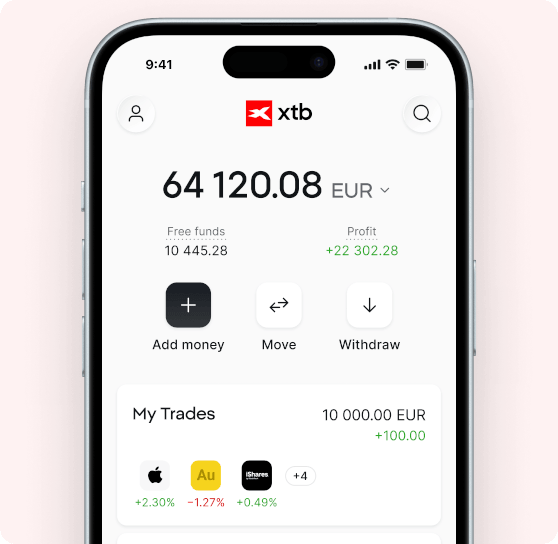
Have all your trades always at hand

With award-winning and easy to use XTB trading app

Latest news

Keep your finger on the pulse with our latest news

Market Wrap: EU chip stocks surge on...
17 August 2026
Gold gains and returns to $4,400 🗽 Ar...
17 August 2026
🟠Is there a shortage of physical copper?
17 August 2026
See more news
GET ACCESS

How to invest in Wells Fargo & Co at XTB?

1. Open an account

Complete the form and send relevant documents - all without unnecessary formalities.

2. Make a deposit

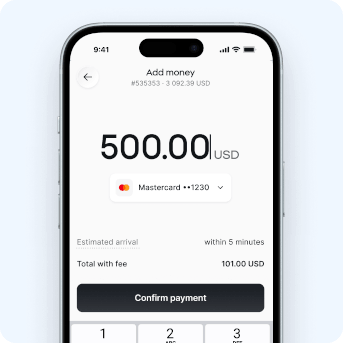
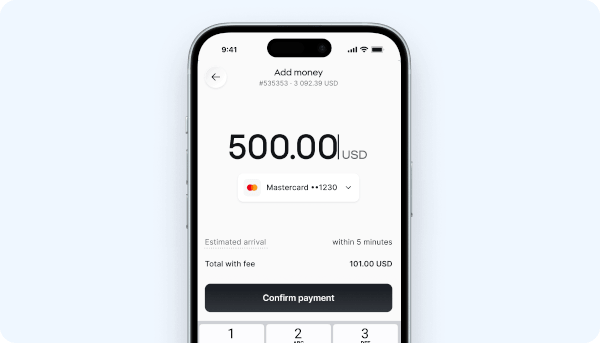
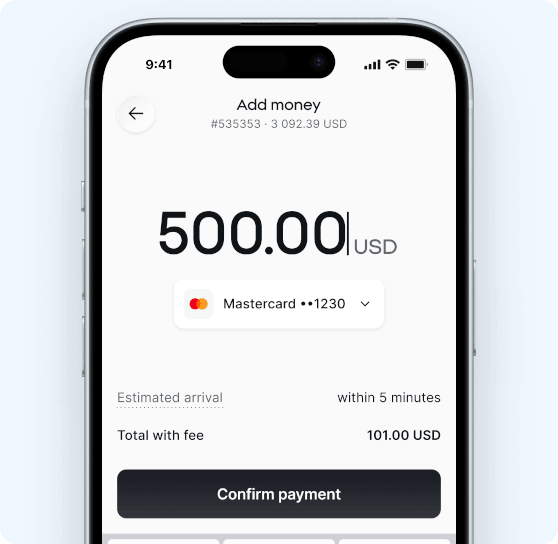
Choose a deposit method convenient for you from a range of available ones, including instant and free payments.

3. Start trading

Choose from 11900+ instruments.

1. Download the app

Visit your mobile store and download our app completely for free

2. Open an account

Complete the form and send relevant documents - all without unnecessary formalities.

3. Make a deposit and start trading

Choose a deposit method convenient for you from a range of available ones, including instant and free payments.

WHY XTB

Why trade at XTB?

Innovative Platform

We are constantly working on the development of our proprietary and award-winning trading platform to make sure it suits all your needs. Available in both desktop and mobile versions.

Regulation

We are part of the group that is one of the largest stock echange-listed brokers in the world, regulated by several reputable supervisory authorities. It is also worth noting that XTB clients’ funds are being kept in segregated accounts, which means that they are separated from the company’s funds.

Multilingual and highly qualified Customer Support

Our support team is ready to help you 24 hours a day, from Monday to Friday.

TOP INSTRUMENTS

Check out more instruments

All stocks
Education

Explore extensive Knowledge base

REIT ETF & Stock - How to Invest in Property
Betting Against the Market - How to Make Money in Falling Markets?
Best Companies to Invest In & Stocks to Buy – How to Choose?
FAQ

Do you have any questions?

Banking, mortgages, wealth management, credit cards, and investment services.


Primarily focused in the U.S., with some global corporate and investment banking services.


Mainly from net interest income (the difference between deposit rates and loan rates) and service fees.


In 2016, it was revealed that millions of fake accounts were opened without customer consent, leading to major fines and leadership changes.


Yes — it's one of the four largest banks in America, although under stricter regulatory oversight.


Yes, its app and online banking services are key growth areas, especially after COVID-19 accelerated digital adoption.

Historically one of the largest mortgage lenders in the U.S., though it has recently scaled back its mortgage footprint.


JPMorgan Chase, Bank of America, Citigroup, and regional banks like PNC and U.S. Bank.


Wells Fargo is known for paying dividends and is popular among income-focused investors.


Regulatory pressure, reputational recovery, digital transformation, and competition from fintech companies.


A stock is a type of security that represents ownership in a company. It represents a claim on part of the company's assets and earnings.

By owning stocks, you can potentially benefit from the growth and success of the company. There are several ways that stocks can make you money: dividend payments (some stocks pay dividends, which are payments made to shareholders out of the company's profits) or capital appreciation (when the price of a stock you own increases, you can sell the stock for a profit).

There are three main types of stocks: common stock (gives its owner voting rights at shareholder meetings and entitles to a portion of the company's profits through dividends), preferred stock (pays dividends at a fixed rate and has a higher claim on assets and earnings than common stock; does not typically come with voting rights), and warrants (type of security that gives the holder the right, but not the obligation, to buy or sell a specific number of shares of stock at a predetermined price within a certain time frame).

It is not possible to determine a "good" first stock to buy, as what constitutes a good stock can vary depending on an individual's financial goals and risk tolerance. It is important for individuals to thoroughly research any potential investment and consider their own financial situation before making a purchase.
The financial instruments we offer, especially CFDs, can be highly risky. Fractional Shares (FS) is an acquired from XTB fiduciary right to fractional parts of stocks and ETFs. FS are not a separate financial instrument. The limited corporate rights are associated with FS.
This page was not created for investors residing in Brazil. This brokerage is not authorized by the Comissão de Valores Mobiliários (CVM) or the Brazilian Central Bank (BCB). The content of this page should not be characterized as an investment offer in Brazil or for investors residing in that country.
Losses can exceed deposits