GBP/NZD

Trade GBP/NZD CFD

Past performance is not necessarily indicative of future results, and any person acting on this information does so entirely at their own risk.

Fees

Less costs, more investments

Competitive fees

Trade with leverage and keep costs low

Free deposits and withdrawals

Manage funds without costs using selected payment methods

Free account opening

Complete the process in 15 minutes without unnecessary formalities.

Learn

What is CFD trading?

New to CFDs? Learn how CFD trading works and how you can trade on both rising and falling prices without owning the underlying asset. We explain the basics, financial leverage, potential benefits and risks in simple terms.

Read the Beginner’s Guide

Create an account

Open your XTB account in just a few simple steps. Get access to global markets and a wide range of investment opportunities.

Make a deposit

Add funds to your account using one of the available payment methods. Once your funds are available, you’re ready to start investing.

Trade GBP/NZD

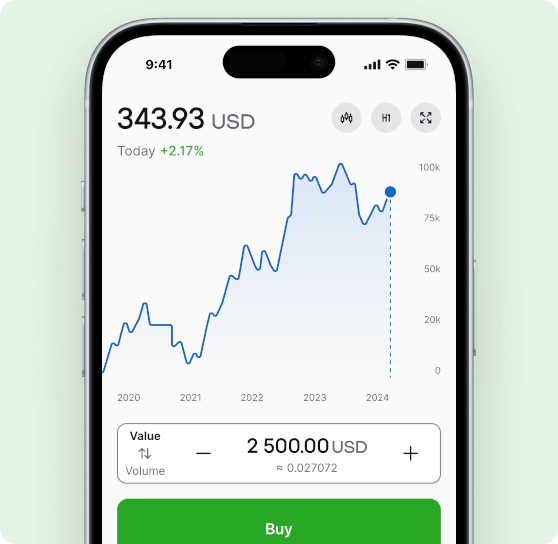
Find GBP/NZD in XTB App, choose how much you want to invest and place your order. Start building your portfolio on your terms.

And make your money work in many ways

Explore more ways to put your money to work - from global stocks, ETFs and more. Discover Investment Plans while you wait for your next investment opportunity.

Popular in the markets

Most traded CFDs

Discover where CFD traders are most active. Explore some of the most traded CFDs across global markets and see which instruments are in focus.

News

Keep your finger on the pulse with our latest market news

We are regulated by leading financial regulatory authorities across multiple markets worldwide.

About instrument

Trade GBP/NZD CFD

The GBP/NZD forex pair represents the exchange rate between the British Pound Sterling (GBP) and the New Zealand Dollar (NZD). This cross-currency pair does not include the US dollar, making it a direct trade between two influential economies. The pair is often referred to as "the Kiwi."

Economic Influences on GBP/NZD

UK Economy:

The British Pound is one of the world’s most traded currencies due to the UK’s global financial hub status. Factors like economic data (GDP growth, employment figures, inflation), political stability, and monetary policy decisions by the Bank of England (BoE) significantly affect GBP’s value. The UK economy is heavily service-based, particularly in financial services, and consumer spending is a critical driver of the Pound’s strength.

New Zealand Economy:

The New Zealand Dollar is closely tied to global commodity markets, especially agricultural exports like dairy and meat. New Zealand’s economy is heavily influenced by trade relations, especially with China and Australia, which are major trading partners. The Reserve Bank of New Zealand (RBNZ) controls monetary policy, and interest rate decisions impact the NZD’s strength. Additionally, global risk sentiment plays a significant role due to New Zealand’s status as a smaller, export-driven economy.

Key Factors Impacting GBP/NZD

  • Interest Rate Differentials: The BoE and RBNZ’s interest rate policies create opportunities for traders to take advantage of the yield differentials.
  • Commodity Prices: NZD’s performance is highly sensitive to changes in global commodity prices, particularly in agriculture.
  • Geopolitical Events: Political uncertainty in either country, or in global trade relations, can significantly move this pair.

Here are the five most important macro reports influencing the GBP/NZD forex pair:

1. UK GDP Growth Report

Provides insight into the economic performance of the UK, a crucial driver for the value of the British Pound (GBP).

2. New Zealand GDP Growth Report

This report indicates the strength of the New Zealand economy, significantly impacting the New Zealand Dollar (NZD).

3. Bank of England (BoE) Interest Rate Decision

The BoE's monetary policy decisions, especially regarding interest rates, directly influence GBP's value.

4. Reserve Bank of New Zealand (RBNZ) Interest Rate Decision

RBNZ's stance on monetary policy, including rate adjustments, affects NZD fluctuations.

5.UK Inflation Report (CPI)

UK’s Consumer Price Index (CPI) data is a key indicator of inflation, influencing BoE policy and, in turn, GBP/NZD.




Standard Transaction Spread

0.00022

Margin

0.20%

Leverage

500

Commission

-

Market hours

24 h from Sunday 11:00 pm to Friday 10:00 pm CET

Interesting Facts

What to know before investing in GBP/NZD

A High-Beta Cross for Risk-Sensitive Traders

GBP/NZD is not your average currency pair. Known for its wide price swings and frequent trend bursts, it reacts sharply to macro shifts—especially changes in risk sentiment and central bank policy. This makes it a magnet for seasoned traders who thrive on volatility and momentum.


Commodity Exposure Through the Kiwi

The New Zealand dollar is deeply tied to global commodity cycles, particularly dairy and meat exports. When agricultural prices rise or fall, NZD tends to follow—and GBP/NZD moves accordingly. Few major pairs offer this kind of sensitivity to soft commodity demand.


Two Central Banks, One Opportunity

The Bank of England and Reserve Bank of New Zealand often take different stances on interest rates. When one hikes and the other pauses or cuts, GBP/NZD often makes bold directional moves. That divergence in monetary policy offers clear setups for traders who follow rate expectations.


Big Moves in Quiet Hours

Despite linking two developed economies, GBP/NZD has relatively low liquidity, especially outside London and Asia-Pacific trading sessions. That can mean wider spreads—but also larger-than-expected moves during news events. It's a favorite among breakout traders looking for clean, fast momentum.


Political Sensitivity on Both Sides

From UK elections to New Zealand’s ties to China, this pair absorbs a dual stream of political and macroeconomic noise. When instability hits one side while the other remains steady, GBP/NZD can trend aggressively—making it a go-to for traders tracking asymmetric global risks.


A Natural for Mean-Reversion and Swing Setups

This pair loves to overshoot. Whether it’s emotional spikes or technical breakouts, GBP/NZD frequently pulls back—making it ideal for mean-reversion strategies. Tools like Bollinger Bands, RSI divergences, and Fibonacci retracements are especially effective in catching its reversals.


FAQ

Do you have more questions?

Find answers to our most commonly asked questions. Still have a question? Please contact our customer support team.

GBP/NZD represents the exchange rate between the British Pound Sterling (GBP) and the New Zealand Dollar (NZD). It shows how many NZD are needed to purchase one GBP.

The main factors include interest rate differentials between the Bank of England (BoE) and the Reserve Bank of New Zealand (RBNZ), commodity prices (especially dairy and agriculture for New Zealand), and economic data such as GDP, inflation, and employment figures from both countries.

The pair is most actively traded during the overlap of the European and Asian trading sessions when both the UK and New Zealand markets are open, which can result in increased volatility and trading opportunities.

Popular strategies include interest rate differential (carry trade), commodity price correlation, and news trading based on major economic reports from the UK and New Zealand.

GBP/NZD is subject to volatility due to the differing economies and time zones. Factors like political instability in the UK or global commodity price swings affecting New Zealand can cause sudden fluctuations in this pair.

It is best to proceed trading in FOREX with proper education - you can start with the Knowledge base we have prepared for you. Once you have the proper knowledge you should open a demo account to get a feel for the market and practice your trading strategy before investing real money. Remember that you can never have to much knowledge and you should constantly educate yourself during your presence on the financial markets.

There is no recipe for success in the FOREX market. However, there are some aspects that will help you become a better trader. Here are some tips: start with demo account (before risking real money - get a feel for the market and practice your trading strategy), develop a trading plan (it's important to have a clear plan in place before starting trading), use risk management tools (manage your risk when trading, through eg. Stop Loss orders), do not overtrade (it's easy to get caught up in the excitement of trading, but it's important to stick to your plan and not overtrade).

Financial markets are a very complex topic, as they are influenced by various factors, such micro- and macroeconomic events, policies or social changes. You should start your trading experience with proper education about the concepts, assumptions and laws that govern the markets - you can start with the Knowledge base we have prepared for you. Once you have the proper knowledge you should open a demo account to get a feel for the market and practice your trading strategy before investing real money. Remember that you can never have to much knowledge and you should constantly educate yourself during your presence on the financial markets.

Yes, FOREX investing can be risky. The value of currencies can fluctuate significantly due to a variety of factors, including economic conditions, political events and market speculation. It is important for individuals to carefully consider their own financial situation and risk tolerance before investing in FOREX.

When choosing a broker, you should consider a number of aspects related to its activity and offer. These things you should definitely consider: credibility of the invesment firm, cost and fees, instruments offered, investment platform, customer support and additional benefits. If you want to learn more about how to choose your broker visit: investresponsibly.com.

When choosing a FOREX platform there are several factors you should consider: platform ownership (proprietary platform are usually designed in the most intuitive way), availability of DEMO account (where you can test your knowledge practice strategies before risking real money), fees (commissions, spreads etc.), access to educational materials and market news . Before commiting to one platform you should carefully consider all above-mentioned aspects, as they will particulary contribute to the effectiveness of your trading.

The financial instruments we offer, especially CFDs, can be highly risky. Fractional Shares (FS) is an acquired from XTB fiduciary right to fractional parts of stocks and ETFs. FS are not a separate financial instrument. The limited corporate rights are associated with FS.
This page was not created for investors residing in Brazil. This brokerage is not authorized by the Comissão de Valores Mobiliários (CVM) or the Brazilian Central Bank (BCB). The content of this page should not be characterized as an investment offer in Brazil or for investors residing in that country.
Losses can exceed deposits