


Ever stared at a dozen trading platforms and wondered which one will actually make your life easier instead of turning every trade into a tiny stress test? Choosing the best options trading platform isn’t about flashy charts or even “zero commissions” headlines. It’s about clarity, execution quality, trust, and tools that help you think in probabilities, not panic.
Ever stared at a dozen trading platforms and wondered which one will actually make your life easier instead of turning every trade into a tiny stress test? Choosing the best options trading platform isn’t about flashy charts or even “zero commissions” headlines. It’s about clarity, execution quality, trust, and tools that help you think in probabilities, not panic.
Options are a little different from stock trading. You’re not just clicking buy or sell. You’re dealing with strike prices, expiration dates, implied volatility, and spreads. And here’s the thing beginners learn the hard way: even a great market idea can get quietly damaged by a platform that fills slowly, shows messy options chains, or hides real trading costs in wide bid-ask spreads.
Think of it like picking a car for a long road trip. You can choose the shiny convertible, but if it stalls every fifty miles, the trip becomes a survival story. The right platform feels boring in the best way: it’s stable, responsive, transparent, and built for decision-making. It lets you focus on trading, learning, and improving your process, not wrestling with clunky software or guessing what your order actually did.
Whether you’re just dipping your toes into options or already juggling stocks, ETFs, and maybe crypto, knowing what to look for in a platform is like having a map in a maze. Not because you can’t escape without it, but because without it, you’ll waste time walking into dead ends.
Understanding Options Trading Platforms
Imagine walking into a massive, high-tech kitchen. You have every ingredient and every tool, but you can only cook well if you know where the knives, burners, and timers are. That’s what an options trading platform is: your workspace for analyzing, placing, and managing options trades.
At its core, an options trading platform is software that lets you buy and sell options contracts, track positions, and evaluate market opportunities. Some platforms are simple, just enough for buying basic calls and puts. Others are built for serious decision-making, offering full options chains, Greeks, volatility tools, strategy builders, and risk analytics.
One important detail many beginners miss: in options, your platform is not just a “place to trade.” It’s the interface between you and market reality. Liquidity, spreads, and execution quality matter more than people expect, because they affect what you actually pay and what you can realistically earn.
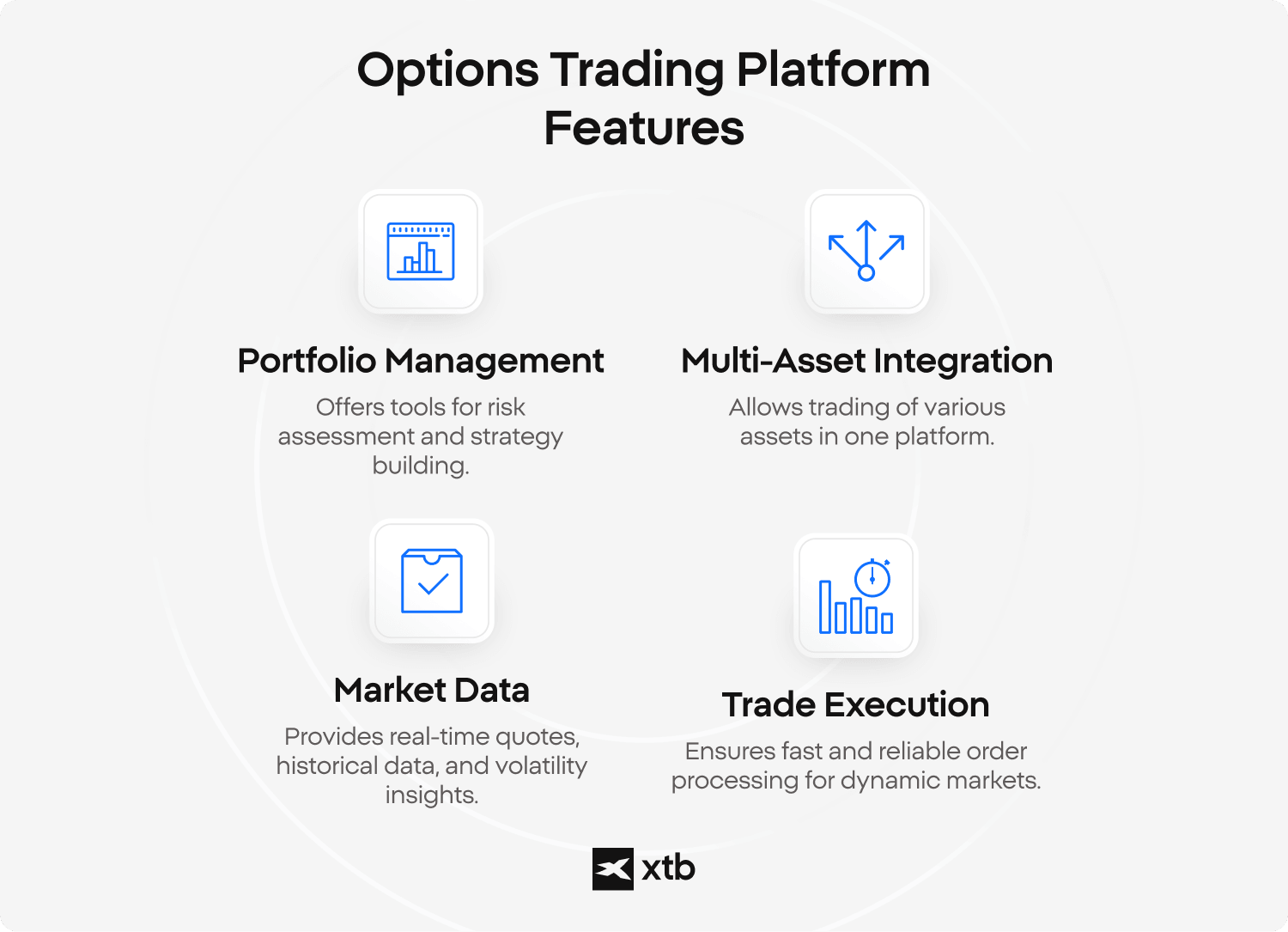
Trade Execution
Execution matters because options pricing can change quickly, especially during earnings, macro news, or sudden market swings. Your platform needs to handle fast-moving quotes and show you clear order details. Think of it like a car’s engine: smooth, responsive, reliable. Not because you want to race, but because you want control when the road gets slippery.
Market Data and Analysis
Good platforms provide real-time quotes, clean options chains, historical pricing, open interest, and implied volatility insights. This is where beginners start understanding how option prices behave, and where advanced traders fine-tune timing and risk.
Even simple upgrades like a clear bid-ask spread display can make a huge difference, because spreads are often a hidden cost that quietly shapes performance.
Portfolio and Risk Management
Options are not only about “up or down.” They’re about probability, time, and volatility. That’s why platforms include tools such as:
- Greeks calculators (delta, theta, vega, gamma)
- profit/loss diagrams
- scenario analysis and stress testing
- strategy builders and payoff visualizations
These tools reduce the chance that you’re trading blind. Even a basic payoff chart can save you from a costly mistake.
Multi-Asset Integration
Many modern platforms allow trading stocks, ETFs, indices, and sometimes crypto in one place. Think of it as a Swiss Army knife: one tool to navigate multiple markets without constantly switching apps.
This matters because options traders often hedge or pair positions across instruments. If your platform supports that smoothly, your workflow becomes faster and cleaner.
Why the Platform You Choose Matters
Using the wrong platform can make even a smart trader feel like a beginner. Slow execution, confusing interfaces, poor options-chain layout, wide spreads, or hidden costs can turn a good setup into frustration.
On the other hand, the right platform can help you:
- make decisions faster (without rushing)
- reduce mistakes during order entry
- track risk clearly across positions
- understand outcomes before you commit
- feel like your trading process is under control
In options, confidence doesn’t come from being fearless. It comes from seeing the full picture.
A Beginner vs. Advanced Perspective
For beginners
Look for platforms that are easy to navigate, include education, and offer paper trading or a simulator. Learning mechanics without risking real money is like practicing surfing on a small wave before taking on the big one.
It’s still real practice, just with fewer scars.
For advanced traders
Speed and analytics become essential, but so does precision. Advanced traders typically look for:
- multi-leg order support
- volatility analytics and scanners
- advanced charting
- customizable alerts
- strategy testing tools
- risk monitoring across the whole portfolio
Because once you trade multi-leg strategies, your “position” is not a single idea. It’s a structure.
Mini Example: Trading Made Simple
Imagine you want to buy a call option on Apple:
- You log into your platform and open the options chain.
- You find a call with a $180 strike priced at $5 (premium).
- You use the platform’s payoff tool to simulate what happens if Apple rises to $200, stays flat, or drops.
- You place the order and verify the execution price, spreads, and confirmation.
It sounds simple, but a platform that lags, hides spreads, or makes the order process unclear can turn even a small trade into an expensive lesson.
Key Features to Look for in the Best Options Trading Platform
Imagine buying a sports car that looks stunning but has brakes that struggle on steep roads. That’s what happens when you choose a platform based on ads or shiny UI alone. In options trading, the platform is not decoration. It’s your infrastructure. The right features reduce errors, improve execution quality, and help you understand risk before it surprises you.
A great platform balances speed, usability, transparency, and insight, so you can focus on decision-making, not technical friction.
Execution Speed and Reliability
Options pricing changes quickly, especially around earnings, macro data, or sudden volatility spikes. A platform should be stable, responsive, and consistent in how it routes and confirms orders.
For options traders, reliability matters just as much as speed. A perfect setup is useless if the platform freezes or quotes lag when the market gets hectic.
Bonus point: look for platforms that show bid-ask spreads clearly and support limit orders, because spreads are often the hidden cost beginners underestimate.
Advanced Charting and Options Analytics
Options traders don’t just trade direction. They trade time, volatility, and probability. Platforms that provide clean charts, full options chains, Greeks (delta, theta, vega, gamma), and implied volatility tools help you evaluate trades properly.
Even beginners benefit from seeing payoff diagrams and risk visually rather than relying purely on numbers. It turns “confusing contracts” into something you can actually understand.
Market News and Alerts Integration
Real-time news and customizable alerts are critical because events move options prices fast. Earnings surprises, central bank statements, guidance changes, or geopolitical headlines can reshape volatility in minutes. Platforms with integrated news help you stay proactive instead of reacting after the premium has already jumped.
Portfolio and Risk Management Tools
Good platforms show what many traders forget to check: what happens if you’re wrong.
Look for tools like:
- profit/loss simulators and payoff diagrams
- scenario analysis (different price + volatility paths)
- portfolio exposure monitoring (delta, vega, theta)
- margin and assignment-risk visibility (especially if you sell options)
These tools keep you honest and help avoid “surprises that were actually predictable.”
Why the Right Platform Can Make a Real Difference
A good options platform does more than execute trades. It helps you operate with structure.
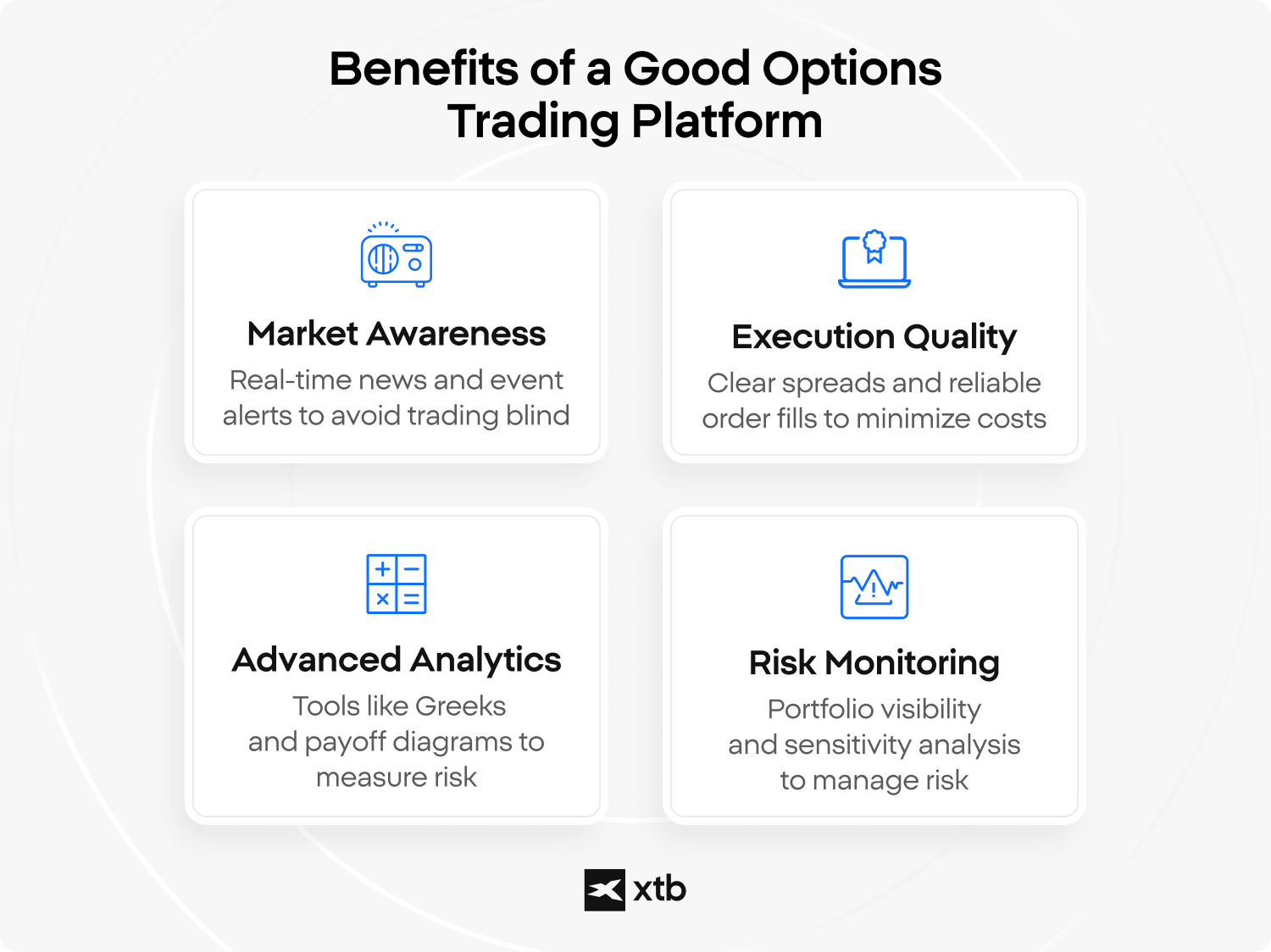
1) Access to market news and event awareness
Options pricing can shift quickly around earnings releases, central bank decisions, or macro headlines. Platforms with real-time news and event alerts help you avoid trading blind. Missing an earnings surprise because your platform is slow is like walking into a storm without an umbrella. ☔
2) Options-native analytics (not just charts)
Charts matter, but options traders also need:
- clean options chains
- Greeks (delta, theta, vega, gamma)
- implied volatility tools
- payoff diagrams and scenario analysis
These features turn options from a “guessing game” into something you can actually measure.
3) Execution quality and order control
In options, the bid-ask spread is often your hidden cost, and poor fills can quietly damage performance. A strong platform shows spreads clearly, supports limit orders, and confirms fills transparently. Speed matters, but reliability and clarity matter just as much.
4) Portfolio visibility and risk monitoring
A platform should let you see your positions, P/L, and exposures in one glance. If you trade options, it helps to monitor risk not only by position, but also by sensitivity:
- delta exposure (directional risk)
- theta exposure (time decay)
- vega exposure (volatility risk)
When risk is visible, stress tends to drop and decisions improve. The bottom line is: even talented traders struggle on platforms that are slow, glitchy, or confusing.
Which platform is best suited for you?
Beginners
Beginners usually benefit most from platforms that are:
- intuitive and easy to navigate with access to ETFs and stocks
- supported by tutorials and clear education materials
- offering demo accounts to training
Intermediate traders
At this stage, traders typically want:
- real-time quotes and clean options chains
- event alerts and integrated news
- better order control
These tools support more tactical decisions while still keeping complexity manageable.
Advanced / pro traders
Advanced traders often prioritize:
- fast, stable execution
- multi-leg strategy support
- customizable alerts and scanners
- deeper volatility analytics and strategy builders
- strong event calendars and macro coverage
At this level, the platform isn’t “nice to have.” It’s part of the edge.
Key takeaways
- Speed and reliability matter: Your platform should remain stable when markets get fast and emotional.
- Real-time news helps: Alerts and event awareness reduce unpleasant surprises around earnings and macro moves.
- Options tools matter more than aesthetics: Greeks, options chains, payoff diagrams, and risk simulators improve decision quality.
- User experience reduces mistakes: Clear order tickets, simple workflows, and good support protect you from avoidable errors.
- Costs shape real results: Look beyond commissions. Spreads, margin rates, and hidden fees can quietly add up.
FAQ
It’s software that lets you trade options contracts, monitor positions, and use tools like options chains, and payoff charts.
Start with paper trading, keep position sizes small, and focus on basic calls and puts first. Learn strikes, expirations, and premiums before going “advanced.”
Yes. Risk comes from volatility, leverage, and time decay. A good platform reduces execution mistakes, but it can’t remove market risk.
Stable execution, deep analytics, volatility tools, scanners, and multi-leg orders ⚙️. Plus strong event calendars and news.
Free platforms are great to learn. Paid platforms add premium tools, data, and execution features. Choose based on how active you trade and how much you rely on analytics.

Women In Trading: Is Trading Still A Male Dominated Industry?

Best Stock Broker - How to Choose the Best UK Broker

5 financial mistakes to avoid when investing online
This content has been created by XTB S.A. This service is provided by XTB S.A., with its registered office in Warsaw, at Prosta 67, 00-838 Warsaw, Poland, entered in the register of entrepreneurs of the National Court Register (Krajowy Rejestr Sądowy) conducted by District Court for the Capital City of Warsaw, XII Commercial Division of the National Court Register under KRS number 0000217580, REGON number 015803782 and Tax Identification Number (NIP) 527-24-43-955, with the fully paid up share capital in the amount of PLN 5.869.181,75. XTB S.A. conducts brokerage activities on the basis of the license granted by Polish Securities and Exchange Commission on 8th November 2005 No. DDM-M-4021-57-1/2005 and is supervised by Polish Supervision Authority.