


Read more
Educational Articles

Knowledge Base

Reading time • 12 minute(s)
How to Save Money Each Month: Practical Tips
Saving money is associated by some with sacrifices and a decrease in life satisfaction. Meanwhile, many of life's costs can be reduced or completely removed without giving up a holiday, a car or new shoes. The key is to stick to at least a few rules and reduce unnecessary consumption of goods in general. This additionally carries a positive impact for the entire planet, not just the state of your wallet. By controlling your spending, you can build a financial cushion that will give you financial confidence in life. You also won't be fully dependent on your job or current living situation. You will be able to negotiate higher rates or change jobs without worrying about stability and liquidity. As you can see, saving doesn't just mean extra money. It can bring with it a positive aspect in the form of feelings of freedom and independence. It also provides a basis for entering the world of investments. By adopting a few money-saving tips, you’ll be able to achieve your financial goals. And enjoy a more secure future by yourself or with family. Now, let’s embark on this journey to financial freedom together!
Read more 
Reading time • 8 minute(s)
How to Start the Year Financially Fit with XTB
As we embark on a new year, many people set resolutions or, as a newer approach, create vision boards to improve their health, financial goals, and overall well-being. As we know, one of the most powerful resolutions you can make is to strengthen your financial fitness. A solid financial foundation not only provides security but also gives you the ability to achieve your long-term goals, whether it's buying a house, investing for retirement, or building a passive income stream. Whether you're new to trading or have experience in the financial markets, XTB's user-friendly platform can help you to make informed decisions.
Read more 
Reading time • 4 minute(s)
Maximising Your ISA Contributions
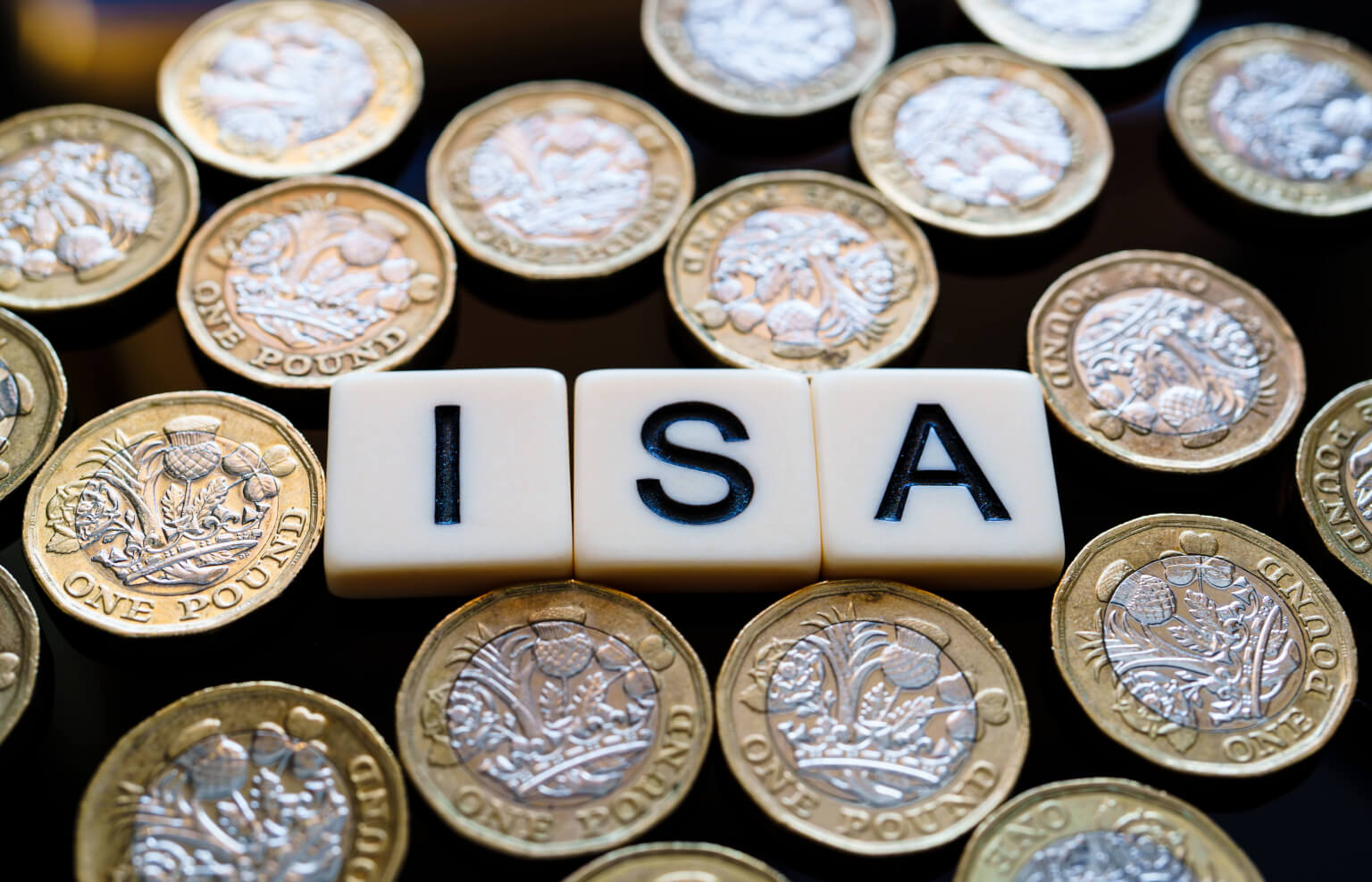
Individual Savings Accounts (ISAs) offer a tax-efficient way to save and invest. By understanding how to utilise the annual ISA contribution limit effectively and implementing regular saving strategies, you can significantly boost your long-term financial goals.
Read more 
Reading time • 5 minute(s)
Choosing the Right ISA for You
Individual Savings Accounts (ISAs) are a popular way for UK residents to save and invest money without paying tax on the interest, dividends, or capital gains they earn. With several types of ISAs available, it’s important to understand your options and how they align with your financial goals. This article will break down the different types of ISAs - Cash ISAs, Stocks & Shares ISAs, Lifetime ISAs & Flexible ISAs, financial goals, risk tolerance and assessing your time horizon.
Read more 
Reading time • 12 minute(s)
Advantages and disadvantages of long term investing
Long-term investing is key to wealth, leveraging cost-effective strategies and profits from business cycles. Now, with easy access through trading apps, it's more popular. Yet, risks and disadvantages exist. Learn more about balancing benefits and potential pitfalls in investing for the long haul. In the ever-evolving landscape of financial markets, adopting the right investment strategy is crucial. One such approach that often stands the test of time is long-term investing. In this article, we'll delve into the advantages and disadvantages of committing your funds for the long haul, exploring the intricacies of this investment strategy. In the intricate world of long-term investing, balancing the advantages and disadvantages is an art. Investing means a number of potential opportunity costs, and uncertainties. Ultimately, a thoughtful and disciplined long-term investment strategy can pave the way for financial success. It means a strategic approach focused on patience and compounding returns, targeting wealth accumulation by weathering market volatility and reducing transaction costs over extended periods. Long term investments offer several advantages such as potential for higher yields due to compounding, lower impact of market volatility, and reduced cost from fewer transactions and lower capital gains taxes. However, long-term investing also presents risks. Almost any investment may be a failure, and a long term approach may be not enough to stop an investor from making a mistake. Read this article to know more about pros and cons of long term investments.
Read more 
Reading time • 11 minute(s)
How to invest in AI stocks?
In the last decade of the 20th century, the internet hit the imagination of investors, starting the so-called dot-com bubble. Almost 20 years later, investors become again fascinated by disruptive technology of generative AI. How to invest in artificial intelligence stocks? Artificial intelligence is no longer Sci-fi. From Hollywood screens, advanced algorithms have undergone a powerful evolution. They have improved productivity, accelerated data analysis and surprised hundreds of millions of people with their text and image generation capabilities. ChatGPT in 2022 was hailed as the fastest-growing app in the world. This revolution is ongoing, AI continues to improve, and companies that have the means and capabilities to use it have taken a special place in the minds of investors. Now virtually everyone can use it, and the world's largest technology companies have entered the race to reach millions of consumers with their products: private and corporate. Like flywheels in a powerful mechanism, market laws have determined the industries that can benefit from the AI trend. In these industries, only some of the best-managed and technology-implementing companies can keep up with the trend. From Microsoft's cloud computing and Nvidia's semiconductors enabling growing computing power (and more advanced AI) to Arista Networks' networking solutions. Let's find out which AI stocks stand to gain from the new technological shift that began in the second decade of the 21st century. In the following article, you will learn why AI has hit the floor of the world's largest stock exchanges. We will also try to identify the companies that can benefit from it.
Read more 
Reading time • 2 minute(s)
XTB Investment Products: Understanding Low and High-Risk Investment Options
XTB offers a variety of investment products to suit different levels of risk tolerance, from lower-risk options for long-term investing to higher-risk products for those interested in more active trading. It is important to understand the differing levels of risk associated with different products and to make informed decisions based on your individual risk tolerance.
Read more 
Reading time • 2 minute(s)
Understanding ISAs: A Tax-Efficient Way to Save and Invest
For many, saving money can feel like an uphill battle. Between everyday expenses and long-term goals, it's easy to see your hard-earned cash disappear. In the realm of personal finance, the term "ISA" often surfaces in conversations about saving and investing. But what exactly is an ISA, and why is it hailed as a cornerstone of tax-efficient financial planning? What if there was a way to make your savings grow faster, with the government giving you a helping hand? Enter the Individual Savings Account (ISA), a tax-efficient tool designed to help your savings strategy.
Read more 
Reading time • 5 minute(s)
US Presidential Election 2024: Kamala Harris vs Donald Trump. Which candidate is better for stock markets?
The US presidential elections take place every 4 years. This year, the election is scheduled for Tuesday, November 5th, whilst the inauguration will be held on January 20th, 2025. Voters will cast their ballots for candidates to the US Congress, composed of the House of Representatives and the US Senate. This year’s election concerns the entire HoR (435 members elected every 2 years), as well as 1/3 of the Senate (33 members for a 6-year term). Back in July, it seemed that Donald Trump's victory in the November 2024 US presidential election was almost certain. President Joe Biden's health problems caused a significant drop in his popularity. An unsuccessful assassination attempt on Trump during a campaign in Butler, Pennsylvania (one of the key swing states) seemed to seal his presidential race.
Read more 
Reading time • 20 minute(s)
Investing during a crisis: Strategies and Tips
Asset prices in financial markets largely depended on the emotions of market participants. Their fluctuations mean that periods of temporary panics and euphoria are cyclical. They are part and parcel of the “mechanics” of the market, and since human psychology has not changed significantly over the past hundreds of years, financial crises and crashes happen periodically. And they are likely to continue to happen, in the future. Usually, a crisis is preceded by a period during which most investors are wrong, driven by greed. Such situations may lead to a crash and can herald a prolonged crisis, fuelled by investors' fear. Most spectacular examples include the 2020 crash caused by the Covid-19 virus, the dot-com bubble of the 2000s, and the Great Depression of 1929, after which the US stock market took nearly 25 years to recover. In good times, investors overestimate the value of some companies and underestimate the risk. This is a characteristic element of a great economy, during which no one worries about the future. Risk control and uncertainty recede into the background. Usually, however, an unexpected event shows that reality is not so great. It could be a systemic problem in the financial sector like the subprime loans in 2008, a war or a period of economic downturn. During a recession, corporate profits and revenues begin to fall. The effect? In the end, euphoria turns into panic and leads to drastic price drops. During them, the market gets rid of assets it loved until recently. Investors see the future in black. They believe that there is no price too low for the things they own. Over time, they are proven wrong again, and the market begins to recover.
Read more 
Reading time • 30 minute(s)
GBP/EUR 2025 Forecast: Euro, Pound Exchange Trends
The pound to euro exchange rate has remained volatile in 2024, with the pound rising in value against the EUR for much of the year compared to the end of 2023. The GBP/EUR rate has often threatened to break out to its highest levels since August 2022. However, recent shifts in expectations suggest potential weakness for the pound, following the belief that UK interest rates have likely peaked and could be reduced by at least two times in 2024. Looking ahead to 2025, the pound's performance against the euro will be influenced by several key factors, including economic growth projections, inflation rates, and future UK monetary policy decisions. If interest rate cuts materialize as expected, this could lead to further downward pressure on the pound, while any economic recovery or growth in the UK could provide support for the GBP. Analysts also suggest that ongoing political and economic uncertainties may continue to play a significant role in currency fluctuations. For 2025, it is anticipated that the pound may continue to face challenges, but there is also the possibility of periodic gains should the UK's economic performance outperform expectations or if the European Union faces its own set of challenges. As always, exchange rate forecasts remain subject to change based on evolving economic conditions. Stay updated with our live blog tracking key changes in the pound-to-euro rate and the latest analyst forecasts.
Read more 
Reading time • 3 minute(s)
The FCA Consumer Duty: What is it?
The financial services industry has undergone a significant transformation with the introduction of the Consumer Duty. This regulation, enforced by the Financial Conduct Authority (FCA), came into effect in July 2023 and places a paramount focus on protecting consumer interests and ensuring that firms deliver consistently excellent outcomes. At the heart of the Consumer Duty are four core principles: acting in good faith, avoiding foreseeable harm, being open and transparent, and delivering fair value. These principles demand a fundamental shift in how financial firms operate, prioritising customer needs and well-being above all else. In this article, we will delve into the key aspects of the Consumer Duty, exploring its impact on both consumers and financial firms. We will also discuss how XTB is actively working to comply with this landmark regulation, ensuring that our clients benefit from enhanced protection, transparency, and fair value.
Read more 
Reading time • 11 minute(s)
Investing in Currencies
Picture a bustling marketplace that never sleeps, where traders from around the globe are constantly buying and selling. This isn’t your ordinary marketplace; this is the foreign exchange market, better known as forex. The foreign exchange market is the largest market in the world, but it is worth noting that the forex market is dominated by speculators who trade trillions of dollars every day, all over the world. But currencies are not just about trading. How can they be used in investments?
Read more 
Reading time • 6 minute(s)
What is Next for the AI Trade?
The Artificial Intelligence trade has been a huge market theme for most of the last 18 months, and big gains for the likes of Nvidia have been a key driver of US stock markets. However, has it reached a tipping point? As we move through the second half of the year, the AI trade can no longer be relied on to keep stock markets moving higher. Added to this, the Q2 earnings season also shows us that investors are becoming more demanding about the financial impact of Artificial intelligence investments.
Read more 
Reading time • 4 minute(s)
What’s Next for Global Stock Markets?
The first half of 2024 will be remembered for strong gains in stock markets, particularly in the mega caps stocks in the US and Japanese equities. Smaller cap stocks and European equities trailed these gains, however, there could be a chance for them to play catch up. The start of the year was dominated by the chip makers and US stocks, especially the tech stocks. The Nasdaq was one of the top performing stock indices globally, rallying more than 16% from January through to the end of July. Japanese stock indices were also top performers, the Nikkei is higher by more 13% than while the Topix is higher by 14%, as investor interest in Japan was piqued by the prospect of interest rate normalisation by the Bank of Japan. As we move through Q3 a new theme could be about to take over markets.
Read more 
Reading time • 5 minute(s)
The Outlook for Commodities in the Second Half of 2024
The commodity market has had a mixed year. After rallying strongly in the first few months of the year, as the months have progressed commodities and some raw materials have given back most of these gains. For example, Brent crude oil is higher by just under 3% YTD, however, it is down nearly 10% in the last three months. The price of copper reached a record high close to $11,000 per tonne in mid-May, however, it is now trading at just over $9,000 per tonne. The weakness across the commodity landscape is down to various factors including macroeconomic fundamentals as well as supply and demand factors.
Read more 
load.more