



The bond vigilantes are after the UK once more
By Kathleen Brooks, XTB research director, UK
The bond market is leading the sell off today, even though gains for the oil price are moderate compared to Thursday, and European stock markets are stabilizing. The bond sell-off is a problem for the global economy, particularly the UK. The decline in Gilts and the relentless rise in yields is continuing at the end of the week.
UK debt sell off worse than elsewhere
The UK is looking like an outlier, and multiple factors are causing this. Events in the Middle East are a major factor, along with the unprecedented repricing of UK interest rate expectations. More than 3 rate hikes are still expected this year from the BOE, even after Andrew Bailey attempted to calm markets after yesterday’s press conference. There are also idiosyncratic factors that make the UK more vulnerable to energy price shocks. Our blunt energy pricing mechanism will cause bills to surge later this year, and we have a Labour government that is spending more in welfare than it is bringing in through taxation, which is also spooking bond investors in the current environment.
Historic move in yields
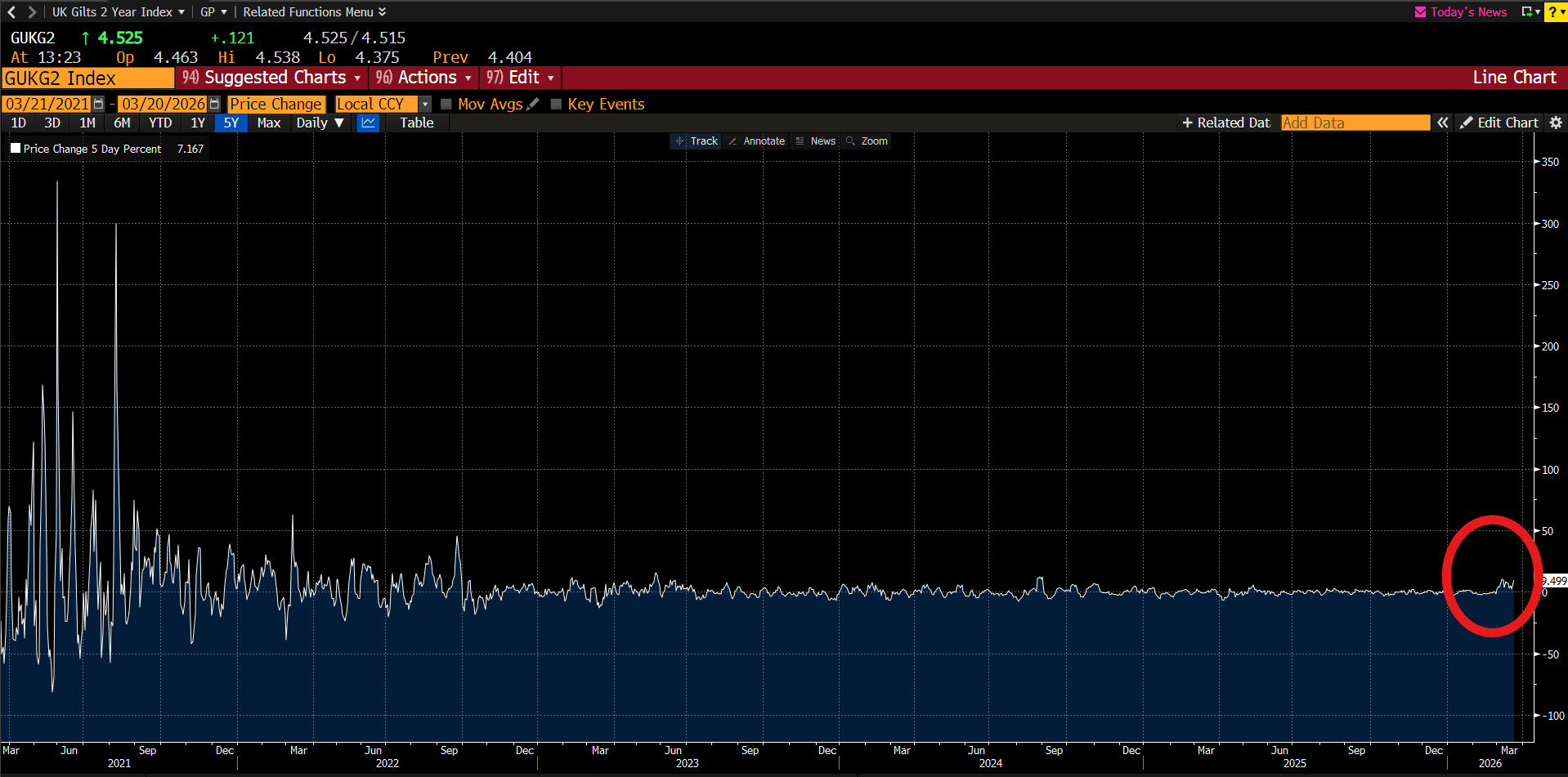
The 2-year yield is higher by another 9 bps today and is up 40bps in the past week. The 10-year Gilt yield, the benchmark, is higher by 16bps this week. At 4.92%, the 10-year Gilt yield is now at its highest level since the financial crisis, while the 30-year yield is up 7bps today and has broken above last week’s high and is at its highest level since 1998. The question now is, will the rapid rise in yields break something in the UK economy?
Chart 1: It’s been a volatile decade for UK debt: UK 2-year yield % move on a weekly basis, this is one of the biggest moves since 2022
Source: XTB and Bloomberg
The political risks impacting bonds
The UK is in a dangerous position as today’s public finance figures show us. The sell-off in Gilts was exacerbated by the February borrowing figures, which showed that public sector net borrowing was £14.3bn, more than £5bn more than expected. This data suggests the UK’s fiscal problems were in place long before the war started. The UK’s welfare bill is bulging, and if Starmer is replaced after local elections in May then we could get a left-leaning PM at the exact time the Gilt market is groaning under the public sector debt burden. The fact that UK debt is selling off more than anywhere else should be a warning sign to this government: be careful about making promises around energy subsidies, as the Gilt market may not have the bandwidth for any more handouts.
Political risks are mounting for the UK as £66bn of tax increases under this government so far has not plugged any holes, fictitious or not. This suggests that the UK’s current economic path is extremely damaging and there needs to be a major re-set.
The rising risk of owning UK debt
While the Iran war is one factor that is weighing on UK Gilts right now, it is not the only one. If there is a ceasefire, then some of the upward pressure on yields will abate, however, it won’t completely return to normal. The risk premium attached to UK Gilts is only going to get wider, in our view. The UK is now considered a high inflation economy that cannot withstand energy price shocks. What is particularly worrying is that the UK has a widening budget deficit, and the sell off in UK Gilts is far worse than our neighbors. For example, our Gilt yields are rising at double the rate of France and Italy this week. This is a lonely place to be and needs to be urgently addressed.
This is also weighing on the GBP today, and GBP/USD is back at the lows of the day and is testing support around $1.3350. It has also retraced around 50% of yesterday’s upside move. A steeper sell off in GBO would be a negative development as the same time as yields are rising, since it would suggest that fiscal stresses are building.
Why equities are more resilient than bonds
The bond market has been deeply affected by this crisis, and it has sold off more sharply than equities. There is some expectation that equity markets will align with bonds and a steeper selloff is coming, but we disagree. The energy price shock caused by the war in the Middle East is exposing the vulnerabilities of highly indebted western nations. This is a major problem for them. In contrast, some corporates have more resilient balance sheets, which is a benefit in this environment. Thus, we could see more buying of equities compared to sovereign debt as long as this war rages on. Eventually bond buyers will come back into the market, but recent price action suggests that it may take some time.



Daily Summary: US100 Hits New Highs on Weak NFP 🚨


Oil down nearly 5% following the announcement that European diesel reserves will be released💡



BREAKING: US NFP data surprises to the downside; USD dips🔥

🟡Gold takes a breath, because of oil, not NFP
This content has been created by XTB S.A. This service is provided by XTB S.A., with its registered office in Warsaw, at Prosta 67, 00-838 Warsaw, Poland, entered in the register of entrepreneurs of the National Court Register (Krajowy Rejestr Sądowy) conducted by District Court for the Capital City of Warsaw, XII Commercial Division of the National Court Register under KRS number 0000217580, REGON number 015803782 and Tax Identification Number (NIP) 527-24-43-955, with the fully paid up share capital in the amount of PLN 5.869.181,75. XTB S.A. conducts brokerage activities on the basis of the license granted by Polish Securities and Exchange Commission on 8th November 2005 No. DDM-M-4021-57-1/2005 and is supervised by Polish Supervision Authority.