

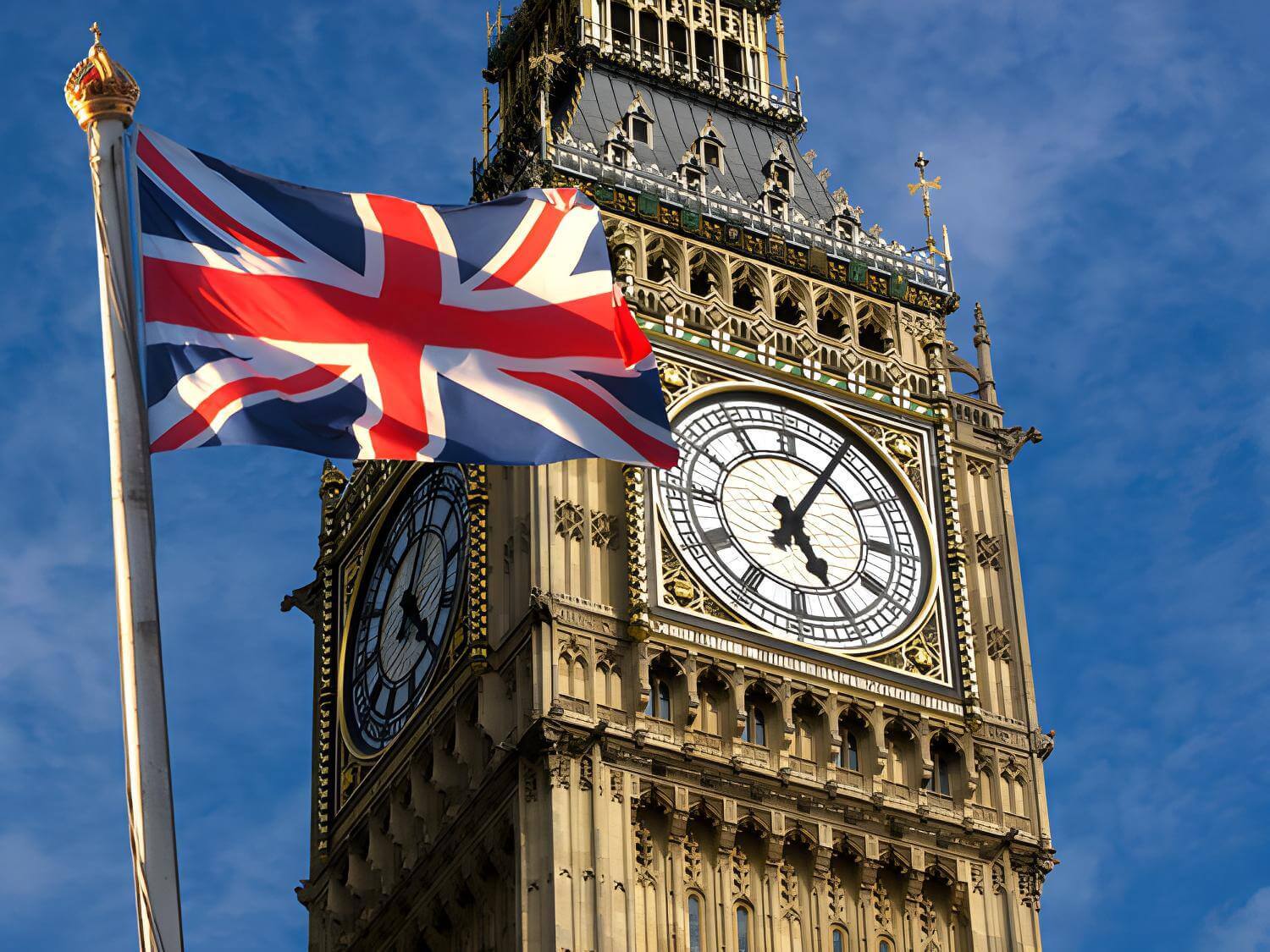
- The chancellor is set to deliver the UK Budget, featuring targeted energy support and extended VAT cuts.
- Bank shares for Lloyds, NatWest and Barclays have fallen as the profit surcharge could rise to 8%.
- The government plans to reverse the cash ISA limit cut, maintaining the 12 000 GBP threshold.
- Frozen income tax thresholds continue to pull more workers into higher tax brackets.
- The OBR forecasts a reduced fiscal headroom of roughly 15 billion GBP alongside a record high tax burden.
Budget day has finally arrived, and the chancellor is expected to deliver his speech to parliament and the nation at 1230PM.
Below is a checklist of what to expect:
1, Cost of living
One of the main pillars in today’s Budget is energy bills and reducing the cost for households and businesses. The main pledges include: targeted short-term support for energy bills for the poorest households on benefits, the VAT cut on electricity bills will be extended and the Chancellor is also expected to unwind green levies on energy bills.
The last point could have a major impact on lowering energy bills in the long term. This is one of the only ways that the government can control energy prices, and it is welcome to see Healey grasp this thorny issue. It will be worth listening closely to what his plans are for dismantling green levies, and we expect it to be a long-term programme.
Reports also suggest that the government will assume the reopening of the Rosebank gas field, which suggests that Andy Burnham is putting the nail in the coffin of the UK’s green ambitions and the policies of Ed Miliband when he was energy secretary.
The resumption of drilling in the UK for oil and gas may not please all in the Labour Party, but it could significantly boost the OBR forecast for future UK tax revenues. The question is, how the Labour party plans to spend that potential cash. Will that be used to fund defence or benefits? The former would be better for the bond market.
Other measures to help with the cost of living include another extension of the freeze in fuel duty and no change in UK prescription prices.
2, Tax increases
The main tax increases in this budget have been pre-announced. This includes another tax raid on banks, and a VAT crackdown on online retailers. Investors have been de-risking their banking exposure as we move towards the Budget, as the surcharge on their profits could rise to 8% from the current 3%. This takes us back to levels under the previous government, and banking shares for Lloyds, NatWest and Barclays have fallen approx. 7% over the past month on this news.
The risk is that banks pass on this cost to consumers, and the cost of borrowing gets more expensive for households and businesses. We doubt that Healey will give any sweeteners to banks to lessen the blow from this tax rise, but he is also unlikely to listen to some of the unions who are calling for him to raise the banking surcharge to 35%.
The crackdown on online retailers’ VAT receipts will be used to fund a cut in business rates for the UK high street stores and independent retailers.
The Chancellor is set to reverse plans to cut the cash ISA limit to £12,000, a deeply unpopular plan put forward in last year’s Budget. This will not not go ahead in April 2027. The Chancellor said that the cut to the limit would not help boost stock trading in the UK, so it is worth noting if the government includes other measures to entice stock trading in the UK in this Budget. Could he surprise the markets and cut the 0.5% tax you pay when you buy shares in UK companies? If yes, this could be a major boost to the FTSE-listed stocks.
3, Stealth tax raid
The biggest tax raising measure will be yet another budget when income tax thresholds are frozen. This will drag more workers into higher rates of income tax over the coming tax years. The chancellor is unlikely to do anything to stop the tax ‘cliff edge’, which is putting people off taking promotions or working extra hours.
For now, strong growth so far this year and an upwards revision to UK productivity figures by the ONS could be enough for Healey to shelve this major issue for UK workers for yet another year.
4, Spending
Do not expect any trimming of the welfare bill in this Budget. Instead, the chancellor and the Prime Minister are both likely to kick the can down the road to the spending review that should be published next year and will lay out the PM’s 10-year spending plan. This is expected to include a major overhaul of the UK's spiralling welfare bill, so that problem will be for another day.
The Chancellor has also asked his cabinet members to deliver deeper and more serious cuts to their budgets, which suggests that this budget will not include any extra departmental spending increases, beyond what is ring fenced. However, let’s face it, ring-fenced spending is the main problem for the UK’s public finances, and some are sceptical about the UK’s current, and much-lauded, deficit reduction plans.
Cuts to government budgets are expected to fund the increase in defense spending to the tune of over £4bn. The chancellor is also expected to include increased levels of borrowing to hit the target to spend 3% of GDP on defense. The bulk of the UK’s defence spending plan will also be announced at the next spending review, so expect only the bare bones of a plan later on Wednesday.
5, OBR forecasts:
The most newsworthy details from the OBR’s forecasts today iinclude the following:
- Reduced fiscal headroom to approx. £15bn
- Another record high tax burden, which will do nothing to protect the government from opposition attacks later on Wednesday.
It is worth noting that concerns about another major escalation in the war in the Middle East after next week’s Midterm elections in the US could render the OBR’s forecasts for inflation and growth obsolete within days. Thus, the GDP and inflation assumptions included in the OBR forecasts should be taken with a grain of salt.
What the Budget will not include
The Budget will also be noticeable for what it will not include. The budget will not raise the rate of capital gains tax, which would have been incredibly damaging to the economy. It won’t include welfare reform, which the public wants, and it won’t set out a timeline for when the UK will reach its target of spending 3% of GDP on defence.
The market reaction
In the lead up to budget, movement across all of the major UK asset classes, including bonds, have been driven mostly by global factors.
Over the past month, the pound has been one of the top 3 currencies, and has performed well on a broad basis. GBP’s performance has slipped in the past week, and it is now one of the weaker performers vs. the USD, but this is largely down to dollar strength, rather than pound weakness.
The pound is down a notch vs. the USD today and GBP/USD is below $1.33 on Wednesday. Overall, GBP is stable as we lead up to the Budget.
UK index hindered by rotation back into tech
The FTSE100 is struggling today and is one of the weaker European performers. However, this is largely down to the rotation back into the tech trade and the recent weakness in the oil price, which has dragged the Brent crude oil price back below $116 per barrel in the past week, and weighed on UK oil majors. Like other European bourses, the FTSE 100 is an under performer vs. Asian and US stock indices in the past month and also over the past 3 months. The FTSE 100 has been dragged lower by its banks, which are threatened by rising taxes set to be included in the Budget. However, stock market weakness has been a European phenomenon in recent months, due in part to volatility in the global bond markets.
The bond market is not spooked by Healey, yet…
Ahead of the Budget, UK Gilt yields are rising moderately. The 10-year yield is up by 1.6bps. However, globally bond price volatility has calmed in recent days. Added to this, in the lead up to the budget, there has been a notable flattening of the yield curve. The long end of the yield curve has fallen, while short-term yields have risen. For example, so far in October, the 2-year yield is higher by 21bps due to rising oil prices and stronger inflation for September, while the 30-year yield is down by nearly 20bps. Since the long-end of the curve is typically more sensitive to domestic factors like Budgets, this suggests that ahead of this Budget, John Healey has not spooked the bond market.
It is worth noting that UK yields remain elevated and have been under immense global stress this year, alongside their peers in the developed world. The difference for the UK is that our yields are nominally higher than our peers, so there is less room for error in this Budget.


RBNZ surprises markets: New Zealand Dollar slumps after unexpected rate decision ✂️



Tech stocks surge, and UK Budget looms

Morning wrap (28.10.2026)



Daily Summary: Wall Street Rises Ahead of Tomorrow's Fed Meeting💡
This content has been created by XTB S.A. This service is provided by XTB S.A., with its registered office in Warsaw, at Prosta 67, 00-838 Warsaw, Poland, entered in the register of entrepreneurs of the National Court Register (Krajowy Rejestr Sądowy) conducted by District Court for the Capital City of Warsaw, XII Commercial Division of the National Court Register under KRS number 0000217580, REGON number 015803782 and Tax Identification Number (NIP) 527-24-43-955, with the fully paid up share capital in the amount of PLN 5.869.181,75. XTB S.A. conducts brokerage activities on the basis of the license granted by Polish Securities and Exchange Commission on 8th November 2005 No. DDM-M-4021-57-1/2005 and is supervised by Polish Supervision Authority.