


- US strikes on Kharg Island—Iran’s main oil export terminal—combined with Tehran’s retaliation against Saudi petrochemical facilities in Jubail indicate that the conflict is expanding into the oil and gas sector, suggesting a negotiation deadlock.
- Iran is signaling a shift toward a more aggressive posture. The Revolutionary Guard has declared that “restraint is over” and warned of strikes beyond the region, raising the risk of broader international escalation.
- There are growing indications of direct threats to US and allied infrastructure. Iranian statements suggest potential targeting of military bases, energy assets, and even carrier strike groups.
- The Gulf region is increasingly affected by the conflict. The UAE has activated air defense systems in response to missile threats, pointing to a widening geographical scope.
- Internal logistics in Iran are coming under pressure. Attacks on railway infrastructure and disruptions to train services indicate strain on domestic transport systems and mobility.
- The Strait of Hormuz remains the central flashpoint. Maritime incidents and disruption risks are driving oil prices higher and fueling concerns over global energy supply.
- Markets are reacting immediately to the escalation. Brent and WTI crude prices are rising, while US equity futures are declining, reflecting a shift toward risk-off sentiment.
- Diplomatic channels remain limited and ineffective. Iran has rejected a temporary ceasefire proposal, maintaining hardline conditions, while mediation efforts continue without tangible progress.
- Global economies are preparing for potential energy shocks. The EU is convening coordination meetings, while Japan is securing oil supplies, highlighting rising concerns about prolonged disruptions.
- Crucially, Iran has responded to the US 15-point plan with its own 10-point proposal, which appears largely unacceptable to Washington. It includes demands such as lifting all sanctions, long-term security guarantees, Israeli withdrawal from Lebanon, and a $2 million transit fee per vessel passing through the Strait of Hormuz under Iranian coordination—effectively implying control over the strait.
US500 (D1 timeframe)
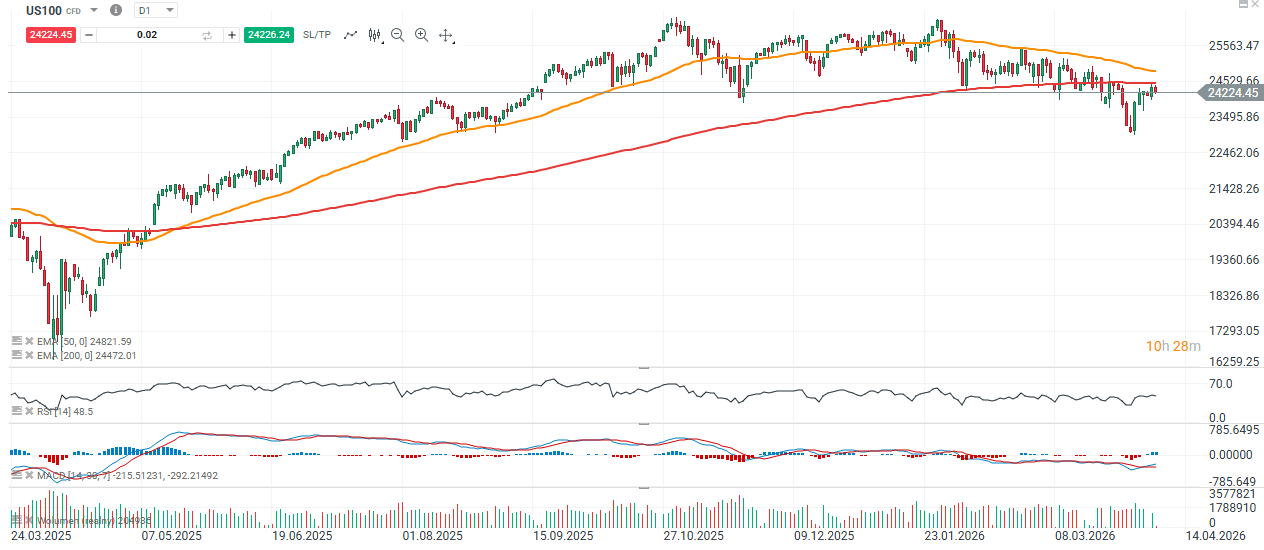
Source: xStation5



Three Markets to Watch Next Week (09.10.2026)



Daily Summary: A Shallow Rebound Ahead of Earnings Season


US OPEN: Trump de-escalates, OpenAI supports Wall Street sentiment

🔼 Gold gains 1.2%
This content has been created by XTB S.A. This service is provided by XTB S.A., with its registered office in Warsaw, at Prosta 67, 00-838 Warsaw, Poland, entered in the register of entrepreneurs of the National Court Register (Krajowy Rejestr Sądowy) conducted by District Court for the Capital City of Warsaw, XII Commercial Division of the National Court Register under KRS number 0000217580, REGON number 015803782 and Tax Identification Number (NIP) 527-24-43-955, with the fully paid up share capital in the amount of PLN 5.869.181,75. XTB S.A. conducts brokerage activities on the basis of the license granted by Polish Securities and Exchange Commission on 8th November 2005 No. DDM-M-4021-57-1/2005 and is supervised by Polish Supervision Authority.