Alphabet Alphabet

Alphabet • Alphabet Inc - class A

Trade GOOGL.US CFD

Past performance or future forecasts does not constitute a reliable indicator of future performance.

Fees

Less cost, more investments

Competitive fees

Trade with leverage and keep costs low

Free deposits/withdrawals

Manage your funds. Take advantage of free deposits and withdrawals.

No custody fees

No custody fees up to 250,000 EUR. After that, 0.02% per annum, minimum £10.

Learn

What is CFD trading?

New to CFDs? Learn how CFD trading works and how you can trade on both rising and falling prices without owning the underlying asset. We explain the basics, financial leverage, potential benefits and risks in simple terms.

Read the Beginner’s Guide

Create an account

Open your XTB account in just a few simple steps. Get access to global markets and a wide range of investment opportunities.

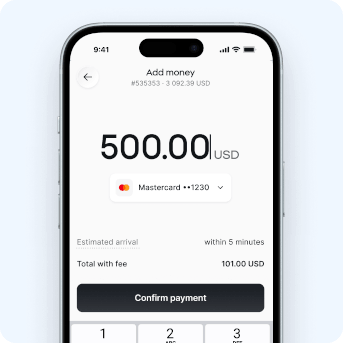
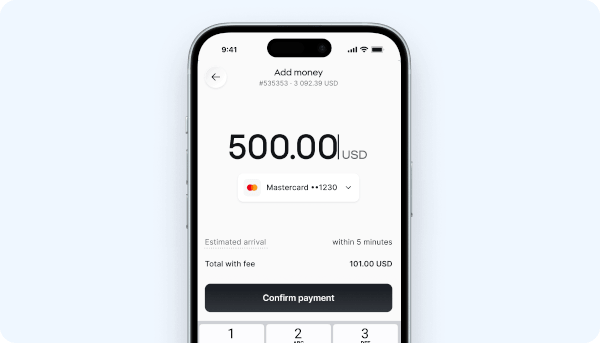
Make a deposit

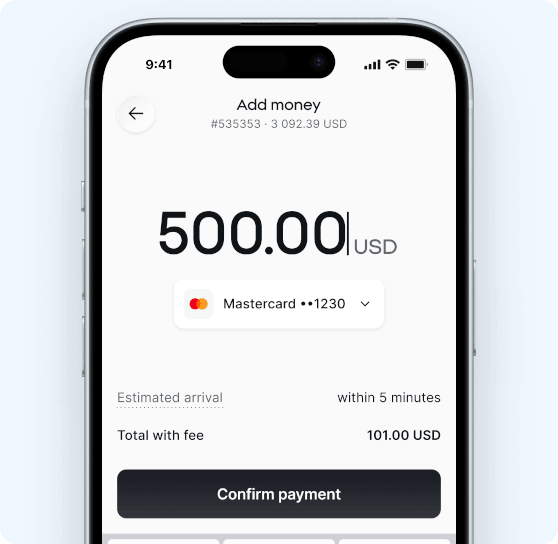
Add funds to your account using one of the available payment methods. Once your funds are available, you’re ready to start investing.

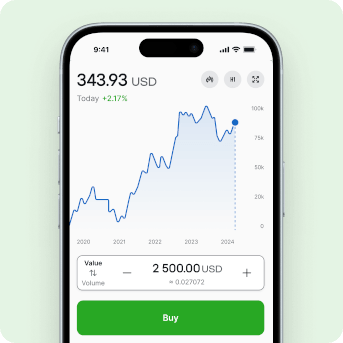
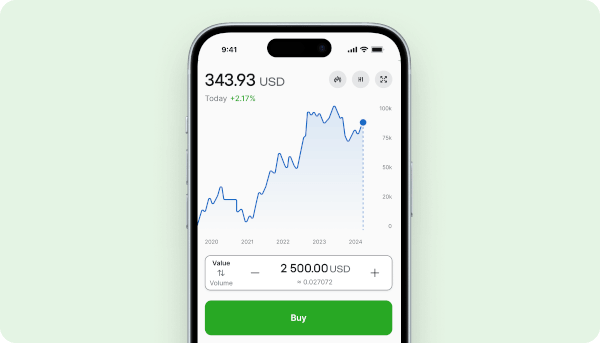
Trade GOOGL.US

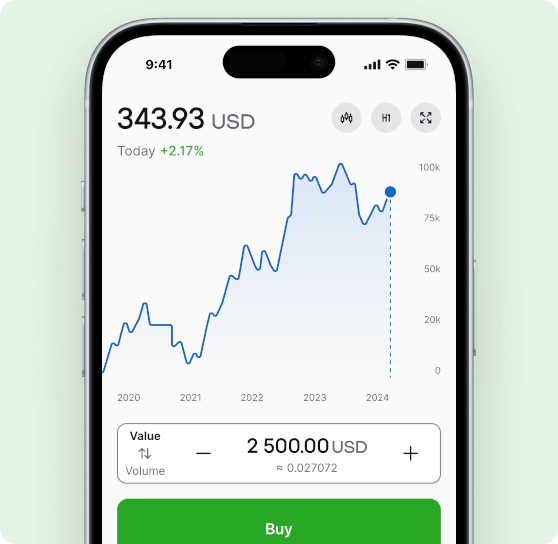
Find GOOGL.US in XTB App, choose how much you want to invest and place your order. Start building your portfolio on your terms.

And make your money work in many ways

Explore more ways to put your money to work - from global stocks and ETFs to more. Discover Investment Plans and earn interest on uninvested funds while you wait for your next investment opportunity.

Popular in the markets

Most traded CFDs

Discover where CFD traders are most active. Explore some of the most traded CFDs across global markets and see which instruments are in focus.

News

Keep your finger on the pulse with our latest market news

We are regulated by leading financial regulatory authorities across multiple markets worldwide.

About instrument

Invest in GOOGL.US CFD

Alphabet Inc., established in 2015 by Google's co-founders Larry Page and Sergey Brin, is a multinational conglomerate. Acting as the parent company of Google, Alphabet's main areas of focus include technology, research, and investment across diverse fields.

Alphabet stands out for its involvement in cutting-edge industries. For instance, Waymo leads its efforts in autonomous cars, Verily in life sciences, and Sidewalk Labs in technology-driven urban infrastructure. Renowned for its trailblasing attitude and dedication to innovation, Alphabet continues to shape the digital era, leaving a significant impact on various aspects of modern life, ranging from information accessibility to digital advertising.

Alphabet, one of the most influential technology companies worldwide, has a major footprint in various areas of digital technology and innovation, making the company one of the most interesting and attractive investment ideas, e.g. using contracts for difference. However, before diving into Alphabet CFD trading, it's crucial to comprehend what it involves.

Trading Contracts for Differences (CFDs) for Alphabet stocks provides a unique avenue for investors interested in gaining exposure to the technology conglomerate without the need to own the underlying shares.

Trading CFDs presents its own unique set of advantages and challenges.The main advantage is the ability to profit from both rising and falling markets. This means that investors can still potentially profit even when Alphabet's share prices are falling by short selling CFDs. Additionally, CFDs allow for leverage trading.This means that you can open a position with a small amount of capital and potentially gain large returns. Remember, while Alphabet CFD trading can be profitable, it also involves significant risk. Since CFDs use investing leverage, they also come with a risk of potential greater loss. Therefore, it is crucial to thoroughly research and consider your financial situation before engaging in such trades.

In terms of the best time to trade Alphabet CFDs, it is during the operating hours of the NASDAQ and NYSE, which are from 9:30 AM to 4:00 PM Eastern Time (from 13:30 to 20:00 GMT times). This is when the majority of trading activity occurs, resulting in higher liquidity and more predictable price movements. However, it's important to note that due to Alphabet's global influence, news and events occurring outside of these hours can also impact its share price.

For those looking to venture into Alphabet CFD trading, it's essential to keep updated with the company's recent activities, earnings reports, and other relevant news. These factors can greatly impact Alphabet's share price and consequently the performance of your CFD trades.


ISIN

-

Trading days

-

Market hours

15:30 - 22:00

Commission

0 USD

Markup included in the price

0,30%

Leverage

5

Margin

20%

Value of 1 lot

1

Minimum order value

50 USD

Interesting Facts

What to know before investing in GOOGL.US

Origins of Alphabet: Alphabet Inc., the parent company of Google, was founded on October 2, 2015, by Google's co-founders, Larry Page and Sergey Brin. It was created to serve as a conglomerate and holding company for various subsidiaries, allowing Google to expand into diverse industries beyond its core search and advertising businesses.

Alphabet's Diverse Subsidiaries: Alphabet's subsidiaries, known as "Other Bets" cover a wide range of industries, including robotics, life sciences, healthcare, and anti-aging. This diverse portfolio of businesses enables Alphabet to explore groundbreaking technologies and innovations beyond the realm of traditional internet search and advertising.

Alphabet's Stock Split: In February 2022, Alphabet's board approved a 20-for-1 stock split, which aimed to make the shares more accessible to investors. This move was made in response to Apple's recent stock split and reflects the company's ongoing efforts to adapt to changing market conditions and investor demands.

Alphabet's Founding Algorithm: The PageRank algorithm, which forms the foundation of Google's search technology, was originally developed by Larry Page and Sergey Brin during their Ph.D. studies at Stanford University in 1995. This groundbreaking algorithm became the driving force behind Google's unrivalled search engine success.

Alphabet's Unique Corporate Structure: three classes of shares: Class A (1 vote/share), Class B (10 votes/share, mainly held by founders and early investors), and Class C (no voting rights). This structure allows Google's leadership to retain significant control over the company while offering different investment options to shareholders.

Leadership Changes at Alphabet: Larry Page, one of Google's co-founders, served as CEO of Alphabet when it was created in 2015. However, in 2023, Sundar Pichai took over as CEO, overseeing both Alphabet and Google's day-to-day operations. Page and Sergey Brin remain actively involved as board members.

The Idea Behind the Name "Alphabet": Larry Page explained the name "Alphabet" was chosen because it represents language, which is one of humanity's most important innovations and the core of how Google's search engine functions. Also, the name can be seen as a play on the term "alpha-bet," with "alpha" signifying investment return above benchmark.

Transparency and Oversight: The transition to Alphabet allowed the company to take a long-term view and improve transparency and oversight. By segregating various businesses under the Alphabet umbrella, investors can gain a clearer understanding of the financial performance and risks associated with each subsidiary.

Alphabet's Vision Beyond Google: The restructuring into Alphabet has enabled Google to focus on its core internet-related services, while "Other Bets" like Waymo (self-driving cars) and Verily (life sciences) can pursue ambitious projects independently. This decentralisation of projects encourages innovation and growth within each subsidiary.

Anticipation of Future Growth: Despite facing challenges like market fluctuations and macroeconomic conditions, Alphabet's status as a technology conglomerate with various ventures allows investors to anticipate potential growth and profitability in emerging industries, such as artificial intelligence, biotechnology, and autonomous cars.


FAQ

Do you have more questions?

Find answers to our most commonly asked questions. Still have a question? Please contact our customer support team.

Alphabet is a multinational conglomerate company that serves as the parent company of Google and several other subsidiaries. It was created in 2015 as part of a corporate restructuring of Google. Alphabet's primary businesses include internet-based products and services, such as search engines, online advertising technologies, cloud computing, and hardware devices.


At XTB, we offer investing in Alphabet via leveraged contracts for difference (CFDs). Kindly keep in mind that leveraged investing products come not only with potentially bigger gains, but with greeted losses, too. Therefore, investors should carefully consider their risk tolerance and investment objectives before trading CFDs.


The stock price of Alphabet can fluctuate, so it's recommended to check financial news websites, online stock brokerage platforms just like XTB’s xStation trading platform which tracks the most recent stock price information.


Alphabet owns various subsidiaries, including Google, YouTube, Waymo, Verily, and DeepMind. These subsidiaries focus on different technology-related areas and contribute to Alphabet's diversified portfolio.


Alphabet's stock performance can be influenced by various factors, including market conditions, company performance, and investor sentiment. It's important to note that past performance does not guarantee future results. To assess Alphabet's stock performance, you can analyse historical stock charts, financial reports, and market analyses from reliable sources or consult with a financial professional who can provide insights based on the latest market trends and forecasts.


CFD stock trading and traditional stock trading have some key differences. In traditional stock trading, the investor owns the stock. In CFD trading investors enter into a contract with the broker to pay or receive the difference in price based on the direction of their trade. One of the key differences between these two is margin and leverage. In CFD trading, traders can conduct transactions for amounts that exceed the capital invested. This can potentially increase the returns of an investment, but it can also increase the risk of loss if the investment does not perform as expected. This leverage is not possible in traditional stock trading, where the full purchase price of the stock must be paid upfront. CFD trading also allows investors to short sell stocks, meaning they can profit from falling prices, which is not possible with traditional stock trading. However, it should be remembered that investing in stock CFDs is more risky than investing in traditional stocks.

Leverage is a feature in CFD stock trading that allows investors to conclude transactions for amounts much higher than the capital actually invested. It multiplies the purchasing power of the capital deposited in the Margin, allowing traders to enter into transactions exceeding the value of the deposit. It can potentially increase the returns on an investment, but it can also increase the risk of loss if the investment does not perform as expected.

Yes, you can short sell stocks using CFDs. Contracts For Difference allow you to speculate both on rising and falling prices by going long (buying) on stocks that you expect to increase in value, or short selling (selling) stocks that you expect to decrease in value.