


AMD is acquiring World Labs, a startup founded by Fei Fei Li, one of the best known researchers in artificial intelligence. The deal is valued at around $8.2 billion and will be paid entirely in AMD shares. Once the acquisition closes, Li is expected to join AMD as Executive Vice President and Chief Scientist. The size of the deal is significant, but what AMD is actually buying for that money is even more interesting.
World Labs was founded only in 2024. The company focuses on what is known as spatial intelligence, developing technologies that allow AI models to better understand three dimensional environments, relationships between objects and changes taking place in their surroundings. The startup has already attracted more than $1.2 billion in funding, including a $1 billion round in which AMD also participated. Its valuation has now reached roughly $8.2 billion.
With such a short track record, it is difficult to view this as a traditional business acquisition. World Labs does not yet have years of revenue or an established commercial model that would make its value easy to assess. AMD is primarily buying technology, a research team and the opportunity to incorporate their work into products that have yet to be developed.
The technology developed by World Labs could become increasingly important as artificial intelligence moves beyond computer screens and into the physical world. A robot operating in a factory needs to understand more than what it sees. It needs to understand the space around it, the position of other objects and how the situation might change moments later. The same applies to autonomous vehicles. Simply recognizing a pedestrian or another car is not enough if the system is expected to predict their movements and make the right decision. These are precisely the kinds of problems World Labs is working on.
AMD has been strengthening its position in AI infrastructure for years, but the company is increasingly looking beyond demand from data centers. If robotics, autonomous vehicles and industrial AI systems begin to scale rapidly, demand will extend beyond computing hardware. These systems will also require models and software capable of operating in the physical world. World Labs gives AMD access to technology that could become part of that future ecosystem.
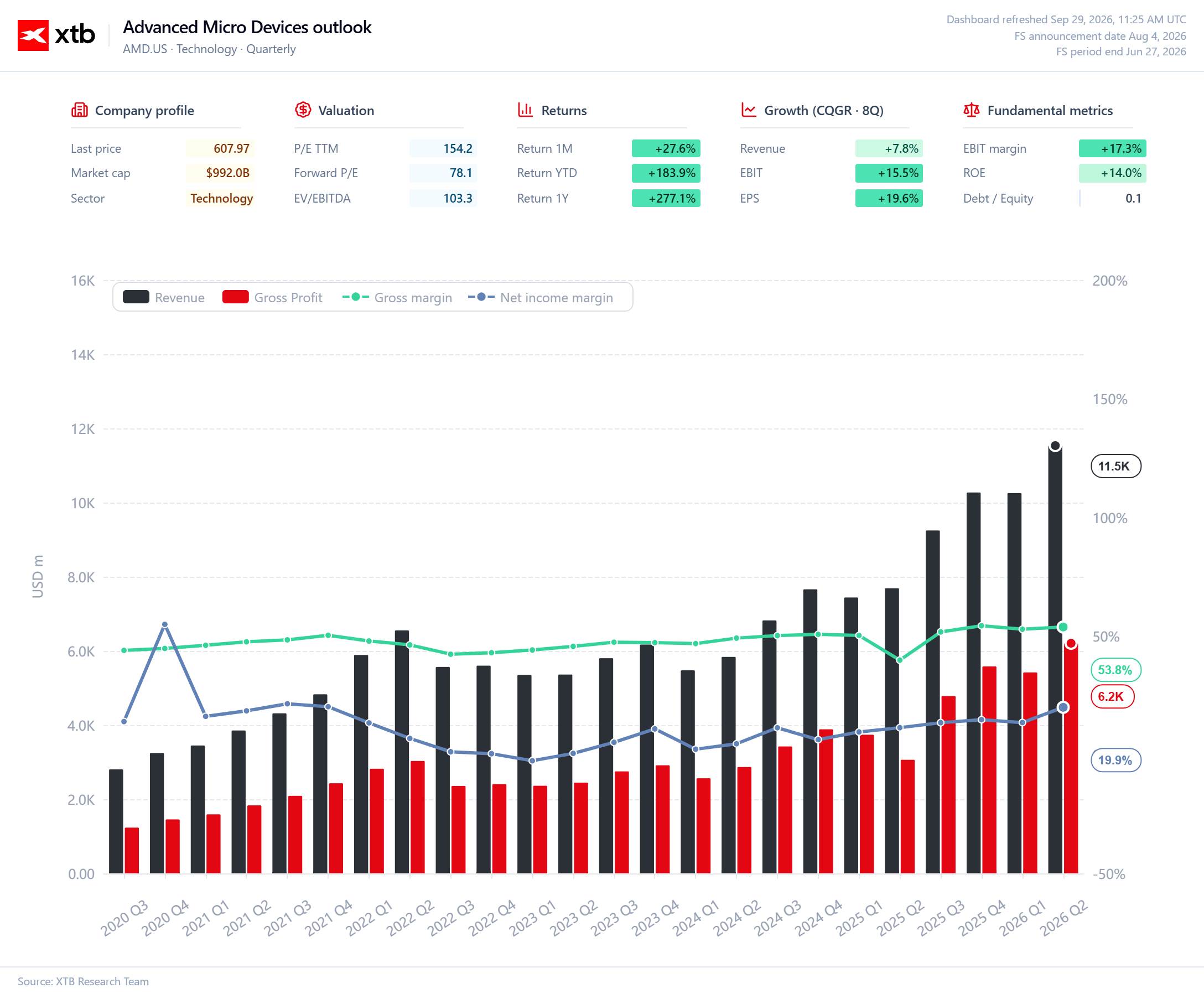
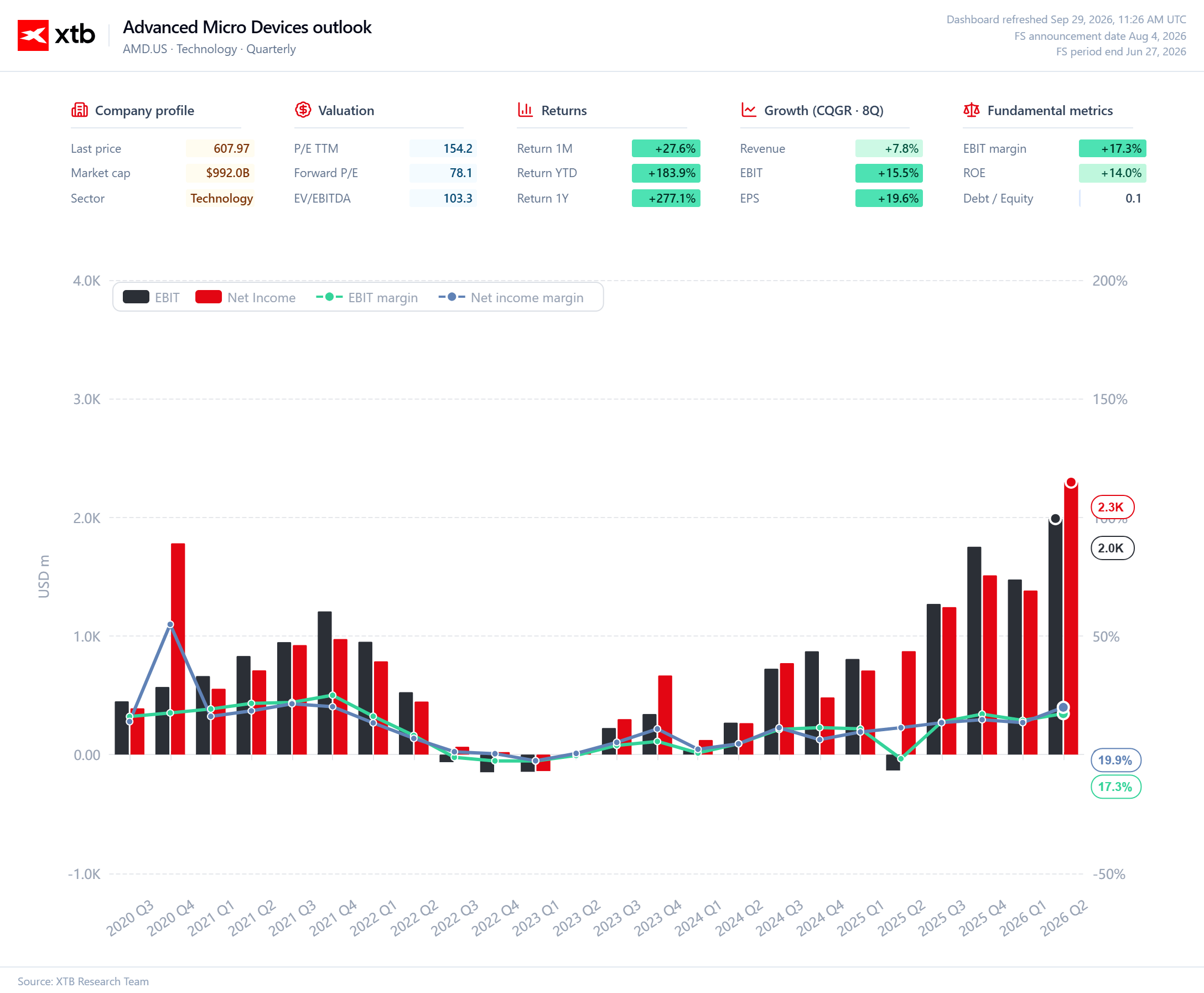
The price is where the story becomes more complicated. Paying more than $8 billion for a company that has existed for only two years is a significant commitment, particularly when its technology has yet to be tested at a scale that would allow investors to assess its future revenue potential. AI is also one of the most capital intensive areas of technology. Research is only the beginning. Companies need enormous amounts of computing power, highly paid researchers and continued access to capital before a technology can become a profitable business. The market has already seen plenty of young companies with talented teams and promising ideas that ultimately failed to turn them into sustainable businesses.
World Labs is in a stronger position than most startups. It has already raised substantial amounts of capital and attracted investors with deep knowledge of the AI industry. That still leaves AMD facing the most important question: how quickly can this technology be turned into products that customers are actually willing to pay for? AMD's investors are not getting billions of dollars in additional revenue today. They are making a bet that the market for spatial AI will become large enough in the future and that AMD will be able to extract more value from World Labs than the startup could have generated on its own.
The structure of the transaction also matters. AMD is paying with its own shares, which means it does not have to spend $8.2 billion of its cash reserves. The trade off is dilution for existing shareholders. The number of shares outstanding will increase, meaning the acquisition will ultimately make sense for current shareholders only if World Labs creates more value for AMD over time than the cost of that dilution.
The decision does, however, reveal how AMD is approaching the next stage of the AI market. Rather than waiting for a new segment to mature, the company is trying to establish a position early, even if that means paying a high price for technology whose full potential has yet to be proven. In robotics and autonomous vehicles, technological advantages could emerge years before mass adoption creates significant demand for finished products.
From that perspective, World Labs fits into a broader AMD strategy. The company already has processors and accelerators capable of providing the necessary computing power. It is now adding expertise in models designed to understand the physical world. It is still unclear whether this will prove to be the right technology or how quickly a market large enough to monetize it will emerge. What is clear is that AMD wants to be ready when AI increasingly moves beyond data centers and into robots, vehicles and machines.
For now, the $8.2 billion price tag is essentially the cost of gaining a position in a potential future market. If spatial intelligence becomes an important part of robotics and autonomous systems, today's valuation of World Labs could eventually look much less striking. If those applications develop more slowly and the technology fails to translate into a large commercial business, AMD will have to justify why it paid such a high price for such a young company.
The transaction does not tell us yet which of these scenarios will unfold. It does show, however, that AMD is increasingly preparing for a world in which artificial intelligence will do more than generate text, images or code. It will need to understand its surroundings and act within the physical world. The ambition is significant, and so is the price. The question now is whether World Labs will ultimately prove to be worth the bet.
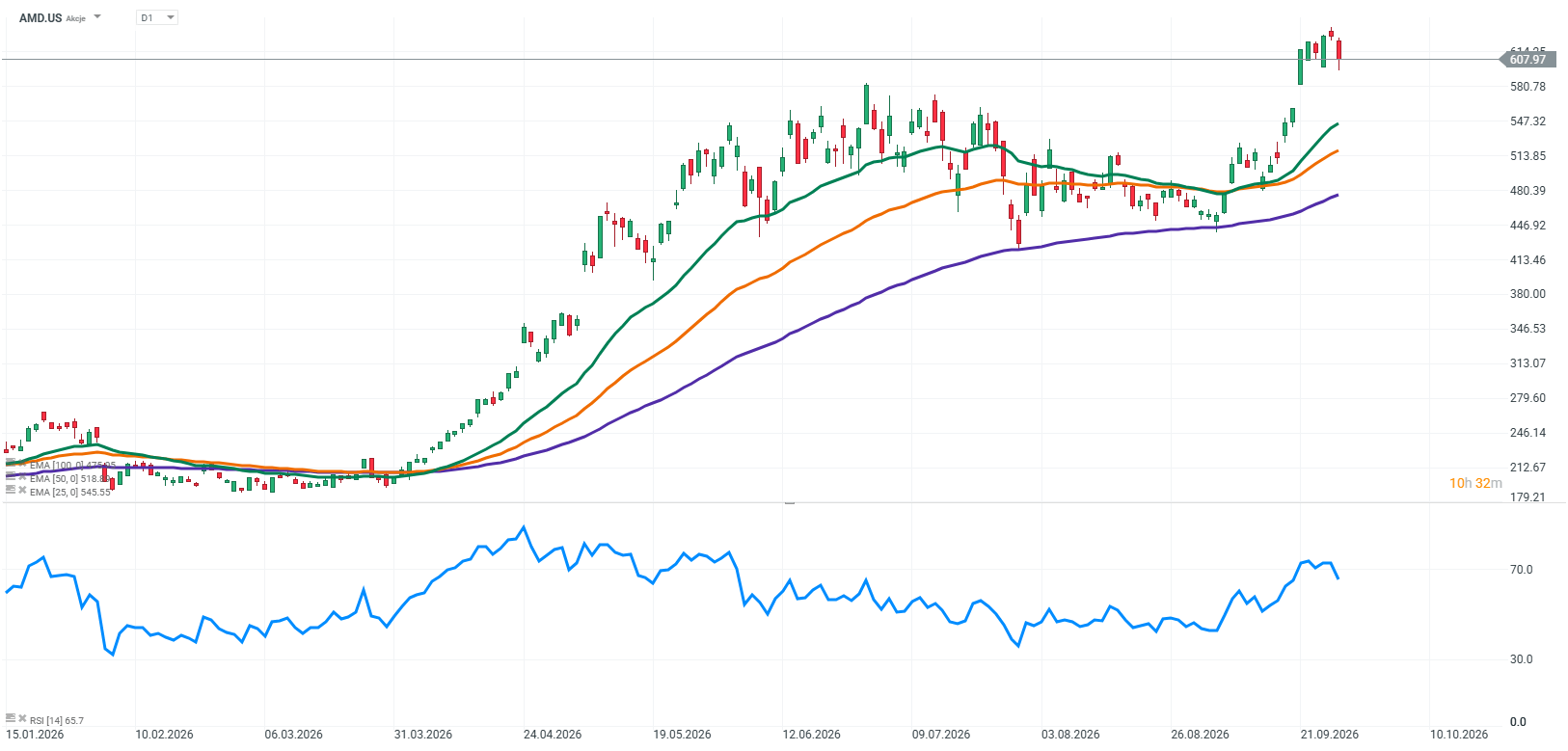
Source: XTB Research


US OPEN: Preparations for Tesla's mega-merger with SpaceX. Diplomatic stalemate with Iran cools Wall Street's enthusiasm

Meta Preview: Billions in AI spending, but when will the investments start paying off?

Tesla Preview: Will Robotaxis Save Earnings?

Supermicro Raises Forecast by $4 Billion as AI Server Demand Once Again Surprises the Market